by UFO History Buff & Author, Charles Lear
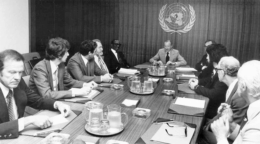
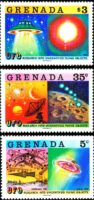
On October 7, 1977, Prime Minister of Grenada Sir Eric Gairy gave a 90-minute speech during the 32nd session of the General Assembly of the United Nations urging the organization to create an agency that would monitor UFOs. This led to a presentation and panel discussion over one year later, organized and produced by Lee Speigel, that included Dr. J. Allen Hynek, Dr. Jacques Vallée, and Col. Gordon Cooper. While this was considered a high point at the time in terms of gaining respectability for the UFO Waldheim Meeting. Credit: ICUFON Archives subject (Grenada issued a set of stamps in 1978 commemorating Gairy’s efforts) and still is today, not everyone was happy about it, particularly the directors of the Scientific Bureau of Investigation, formed in January of 1979.
 SBI introduced itself to the UFO community in the first issue of The SBI Report, published in March 1979. Its founders were Pete Mazzola and Jim Fillow, who helmed the organization as its “International Directors.” It is claimed that SBI is “the first organization to have two international directors” and explained that it was felt that “two heads are better than one.” Mazzola is described as having been a New York City policeman for 12 years, holding a BS in psychology, and being “a certified expert in the fields of Polygraph and Psychological Stress Evaluation testing.” Fillow is described as a general contractor with two years of college studying computer science and 15 years of experience as a UFO investigator with over 500 cases to his credit.
Regarding the UFO discussion at the United Nations, after pointing out that both directors have lectured, “appeared on numerous radio and T.V. programs,” and published the “Step-By-Step” UFO Investigating Manual” [sic] there is this statement: “Currently, each is heavily engaged in the United Nations/UFO discussions dealing with ‘the seriousness of UFO’s [sic] on a world-wide basis which is [sic] currently being presented by WNBC producer—- [sic] Lee Speigel.”
This is a little confusing as the presentation organized by Speigel already occurred on November 27, 1978. On page five it is stated: “presentation of evidence was shown to the General Assembly in order to show cause that ‘UFO’s [sic] present a threat to the national security of the world’ and to have the U.N. investigate this threat on a world-wide scale. The discussions still continue, however, the future investigation into this phenomena [sic] by the U.N. does not look favorable.” It didn’t help that Gairy’s regime was overthrown the very month this was published by Marxist rival, Maurice Bishop, while Gairy was in New York on U.N. business.
By issue Number 2 of the Report, the attitude of SBI towards the “United Nations/UFO discussions” and the people involved has become downright negative, and the issue contains a vehement attack on Hynek by Mazzola. The reason for this seems to be the relationship between SBI and Colman (spelled Coleman in the Report) VonKeviczky, a former major in the Hungarian Army who emigrated to the U.S. in 1952 and became interested in UFOs during the flap that year which included the “Washington Merry-Go-Round.” He is profiled and welcomed as a consultant in “Photographic Analyzation.” According to the list of his credentials and achievements, he started (in 1966) the Jackson Heights (Queens), New York-based Intercontinental Galactic Spacecraft (UFO) Research and Analytic Network (ICUFON), was the first UFOlogist to make an effort to have the U.N. get involved in the investigation of UFOs when U-Thant was the secretary general, was a member of American Institute of Aeronautics and Astronautics, and was “employed by the United Nations as a liason [sic] officer.”
On page 10 there is a report from VonKeviczky which shows his involvement in the recent U.N. discussions. According to VonKeviczky, his organization was originally chosen by Gairy on June 16, 1978, to prepare a presentation of evidence to support Gairy’s speech at the 33rd session of the General Assembly. Then, on July 12, Gairy told him that while it was known by his government that he had the “strongest analysed [sic] evidences [sic] about the UFOs existence and operation,” Gairy, his cabinet, and the “sponsored scientists *” would not be willing to present evidence that UFOs posed an international threat.
The asterisk leads the reader to the following: “On July 14th, Drs. Hynek, Vallée, and astronaut G. Cooper constrained Prime Minister Gairy to cancel Maj. Ret: C. VonKeviczky invitation and announced visit three hours before to U.N. Secretary General Dr. Kurt Waldheim. (WHO ALERTED THE EX-GOVERNMENT SCIENTISTS AGAINST ICUFON!)”
This is possibly what led to Mazzola’s attack on Hynek, which is on page 2. According to Mazzola, Hynek is a “one man army,” who is using his “supreme authoritarianism” to gather “3/4’s of all the UFO data around the world.” He then, Mazzola alleges, turns it over to the CIA while only the cases guaranteed to be ridiculed are ever presented to the public. Mazzola makes this suggestion to Hynek: “Retire and collect your C.I.A. pension.”
Peter Robbins, who was a young aspiring UFOlogist at the time and a member of SBI, wrote a paper titled The United Nations 1978 UFO Committee Initiative: A Personal Reminiscence, which he presented at the 2009 Crash Retrieval Conference in Las Vegas, Nevada. Robbins provides a clear timeline of the events, beginning with Gairy’s speech on October 7, 1977.
According to Robbins, he “came into the picture” after Gairy’s July 1977 meeting with Waldheim (accompanied by Hynek, Vallée, Leonard Stringfield, David Saunders and Claude Poher) “to discuss the creation of a steering committee whose aim was to involve the United Nations in UFO research.” He says his interest in UFOs started the year before when he was “befriended by the three men who would serve as my ufological mentors” whom he identifies as Budd Hopkins, Pete Mazzola, and Colman VonKeviczsky.
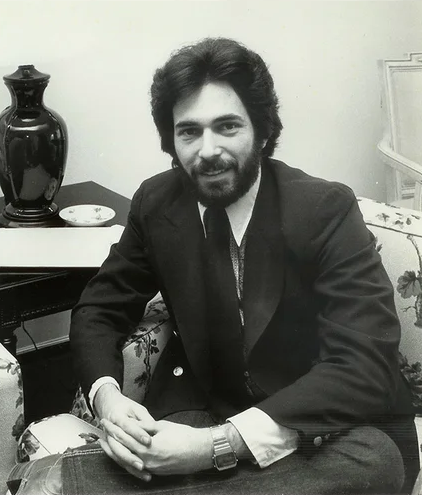
Waldheim had invited VonKeviczsky to submit a paper for the upcoming proceedings addressing his concern that a misidentified UFO might start a war between the U.S. and the Soviets, and Robbins says that he and Chilean UFOlogist, Antonio Huneeus, were “hired” (he points out that neither of them were paid) to be his editors. He describes the process as being quite challenging given that English “was very much a third (or fourth?)” language for VonKeviczsky. He says that due to VonKeviczsky’s pride and stubbornness “the majority of our suggested changes were politely declined, but always with his warm thanks.” In spite of this, the paper was accepted, and Robbins and Huneeus were invited to upcoming relevant meetings. Robbins has a detailed description of the meetings on November 27, but makes no mention of VonKeviczsky being sidelined.
SBI, meanwhile, wasn’t done with its gripes. On page 3 of the Volume 1, Number 4, June 1979 Report, Mazzola lays into Lee Speigel, regarding his recent notoriety as a UFOlogist thanks not only to his involvement in the U.N. discussions, but also his show, The UFO Report, a ten-minute program that ran on NBC radio twice a night, Monday thru Friday. He points out that Speigel has been noted as “an authority” on UFOs and tells the reader “We at S.B.I. have this to say about it—-BALONEY!!!” He attributes Spiegel’s rise to prominence to his association with Hynek, “the Benedict Arnold of the U.S. Air Force,” and accuses both of working together to hijack the “UN/UFO debates.”
After venting his ire, Mazzola asserts that it is VonKeviczsky, not Hynek and Speigel, who is moving the discussion forward “secretly meeting with several important delegates of powerful nations to attempt to introduce a proposal into the agenda for the UN/UFO talks late in October.” He adds that, instead of Spiegel, SBI will be producing the next presentation.
Apparently VonKeviczsky and SBI weren’t successful. According to Robbins, after the talks on November 27, 1978, “Grenada’s efforts to establish a UFO study program were left to languish in committee and died a quiet death the following year.”
Podcast: Play in new window | Download
Maurice Bishop? Isn’t that the alias that a Antonio Veciana indicated was used by David Atlee Phillips, and how he was known to the Cuban exile who was a founder of the anti-Castro group Alpha 66? Antonio withheld the Phillips’ name identification for years, probably out of loyalty to his cause, but after decades finally identified in 2013 that Maurice Bishop who he had previously described having met with LHO in Sept. ’63 was, in fact, CIA officer David Atlee Philips. Kind of curious coincidence about the name…