Simulcast on YouTube, Facebook & Twitter | Thursday, October 29, 2026 @ 8:00 PM EDT (GMT-4)
Join Martin Willis on Podcast UFO for a fascinating conversation with Lorien Fenton, longtime UFO researcher, MUFON Marin and Sonoma Meeting Director, radio host, and producer of the annual UFO CON conference in California. After surviving a life-threatening illness in 2009, Lorien became deeply involved in the UFO community, eventually witnessing several unusual aerial objects, including a mysterious black triangle UFO on November 1, 2014. Lorien shares her personal experiences, including what she describes as encounters with white light beings, while discussing UFO sightings, possible extraterrestrial contact, government disclosure, and the changing landscape of UFO research. Drawing on years of organizing conferences and speaking with researchers, witnesses, and experiencers, she offers a unique perspective on where the UFO subject has been and where it may be heading. We’ll also discuss UFO CON 2027, scheduled for February 26–28 in Burlingame, California.
**Learn more:**
UFO CON 2027: https://caufocon.com/
MUFON Marin Sonoma: https://mufonmarinsonoma.com/
The Fenton Perspective: https://revolution.radio/
BIO: LORIEN FENTON became actively involved in the San Francisco Bay Area UFO after a near death experience which propelled her into doing the work she loves in the communities that she has been passionate about her entire life – UFOs/Aliens, Conspiracy and JFK. Lorien is the MUFON (Mutual UFO Network) Marin and Sonoma counties Meeting Director, holding meetings in Core Madera, CA on the first Saturday of the month. Visit www.MUFONMarinSonoma.com. Her current “occupations” include web designer, bookkeeper, marketing/PR person and conference producer. Lorien produces UFO CON held annually in the San Francisco Bay Area. UFO CON 2027 will be February 26-27-28. She has produced and co-produced many conferences, including: 12 – UFO CONs; 3 – Super Soldier, Targeted Individuals and Mind Control Summits; 3 – Time Travel CONs; 4 – JFK Birthday CONs; 3- JFK Assassination Cons in Dallas; 2 – Lee Harvey Oswald Birthdays in New Orleans; JFK Historical Society’s “The Big Event”, Washington DC; and many more virtual events. If that wasn’t enough, she has a weekly internet radio talk show: The Fenton Perspective, Mondays at 5pm PT/8pm ET on Revolution Radio, Studio A: Revolution.Radio
If you haven’t guessed by now, she lives in front of a computer, has her ear glued to a phone, she sings “Moon Dance” by Van Morrison to herself, is slowly becoming a Crazy Old UFO Lady, and finally saw her first Black Triangle UFO on 11/1/2014. She has never been abducted or seen a typical Alien — that she can remember. However, she thinks the most important moment in her earthly life is when she met God and has been visited by white light beings she believes are “Angels”.
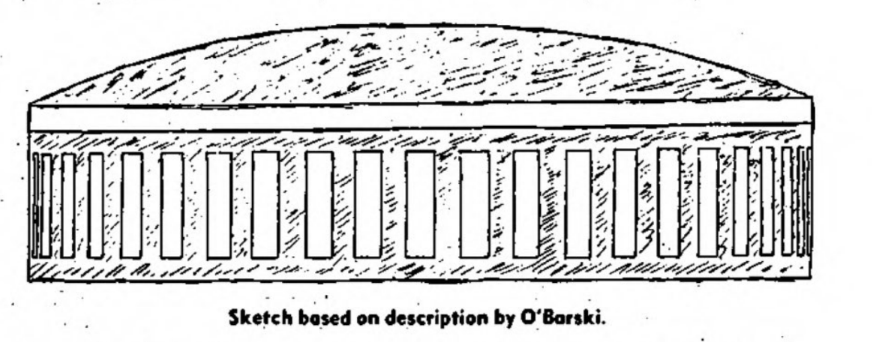 “In mid-January 1975, for about three minutes, a spaceship landed on a hill in New Jersey, apparently to collect soil samples. It happened again last month.” This is according to Budd Hopkins in the summation of his
 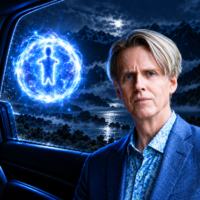 Martin Willis welcomes Indy Pederson, author of Sacrificing Humanity: The UFO Is a Portent of Nuclear War, whose extraordinary experiences in remote Patagonia transformed him from a UFO skeptic into a believer. After purchasing property on an island that locals described as a UFO base, Pederson says he encountered a mysterious glowing orb that approached within two feet of his vehicle and appeared to begin transforming into a humanoid figure. He also discusses alleged government interference involving his island property, reports of cattle mutilations, possible underwater UFO activity, and his concerns about the connection between UAPs and nuclear weapons. A fascinating conversation exploring close encounters, unexplained phenomena, and what these mysteries could mean for humanity.
 In the September 20, 1976, Tehran Journal out of Iran, there is the
  Martin Willis welcomes back Dave Scott, creator and host of Spaced Out Radio, for a candid conversation about UFO disclosure, government secrecy, and the unexplained. Dave shares why he has become increasingly skeptical of the disclosure movement, questions the government’s narrative, and explains why firsthand witnesses may hold more answers than insiders. He also discusses his involvement in connecting Canadian officials with prominent U.S. UFO figures, including Lue Elizondo and Christopher Mellon. The conversation takes a fascinating turn as Dave recounts strange experiences at the remote Flight 21 crash site in British Columbia, including alleged Sasquatch encounters, mysterious footprints, UFO activity, and other paranormal phenomena. Martin and Dave also explore Roswell, the hitchhiker effect, and why mainstream media continues to shy away from serious UFO coverage.
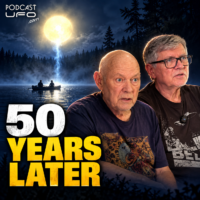 Martin Willis sits down with Charlie Foltz and Jim Weiner, two of the original witnesses to the famous 1976 Allagash UFO encounter in northern Maine. Fifty years later, they recount the enormous glowing object that approached their canoe, a mysterious beam of light, apparent missing time, and the unsettling memories they say emerged during separate hypnotic regression sessions with investigator Raymond Fowler. They discuss their alleged encounters with nonhuman beings, how the experience transformed their art and careers, and the profound effect it had on their lives. Jim also shares a remarkable near-death experience following a serious accident. Recorded after the Exeter UFO Festival, this is an intimate and revealing conversation about one of the most debated abduction cases in UFO history.
 This is the last of a series of
  Martin Willis sits down with Anne Ramsey Cuvelier, who for years opened her historic Newport, Rhode Island mansion to UFO experiencers, researchers and investigators seeking a private place to share extraordinary encounters without ridicule. Anne recalls gatherings that included Dr. John Mack, Budd Hopkins, Barbara Lamb, Peter Robbins and members of the Allagash abduction case. Now 92, she reflects on a lifetime connected to the UFO mystery, including her father’s comments about unusual aerial objects, his friendship with former Secretary of Defense James Forrestal, her experiences investigating crop circles in England, and her memories of leading figures in the experiencer community. The conversation explores the stigma once surrounding abduction reports, how attitudes have changed, and the important role Anne played in giving experiencers a place where they knew someone would listen.
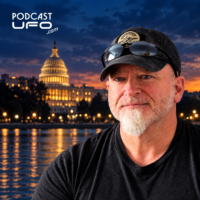 Martin Willis sits down in person with Lue Elizondo for a wide-ranging conversation about UAP disclosure and what may be happening behind the scenes in Washington. Elizondo reveals that he has returned to the Washington, D.C. area and says he is once again working for the U.S. government, although he cannot disclose his specific role. He discusses why some UAP information remains classified, his restrictions on discussing alleged crash-retrieval programs, and the long-rumored 23-minute UAP video, which he says isn’t the most compelling footage that exists. The conversation also covers NASA and unusual observations involving the Moon, historical UAP performance, Ross Coulthart’s recent claims about Elizondo, whether the government truly understands the phenomenon, and the possibility that humanity perceives only a tiny fraction of a much larger reality.
 In last week’s blog, we looked at a case that started when the Sentinel out of Gulf Breeze, Florida,
 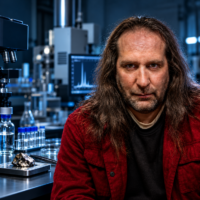 Martin Willis welcomes analytical chemist and longtime paranormal researcher Matt Moniz for a fascinating discussion of the physical evidence surrounding UFO and abduction cases. Matt describes his laboratory examination of material from Betty Hill’s dress, including microscopy and chromatography comparing affected areas with control samples, and discusses other materials he has collected or studied from notable UFO cases. He explains the importance of provenance, contamination, metallurgy and isotope ratios when evaluating alleged UFO materials and discusses several classic cases he believes deserve further scientific investigation. The conversation then becomes deeply personal as Matt recounts his own claimed abduction experiences beginning in early childhood, including encounters he says continued throughout his life and an extraordinary later meeting with someone he remembered from one of those experiences. Martin and Matt also explore consciousness, ghosts, paranormal investigation and the difficult question of how science can approach phenomena that are unpredictable and difficult to reproduce.
 Former British military intelligence officer Franc S. Milburn joins Martin Willis to discuss military accounts of an alleged UFO retrieval in northern England and RAF encounters, distinguishing what his sources told him from what he can verify. He also explores the Nimitz Tic Tac incident, his exchanges with Eric Davis, and his family’s reported experiences. Milburn then presents his case for Russian drone operations behind incidents at UK airbases and around the Baltic Sea, emphasizing the importance of separating conventional threats from unexplained UAP.