by UFO History Buff & Author, Charles Lear
 In the Volume 26, Number 6, March 1981 Flying Saucer Review, there is an article (page 7 of the pdf) by Russian UFO investigator Nikita A. Schnee headlined, “Contact Reported Near Pyrogovskoye Lake.” It tells the tale of an unnamed Red Army officer who said he was taken aboard a craft by “two men in dull-coloured cellophane like garments,” who told him they wanted to have a talk. In his introduction, Schnee explains that Soviet UFOlogists were of the belief that there were no Russian CE-3 cases. He cites Felix Y. Zigel, an assistant professor at the Moscow Institute of Aviation, who presented his opinion in the second issue of Observations of UFOs in the USSR that, in Schee’s words, “such reports are the fruits of sick minds, or obvious hoaxes with the aim of making money or obtaining publicity.” With that said, Schnee assures the reader that in his report, “all the events described actually (emphasis in the original) took place and are not products of the contactee’s imagination.” He says this “has been proved, quite convincingly” through examination of the witness and “the landing site of the UFO.” As the reader shall see, Russian UFOlogists had a unique style of landing site examination in those days.
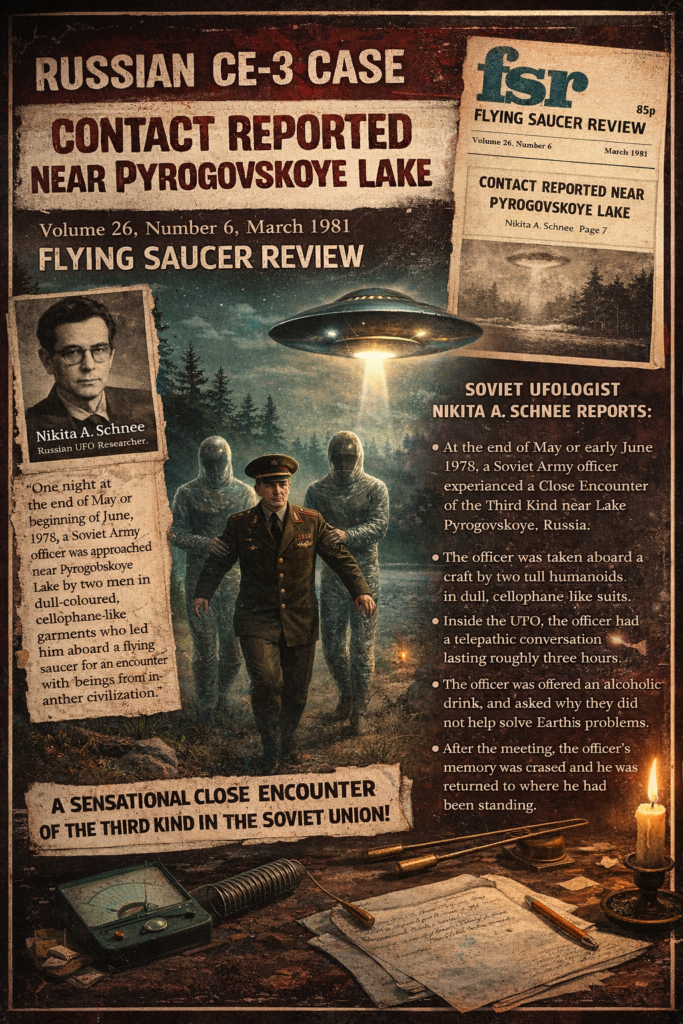 According to Schnee, a Soviet Army officer of high rank was walking away from Lake Pyrogovsoye “at the end of May or the beginning of June, 1978.” He suddenly felt like he was being taken by the arms and then saw the two men in the cellophane-like clothing. One of them communicated this to him: “We’d like to talk to you. It’ll take just a few seconds. Everything we’ll talk about will be erased, and you’ll forget it.”
Schnee then continues the story from the witness’s written statement. According to the witness, he couldn’t remember the faces of the men, explaining, “they are as if in a haze.” He says that neither he nor the two men talked, but he could “feel” their words, and they were able to understand his thoughts. As they communicated, the fear he had initially experienced gave way to feeling “light-hearted” and “free.” His answer to their request was “I’ve nothing against talking with representatives of another civilization.”
According to the witness, the next thing he knew he was in a dome-like room with bright white walls. He couldn’t tell where the light was coming from as he didn’t see “lamps of any kind.” He saw the two men sitting at a table, but his memory of them was hazy. The part of the room opposite him was dark, but he could see “some small tables with buttons and a big screen like a TV-set.”
He was trying to figure out how to prevent the men from erasing his memory after their conversation and “had to try one of our old customs.” He told the men it was a rule here to celebrate important meetings with a drink and they responded by bringing him a glass of salty liquid that looked like lemonade. He told them that we like to celebrate with something stronger, and they asked him to explain. He remembered the formula for alcohol and asked for paper and a pencil. They told him he could write on the wall, and to his surprise, he found he was able to do so with his finger “just like writing on misted glass, or on black velvet.”
One of them said they’d “make it right away,” and “disappeared into the gloom.” He came back with a glass and gave it to the witness. The witness asked “How’s this, that such a highly-developed civilization does not use something like this?” One of them answered saying, “Maybe if we’d used it, we would never have been so highly developed!” The witness felt it was said jokingly.
 The witness then asked why they didn’t help us here on Earth in our struggles against the evils of “poverty, fascism, the rich, and so on.” They explained that it would be difficult to know whom to help and they would “either have to exterminate everybody, or let everybody be and let life on Earth go on the way it goes.” According to the witness, “they aren’t going to interfere; they are just watching us.”
After what seemed to be three hours of conversation, one of them told him they would now erase his memory. He went to a keyboard and started pressing buttons but seemed to be having problems. There were “pulses jumping about on a small screen,” and when the witness asked what was the matter, the man told him that the pulses were usually strongest from the area of the brain affected by the conversation, but strong pulses were coming from everywhere. He said he didn’t know which pulses to erase and told him to just not tell anyone anything he might remember.
The next thing the witness knew, he was back in the spot where he had been before, and it seemed as if only seconds had passed. He told Schnee that his clothes smelled fresher. He went home and told his wife what had happened, and she asked him not to tell anyone lest he be thought insane. He told his co-workers later during a break, and they laughed at him, and also told him he “shouldn’t go around with things like that.”
According to Schnee, he believed the witness was telling the truth, and his friends and co-workers believed he was sincere, but that his experience might have been a dream or “a figment of his imagination.”
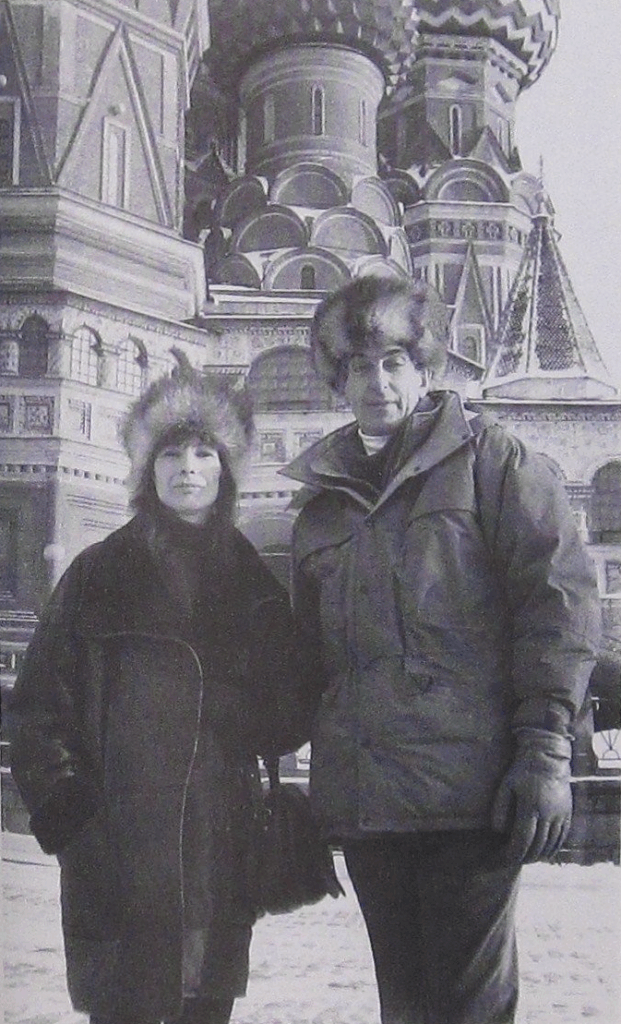 Schnee then describes the Russian-style site investigation. To aid in this, he brought along “sensitives” who were able to feel “biological fields.” If these are detected, a landing is believed to have occurred and the investigation moves forward. Jacques Vallée describes encountering this during his time in Russia in his 1992 book, UFO Chronicles of the Soviet Union. According to Vallée, the term for the practice is “biolocation,” and during a discussion (p.94) with UFOlogist Alexis Zolotov, Vallée and his co-author, Martine Castello, were told by Zolotov that students of geology “graduate with a diploma in biolocation,” which is basically the same as dowsing. Vallée describes Zolotov demonstrating using a coiled piece of metal wire and declaring, “The desk should not be here. This is a negative section of the room.”
Patrick Gross looks at this case on his site, UFOs at Close Sight, and it’s catalogued as URECAT-000313. Besides the FSR article, which is the original source, he lists the 1983 book by Jenny Randles, UFO Reality – A Critical Look at the Physical Evidence (pp. 22-23), and the compilation of reports (page 82 of the pdf) by John Schuessler, UFO-Related Human Physiological Effects. He also lists two websites, and in the account he provides from the Alien Conspiracy website, the officer has developed the name, “Anatoly.”
Gross doesn’t think much of the case. To begin with, he says he couldn’t find a Lake Pyrogovskoye, though he did find embankments with that name. He also notes that Schnee was “a partner of Vladimir Azhazha,” a Russian UFOlogist known for sensationalism and “his pure inventions of UFO sightings.”
Podcast: Play in new window | Download