Blog
The UFO Dark Side
by Charles Lear
As more and more researchers are coming to the conclusion that “the government” is as clueless about UFOs as the rest of us, it’s easy to forget how crazy things got in UFOlogy in the later part of the 20th century. There’s a cast of characters floating around the internet in old videos who told some scary stories. Their dark tales seemed to confirm people’s worst fears about our government, shadowy organizations and aliens. There were some wild claims made by people who had impressive backgrounds that included military service and work with intelligence organizations. Their credentials seemed to have absolved them of the need to back up their claims with proof in the minds of many and the noise they made is still clouding the signal today.
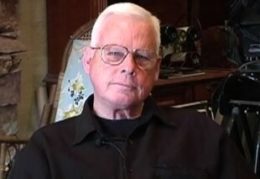
On January 1, 1986, Jim Speiser created a forum called, “ParaNet” within a Bulletin Board System devoted to the paranormal called, “The Other Side.” The purpose was to bring UFO believers, skeptics and those undecided together for an intelligent exchange of ideas and offer access to information. It was here, in 1987, that a newcomer to UFOlogy, John Lear, had a file in the form of a press release posted containing the statement that, “The United States Government has been in business with little gray extraterrestrials for about 20 years.” He referenced MJ-12, crashes in New Mexico at Roswell and Aztec, and stated that MJ-12 had made a deal with ETs. The terms of the agreement were that the ETs would provide technology in exchange for a governmental laissez faire policy when it came to abductions and cattle mutilations. According to Lear, the mutilations and abductions were for the purposes of feeding and breeding. Cattle parts and human parts were mixed in vats at an underground base in Dulce, NM to extract “an enzyme or hormonal secretion” that the ETs absorbed for sustenance. When not used as foodstuff, human females were impregnated and the resulting crossbred offspring were taken. Lear went on to state that, in 1979, there was an “altercation of sorts” where 66 soldiers were killed trying to free “our people” who had become trapped in the facility after learning its secrets.
Did Ryan Sprague have a UFO Sighting in 1995 or Not?
You listed and be the judge.
It’s strange and probably just a coincidence, but ever since this was posted I get daily alerts of hacking attempts from my security program. I took this post down for a few days, then it stopped. When I re-posted the hacking attempts started again.
This site was hacked and completely wiped out in February 2020 with all the episodes, including Ryan’s where he told me he never had a UFO sighting. I really have to believe it is all just a coincidence, but weird.
Leonard Stringfield and the UFO Vortex
by Charles Lear
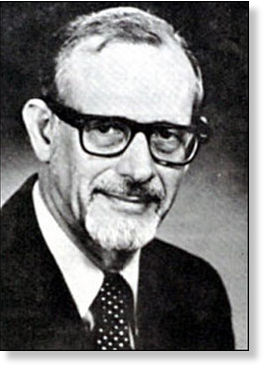 Some are born to it, some achieve it, and some have it thrust upon them. If one is talking about a life devoted to UFO research, Leonard Stringfield was in the last category. He was a prominent figure in the early days of UFO investigation and remained highly active until his death in 1994. Most notably, Stringfield was the only private investigator ever to have a direct line to the Air Force during their Project Blue Book investigation.
Born in 1920, Stringfield’s interest in UFOs began in 1945, just three days before the end of World War II. He was an Army Air Force intelligence officer, flying as a passenger in a C-46 headed for Iwo Jima. Mid-way, after taking off from Ie Shima, the plane developed a problem in its left engine and started losing altitude. As this was happening, Stringfield noticed “three unidentifiable blobs of brilliant white light, each about the size of a dime held at arm’s length.” The pilot regained control and as the plane ascended, Stringfield noted that the objects remained below and vanished into the clouds.
Writing about the incident in his 1957 book, “Saucer Post…3-0 Blue” he compared what he’d seen to the “foo fighters” reported by pilots from all sides of the war. He went on to write that he believed that the engine trouble had been caused by the objects.
In 1950, news reports of flying saucers revived Stringfield’s wartime memory. One report was from a family that had seen an object fly over their house that lit up the area under it as it passed. The other was of a blue light swinging like a pendulum over a ridge. The witnesses were fellow citizens of Cincinnati, Ohio and Stringfield was impressed by their “genuineness.” He became convinced that flying saucers were interplanetary and found this “ominous.” In 1952, there was a flap that included sightings in restricted airspace over Washington, D.C. during two consecutive weekends. On July 25th, Stringfield and other Cincinnatians observed a teardrop-shaped object moving quickly through the sky and changing direction. He was compelled to report it to the press and announce that he was forming a research group, the Civilian Investigating Group for Aerial Phenomena. Though the organization consisted only of Stringfield throughout its short, less than 2-year existence, he received hundreds of reports and was noted as a local flying saucer authority.
New Zealand UFOs: the 1909 Airship Wave
by Charles Lear
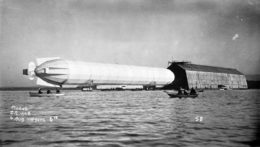 A lot of people are familiar with the mysterious airship wave over the United States that began in 1896. Beginning in California and continuing throughout the rest of the country, people reported seeing large ships in the sky, often described as cigar-shaped and with bright lights when seen at night. There were reports of landings and meetings with human-looking occupants and most thought they were seeing the results of some great inventor’s work. The sightings were reported in many newspapers of the day and they remain an intriguing part of American history. What many people are not aware of is that, in 1909, New Zealand experienced a similar wave of sightings.
As with the American sightings, the New Zealand sightings are preserved in newspaper articles and these are an excellent means of establishing a timeline. New Zealand took a special interest in creating a national archive to preserve its newspapers and there is a wealth of material available to researchers at paperspast.natlib.govt.nz. A 2015 article written by Bryan Dickeson that appears on the UFO Focus New Zealand Research Network website, goes into detail about the news coverage. He noted how researchers have consistently favored the coverage by northern island sources and that this has resulted in the loss of important details as the first sightings occurred on the south island. The very first sighting was reported in the July 13, 1909 edition of the Clutha Free Press, but Dickeson described being unable to find the original article after a 25-year search. Fortunately, enough of the article was reprinted in other papers, that he was able to reconstruct it.
The article begins with a statement regarding the witness’ credibility:
“A resident of Stirling whose veracity we have always been accustomed to look upon as absolutely unimpeachable called upon us yesterday with the story of a strange light seen in the sky over the Wangaloa Hills on Sunday night.”
The witness described the light as “a white light with a reflector” and that it changed altitude and direction seeming to move “with as much ease, and even grace, as a bird on the wing.” He stated that he and others with him, thought they could make out an opaque outline and he came to the conclusion that they had witnessed an airship making an experimental flight.

UFOs Over Finland
By Charles Lear
 The history of UFO reports in Finland is much like that of other countries except that it starts earlier than most, dating back to the early 20th century. As was the case for much of Scandinavia, Finland had reports in the 1930s and 1940s of mystery lights, aircraft and rockets but, unlike its neighbors and much of Europe, the government of Finland has been quite secretive regarding official UFO investigations. Despite the government’s secrecy, documents have been released and were examined by private researchers. These documents revealed that Finnish defense organizations were actively investigating UFO reports from the very beginning and some intriguing cases have been brought to light.
Finland has the distinction of having an abduction account from 1917. The first printed version of that account appeared in the June 9, 1978 edition of the newspaper, Kurkijokelainen, and was written by Latomäen Aino. According to the story, a widow, Anni, was missing from her house in the community of Jyrinvaara for several days. Neighbors had thought she’d been away visiting her daughter but, when she reappeared, she had an unusual explanation for her absence. According to her, a large craft, shaped like a washbasin, had descended next to her house and small creatures came down out of it using a ladder. She was able to partially understand their language and, after refusing their invitation to come aboard, was taken by force. The craft flew off and she described being taken all over the planet and then among the stars.
That Other New Mexico UFO Crash
By Charles Lear
 When it comes to reported UFO crash locations in New Mexico, everyone has heard of Roswell, many have heard of Aztec but few have heard of San Antonio. San Antonio is a small village, 12 miles south of Socorro just northeast of White Sands Missile Range. It was the childhood home of two men, Reme Baca and Jose Padilla who, in 2003, came forward with the story that they had discovered a crashed UFO there in 1945.
In 2002, Reme Baca and Jose Padilla were living in Washington State and California respectively. Padilla left San Antonio in 1954 and Baca left in 1955. According to Baca, there was no contact between them from 1955 to 2001. They renewed contact after coming across each other while searching their ancestry on the internet. In the course of their conversations, they revisited an unusual series of events from their childhood. They got in touch with an old schoolmate, Ben Moffett, who was a reporter for the Socorro newspaper, The Mountain Mail. They related the events to him in 2003 and he published their tale as a two-part series in the November 2 and November 6, 2003 editions.
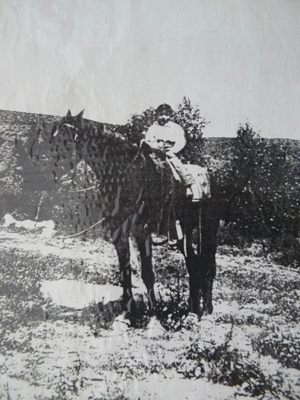
On July 16, 1945, the world’s first atomic bomb was detonated at the Trinity site, which is approximately 40 miles from San Antonio. Jose Padilla and his mother were up early that day and when the bomb went off, his mother observed it through a crack in the door and lost her sight in one eye. Residents of the area were told that what they had witnessed was the accidental explosion of a munitions dump. A month later, on or near August 16th, Reme Baca, age 7, was with Padilla, age 9, helping out on the ranch owned by Padilla’s father, Faustino. They were tasked with finding a cow that had wandered off to give birth and they set out on horseback. That children that age would be helping out as ranch hands may seem extraordinary to us modern folks, but a picture of Baca on horseback confirms that he was, at least, able to ride at that age.
When UFOs and Cars Collide
By Charles Lear
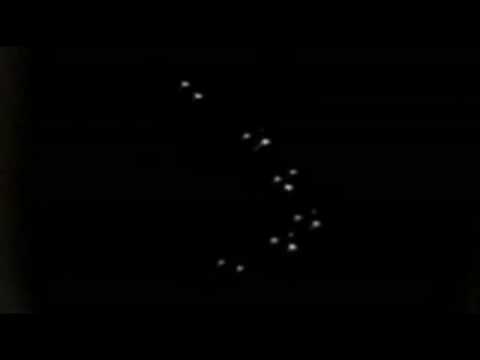 Occasionally, a good, solid, interesting UFO case will slip away from memory only to be rediscovered, years later by an alert researcher. A 1967 case involving a New York woman, Emma Funk, is a perfect example. This case was found recently by New York based researcher and author, Linda Zimmermann, and discussed on the Hudson River Radio show she hosts, “UFO Headquarters.” The Hudson River Valley of New York has long been an active area for UFO sightings and is particularly well known for a wave in the 1980s involving low flying, silent, black triangles, some the size of a football field. The incident involving Funk occurred in Millerton, NY, which is just east of the Hudson River Valley near the Connecticut border. It involved a collision with an object while driving and was remarkably similar to a case familiar to many, the “Val Johnson Incident”, that happened 12 years later.
On Tuesday morning, July 18, 1967, Emma Funk reported an incident to local police. Village patrolman Lewis Lindsay described the report for an article, which appeared in the July 19th edition of the Poughkeepsie Journal. According to the article, Funk was driving home after work on Monday at 11:25 PM. She was heading north on route 22, when an object the size of a softball hit her windshield. At that moment, her headlights went out, her car stalled and the inside of the car was filled with a bright light. Funk was dazed and when she regained her composure and got the car back in motion, she realized she was driving south, in the opposite direction. Lindsay checked the car, saw that there was a crack in the windshield and noted that he couldn’t make a determination as to its cause. The article mentions that there had been “recurring reports of unidentified flying objects in Northeast Dutchess County.” Lindsay said that there was a search planned in the area to try to locate “the sphere” but wouldn’t speculate whether the incident had any connection with the reported UFOs.
A follow up article in the August 5th edition of the same paper describes a meeting at LaGrange Town Office hosted by Aerial Investigations Research Corps Inc. where Funk’s windshield was on display. The object is described in this article as baseball sized and black with an orange glow. A.I.R.’s president, William Donovan, announced at the meeting that the windshield would be sent to the physics department of Syracuse University for “chemical and ballistics tests” and that pictures of it would be sent to the Condon committee. The Condon committee was a group at the University of Colorado that was studying the UFO phenomenon on behalf of the Air Force.
UFOs Over Japan
by Charles Lear
 When it comes to popular culture, the Japanese people seem to have as much of an appetite for science fiction and the paranormal as the people in the United States. With stories ranging from ghosts to Godzilla to aliens, Japanese media from film to comic book has not only entertained Japanese people, but people worldwide. Despite the popularity of otherworldly subjects in that country, the Japanese government and its people have a history of being conservative regarding the subject of UFOs. According to journalist and television producer Michi Saito, “to most of the Japanese, they’re accepted as more like a mysterious fantasy.” Japanese officials have only recently acknowledged a need to have some sort of official UFO policy. This comes in the aftermath of the U.S. Department of Defense’s recent release of official UFO videos. That’s not to say there haven’t been believers within official circles or that there have been no significant cases in the country. Japan’s UFO history goes back well before the 20th century and there are enough Japanese believers, researchers and enthusiasts to keep that history alive.
There are alleged reports from as early as 1015 that have been passed from author to author and all around the internet. They’re interesting but they lack any reference to an original source from the period, or at least, one that can be found by a shameless armchair researcher. One report, however, does come with an original source citation, and an explanation as wonderfully ridiculous as some of those offered by our modern debunkers. From the book, “Azuma Agami” a chronicle covering the years 1180 to 1266, comes a UFO report that was investigated by what could loosely be called, “scientific consultants.” On October 2, 1235, Shogun, Yoritsune Suketoshi, reported that strange lights had been seen in the southwest, swinging and circling. He ordered his astrology consultants, who had a good knowledge of astronomy, to investigate. After consideration, they reported that the cause of the strange light activity was the wind causing the stars to sway.
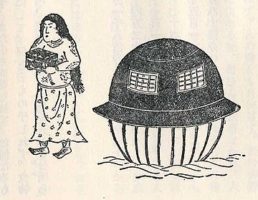
 Another ancient episode brought up by UFOlogists is known as the “Utsuro-bune” incident, which, according to legend, took place on February 22, 1803. Utsuru-bune translates to “hollow boat” and it refers to a vessel that washed up on a beach in Hitachi province. Inside was a woman with red hair who spoke a strange language. No one was able to communicate with her so she was returned to the sea. The description of the boat mentions wood and tree resin, which seems to make it a poor candidate for a spaceship. Read more
Fear and Loathing and UFOs in Dulce
By Charles Lear
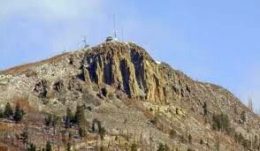 As the internet was becoming more and more a part of everyone’s daily life, the mood of UFOlogy was becoming more and more paranoid. Growing numbers of people were reporting abductions and animal mutilations and the idea that our Earth based governments were collaborating with alien races was gaining acceptance beyond just a small fringe element of society. Little green men became little grey men (and large reptilians) and they were, reportedly, not very friendly. All of these elements converged in dark tales told about an area located in New Mexico. That area is near the town of Dulce and its history of strange activity goes back well before the internet.
Even before the alleged alien activity, Dulce was the location of some unusual human activity. In 1967, someone had the bright idea to recover natural gas trapped underneath Dulce by setting off a nuclear device 4000 feet below the surface. The operation was named, “Project Gasbuggy” and was an early attempt at fracking. Unfortunately, when one sets off a nuclear device near natural gas, the gas becomes too radioactive to be usable.
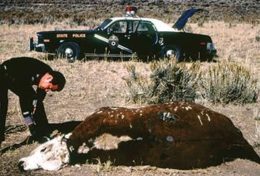 In the 1970’s, the Dulce area was hit with a wave of reported cattle mutilations with accompanying black helicopters and strange lights. New Mexico State Police officer, Gabe Valdez, investigated many of the reports and became obsessed with the mystery for over 30 years. By 2005, Valdez had become convinced that the mutilations were the result of human researchers but, by that time, many had come to believe quite the opposite. From its beginning in early 1980’s, a story had grown that there was a secret underground base near Dulce under a formation called Archuleta Mesa. This base was reportedly populated by aliens conducting nightmarish experiments on humans as well as cattle. This story is still believed by many people today.
Latest Stream of the SCU, What is the Possible Connection between UAP’s and Dark Matter?
Abstract: Nearly 25% of the universe is composed of a mysterious substance known as dark matter (while 70% of the cosmos is something called “dark energy”) making it the height of hubris to think that we know all there is to know about physics and astronomy today. This talk will review the strong evidence behind the existence of dark matter, such as gravitational lensing, then discuss how it might lead to naturally occurring anomalies not involving craft piloted by intelligent beings at all. Next, I will cover the possibility for its use as fuel for interstellar flight, one that can be gathered in transit, given its natural abundance being 5x that of interstellar hydrogen.
When UFOs Were Soucoupes Volantes
by Charles Lear
 Every so often, there are concentrations of UFO sightings reports, known as flaps or waves that receive a substantial amount of press coverage. This occurred in the U.S. in the early years of the modern UFO era and the press generated by one flap in 1952, which included sightings over the Capital, caused a great deal of concern in Washington. In 1954, there was a flap that was worldwide that involved reports of not only flying saucers, but also of landed saucers and humanoid occupants. There are reports on record from South America to Africa and the Middle East but the heaviest concentration was over France. It was there that French researcher, Aimé Michel came to international prominence as he investigated, collected data and tried to unravel the mystery. A young Jaques Vallée first became interested in flying saucers at this time and was inspired by Michel’s work to go on to even greater prominence as a respected and influential figure in the field.
On September 10, 1954, an incident was reported to police by a 34 year-old man in Quarouble that went on to be covered by the press extensively, not only in France, but worldwide. Marius Dewilde told police that at 10:30 PM, he was sitting in his house by the railroad tracks, when his dog, Kiki, started barking outside. Dewilde went to investigate, bringing his flashlight, as it was dark. Outside, he noticed a large object, which he assumed was a harvest cart, six meters from his front door. He then saw two figures on a nearby path that was often used by smugglers. He shined his flashlight at them and it reflected off of what he perceived was a helmet on one of the figures, both of which he estimated to be about a meter in height. At that moment, a door opened up on the side of the object, a blinding light came out and Dewilde said he was paralyzed by fear. He closed his eyes and when he opened them, the object had risen ten meters in the air and it then shot off to the west like “lightning.” Later, indentations were found in railroad ties that were thought to have possibly come from the object’s landing gear. As the story made its way from newspaper to newspaper, Dewilde’s being paralyzed by fear turned into Dewilde being paralyzed by a beam of light.
Citizens Against UFO Secrecy
by Charles Lear
 At this point in time, most people interested in UFOs are probably used to being able to look at official government documents if they want to do some research. The C.I.A., F.B.I. and N.S.A. all have UFO related documents available online and there is, of course, the enormous collection amassed by John Greenewald Jr. on his site, The Black Vault. One might think that the three letter agencies listed above would have been reluctant to make such documents readily available. This was certainly the case in the early 1970’s when researchers began to use a new tool at their disposal known as the Freedom of Information Act. The F.O.I.A. was passed in 1966 and required that government agencies release documents, not exempt according to the statute’s guidelines, to any citizen upon request. Part of the idea was to provide citizens with insight into the operations of government agencies in the hope that they could play a part in making them more efficient. The act was amended in 1974 and now offered citizens a judicial review if they felt a request had not been responded to satisfactorily. Bruce Macabee, an optical physicist and UFO researcher, was one of the first to take advantage of the act but it was a private group, Ground Saucer Watch, that made headlines after successfully acquiring over 900 pages of documents from the C.I.A. GSW was dissolved shortly thereafter in the midst of financial difficulties but some of its members had already formed Citizens Against UFO Secrecy. CAUS went on to acquire documents from many agencies, and it was because of the efforts of these early adventurers who fearlessly confronted monstrous bureaucracies that we have the resources that are available today.
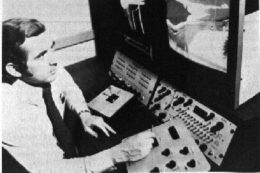 Ground Saucer Watch was formed in 1957 and its members included scientists, engineers and technicians. William Spaulding, the group’s director, was an aerospace quality control engineer who worked at a company called AIResearch. GSW was based in Arizona and was one of the first groups to respond to the 1975 Travis Walton incident. They achieved national notoriety thanks to a lawsuit filed against the C.I.A. in 1977. Spaulding was seeking the release of requested documents and had retained the services of New York attorney, Peter Gerston who offered his services pro bono. In order for C.I.A. to win, they had to establish that UFOs were a matter of national security (contrary to repeated statements of organizations such as the Air Force) and that they had legal authority to investigate UFOs. While they awaited the outcome, in 1978, GSW members, Todd Zechel, Brad Sparks and others, along with Gerston, formed CAUS in order to “open the war on UFO secrecy on other fronts.” Near the end of that year, the C.I.A. released almost 900 pages of documents and on January 14, 1979, an article appeared in The New York Times detailing some of the revelations.
When UFOs Collide
By Charles
 There is a discussion among UFO enthusiasts as to whether or not the objects being reported are actually material in nature. Cases where there have been physical traces left behind after a sighting support the argument that some objects are indeed solid but there were times when those traces were left behind none-too-gently. Actual collisions have been reported between UFOs and aircraft, cars and, possibly, even a train according to a report referenced to in the forum section of Trains magazine.
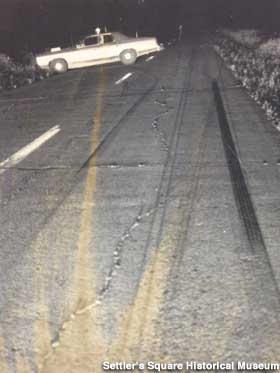
The most famous case involving a UFO hitting a car comes from Marshall County, Minnesota. At around 1:40 AM on August 27, 1979, Deputy Sheriff Val Johnson was driving on duty close to the North Dakota Border when he saw a light. He described it in a taped statement for UFO investigator, Guy Wescott, as “a very bright, brilliant light, eight to twelve inches in diameter, three to four feet off the ground” with well-defined edges. Thinking it was a landing light from a distressed aircraft, Johnson drove towards it, traveling a little over a mile, when it suddenly came towards him and “intercepted” the vehicle. Johnson lost consciousness for “approximately thirty-nine minutes” and came to with his car stopped sideways across the road at the end of 99 feet of skid marks, and a total of 953 feet from the site of impact. He radioed for help and Deputy Sheriff Everett Doolittle was the first to arrive. Doolittle found Johnson sitting in the driver’s seat, in a state of mild shock, with his head against the steering wheel. Johnson complained of pain in his eyes that reminded him of burns he’d experienced after welding and said his head felt as if he’d been hit “in the face with a four-hundred pound pillow.” Doolittle called for an ambulance and Johnson was taken to a hospital where his eyes were treated with salve and bandaged. Read more
Check Out the SCU’s First Livestream, Analysis of the “Ubatuba” material by Robert Powell
Robert Powell reviewed recent testing he completed on a 99.88% pure magnesium sample first obtained in the Ubatuba region of Brazil in 1957. Powell also reviewed the history of the sample, previous chemical testing, isotopic analysis of the magnesium as well as isotopic analysis of impurities in the sample that were in 100ppm levels, namely strontium, barium, zinc, and copper. Lastly he discussed the meaning of the results that he obtained. For more information about the SCU visit: https://www.explorescu.org/