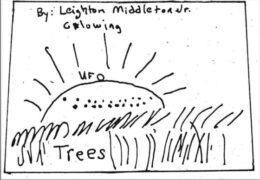
In 1975, after the Travis Walton Incident on November 5, because of the attention it received in the press and among the UFO community, there were two flaps in Florida that fell through the cracks and have all but been forgotten. The first one was in the area of Miami- Dade County that started on the same day as the Walton incident, and the second was a little over a month later around 50 miles south of Jacksonville in the small farming community of Hastings. The Miami-Dade reports received a good amount of local press, as did the Hastings reports. The Hastings reports were looked into by the Aerial Phenomena Research Organization, and there is an article on the case in the January 1976 APRO Bulletin.
Recently, on July 26, KLAS Chief Investigative Reporter George Knapp attended the House Oversight Committee hearing on UFOs. He submitted a written statement describing his interest in and involvement with the subject that was read into the record. A part of his statement that has made headlines is a description of an incident involving UFOs over a Russian ICBM base in Ukraine that seemingly took control of the base launch system. He said this story was to him by a man he described as the director of Russia’s official UFO investigation, Col. Boris Sokolov. According to Knapp, the study lasted ten years, “and was likely the largest UFO investigation ever undertaken.” As this is now in the historical record, it might be of interest to know how Knapp got in touch with Sokolov and consider how accurate his information might have been. Read more →
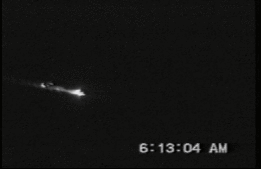
In part 1 of this blog, we looked at a 1993 case from Southern England that has become known as “The Cosford Incident.” It involved a series of UFO sightings reports, many from police, on March 30 and 31, 1993. British UFO researcher Nick Pope was manning the UFO desk in Sec(AS)2a of the Ministry of Defense at the time and described himself on an episode of NEWS 7 Spotlight as being “broadly skeptical” when it came to UFOs and that his investigation of this case was “the turning point.” The case became a British classic due in part to Pope’s description of it in his 1996 book, Open Skies, Closed Minds. However, other researchers, such as Jenny Randles of the British UFO Research Association, suspected that some of the sightings were of a satellite rocket booster from Cosmos 2235 (sent up by the Commonwealth of Independent States) re-entering the atmosphere. One report from RAF Shawbury that was highlighted by Pope was later reconsidered by the witness as also having a prosaic explanation. Because the file (Part 1, Part 2) on the case was released to the public by the MoD, details can be examined by anyone with an interest. Read more →
Recently, on August 24, Calvin Parker passed on at the age of 68. In 1973, he, along with Charles Hickson, reported being abducted by strange creatures in Pascagoula, Mississippi. Afterwards, he spent decades hiding from public attention, moving repeatedly, and changing his name. As the 50th anniversary of the incident was approaching, with the encouragement of his wife, Waynett, Calvin began to publicly acknowledge who he was and what he reportedly experienced. He spent the last decade of his life making friends among the UFO community while speaking about his experience on podcasts, radio shows, and conventions after writing a book, Pascagoula – The Closest Encounter: My Story, that was published in 2018. Martin and Podcast UFO played a large part in Calvin’s re-entry into the public arena and also provided a vehicle for a happy reunion with an estranged family member. Read more →
On March 30, and 31, 1993, reports of a UFO over Southern England came in to the Ministry of Defense. Nick Pope was manning the “UFO desk” at the time, and he described that “the phones were ringing off the hook.” He posted a description of the most dramatic reports on February 20, 2007, on the Physics Forum website. He appeared in a 2009 7 News Spotlight (an Australian program) segment presented by Russ Coulthart and described himself as “broadly skeptical” and his investigation of this series of reports as “the turning point.” Pope described the case in his 1996 book, “Open Skies, Closed Minds,” which helped to make it a classic, but Jenny Randles of the British UFO Research Association suspected that some of the sightings were of a satellite rocket booster from Cosmos 2235 (sent up by the Commonwealth of Independent States) re-entering the atmosphere. One report from RAF Shawbury that was described by Pope was later reconsidered by the witness as also having a prosaic explanation. Because the file (Part 1, Part 2) on the case was released to the public by the MoD, the details of the case can be examined by anyone with an interest.
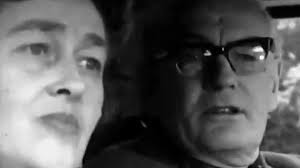
This is the third part in a series looking at two separate encounters in Winchester, England, with UFOs and humanoids reported by two friends, 42-year-old Joyce Bowles and 58-year-old Ted Pratt. They reported that as Bowles was driving with Pratt in the passenger seat prior to their first encounter, Bowles’s Cooper Mini Clubman travelled diagonally as if it was floating after the steering wheel locked, and the car came to a rest on a strip of grass (known as a “verge” in England) next to the road. They said they then saw a craft hovering 18 inches above the ground with 3 humanoids behind a window or windows sitting lined up as if they were on a bus. A creature left the craft, possibly by walking through it, came up to the car, and seemed to have put its hand on the roof as it looked in Bowles’s window. It was said to have been wearing what looked like a silver “boiler suit” and to have had long hair that curled up in the back, sideburns that came down to a pointed beard, and brilliant red eyes with no pupils or irises. They said that during their second encounter, they found themselves standing next to Bowles’s car inside what they assumed was a spaceship. The creatures spoke with them, said they weren’t there to invade and that they’d be back. Their case got the interest of researchers from various organizations and there is one article examining it in the March/April 1977 BUFORA Journal and FOUR articles in the February 1977, Vol. 22, No. 5 Flying Saucer Review. In the course of the investigation, it came out that there were after-effects and that Bowles had a history of reported paranormal experiences and well as healing and psychic abilities. One of the researchers, Lionel Beer, reported in his article in the BUFORA Journal that Bowles’s history made him dubious, but he and the others didn’t discount her claims, possibly due to the influence the ideas of John Keel and Jacques Vallée were having on researchers at the time. Leslie Harris makes a reference to Vallée’s 1969 book “Passport to Magonia” in his article covering the case in Flying Saucer Review. Read more →
In last week’s blog, we looked at a case involving two friends, 42-year-old Joyce Bowles and 58-year-old Ted Pratt, who reported an encounter on November 14, 1976, in Winchester, England. They claimed they saw a cigar-shaped craft hovering 18 inches above the ground with three humanoids, sitting lined up as if they were on a bus, visible behind a window or windows. One creature was said to have left the craft, possibly by passing through it, and then to have walked towards Bowles and Pratt, who were sitting in Bowles’s Cooper Mini Clubman. The creature was described as human-looking, with long hair that curled up in the back and sideburns that went down to a pointed beard, but its eyes were said to be “piercing pink” with no pupils or irises. Bowles said when she looked away from them, she saw spots as if she had been looking at the sun. The case got the interest of many researchers, mostly from the British UFO Research Association. There is one article (page 12 of the pdf) covering it in the March/April 1977 BURORA Journal, and four in the Volume 22, Number 5, 1976 Flying Saucer Review, published in February 1977. What makes this case unique is that it involves two witnesses who described two encounters. This week we’re looking at the second encounter described. Read more →
On November 15, 1976, 42-year-old Joyce Bowles, and her 58-year-old friend, Ted Pratt, appeared on the BBC television program South Today. They were interviewed about their reported encounters with UFOs and humanoids the night before. Their case got the interest of researchers from various organizations and there are FOUR articles examining it in the February 1977, Vol. 22, No. 5 Flying Saucer Review: an article by Bournemouth Unexplained Phenomena Research Group Investigator Leslie Harris headlined “UFO & Silver-Suited Entity Seen Near Winchester,” an article by British UFO Research Association Investigator Richard Nash that consists mostly of a transcription of a tape recorded interview with Bowles and Pratt conducted by Nash, “Questions and Comments on the Nash Interview” by BUFORA Research Coordinator Jenny Randles, and an article by BUFORA Investigator Frank J. Wood based on two reports prepared by him headlined “Alleged CE-III at Winchester: Vehicle Examination,” with the subheading “Together with a few other matters of interest.” There is also an article by Lionel Beer in the March/April BUFORA Journal headlined “The Winchester Encounters. There are several sensational claims in this case, and while it is based on the testimony of two witnesses, Mrs. Bowles had a history of reporting other paranormal encounters, which caused some doubt among researchers. However, Jacques Vallée’s 1969 book, Passport to Magonia, had an impact on the thinking of researchers at that time, as did the work of John Keel, an FSR contributor, and an increasing number were considering the idea that UFOs might be more paranormal in nature than physical craft being piloted by extraterrestrials.
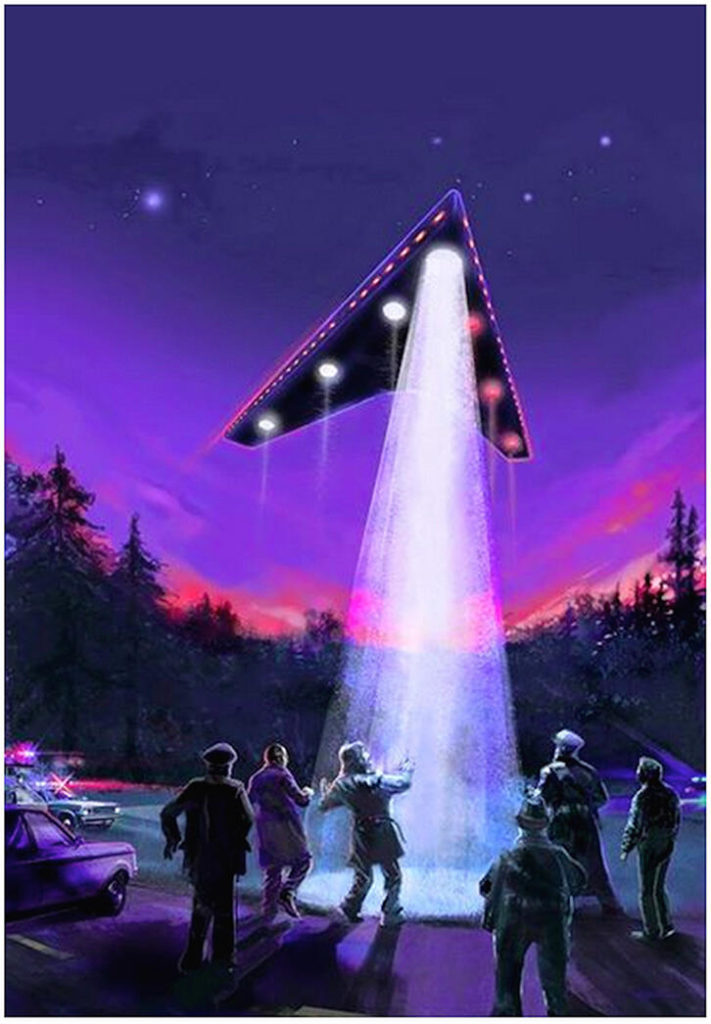
Prologue by Martin Willis: Charles Lear suggested that I repost this blog in honor of the loss of dear friend, and iconic UFO researcher, Lee Speigel last week. I titled it according to what Lee told me his response was to J. Allen Hynek’s request. Hynek asked him to travel to North Carolina to meet with police officers experiencing a repeating encounter with a triangle UFO. Lee’s response was; “You want me to go to North Carolina to check out a flying Dorito? Of course I will, I am in!”
by Charles Lear (re-post)
Illustration by Dale Hendrickson
It is often the case with UFO investigators that once they get to an area where a UFO has been reported, the UFO is long gone, and all they can do is interview witnesses. This is important as a means of creating a record of the case that can be referred to by future investigators and researchers. But, occasionally an investigator gets the chance to be a witness and actually observe what had been reported. This happened to investigator Lee Speigel who was looking into a series of sightings by as many as thirty police officers and 50 civilians in Lumberton, North Carolina in 1975. Spiegel submitted a report on the case to the director of the Center for UFO Studies and former Project Blue Book scientific consultant, J. Allen Hynek. The case file resides in the archives housed by David Marler in New Mexico.
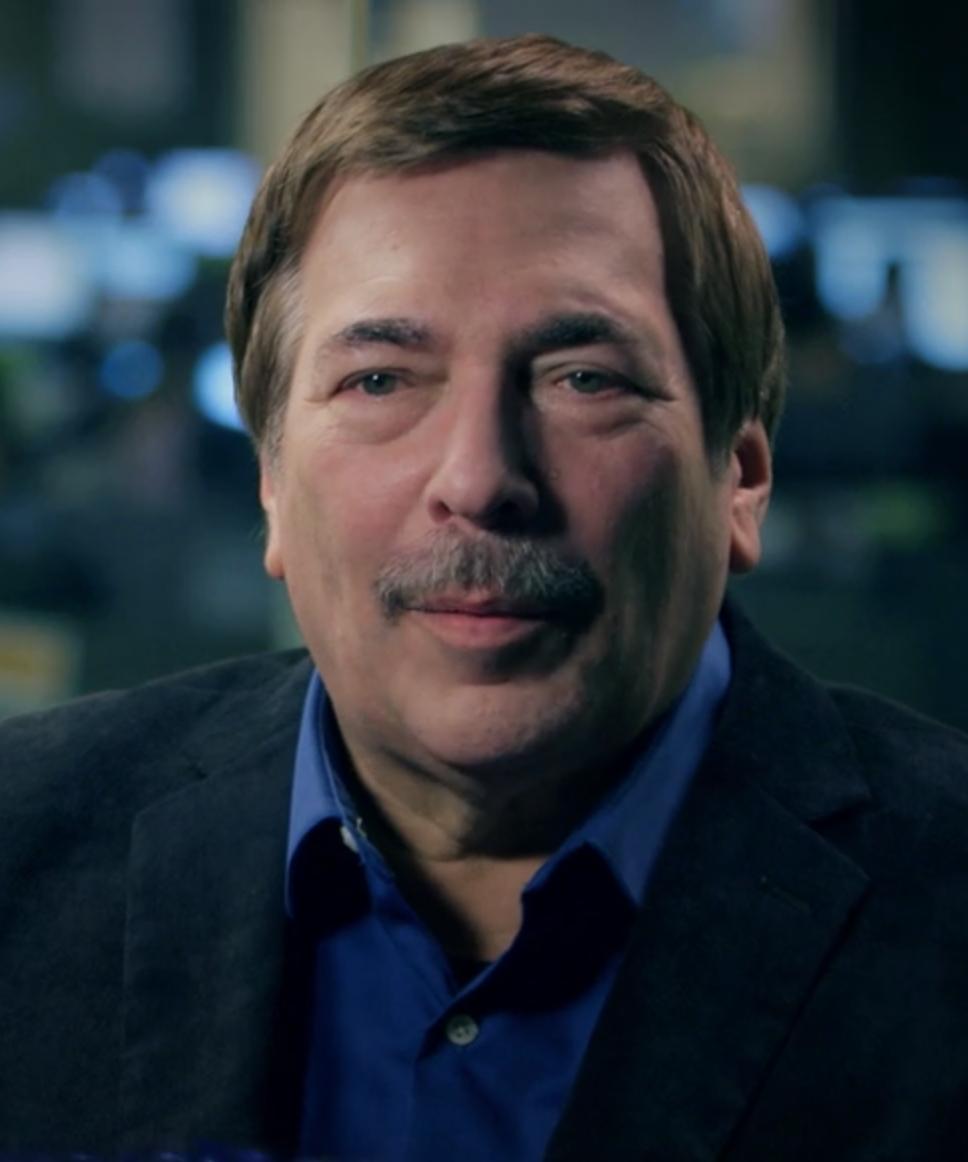
Lee Speigel
Along with Speigel’s report and contemporary newspaper clippings, there is also a series of paper slips in the file folder containing call information, presumably filled out at a CUFOS UFO call center. (If anyone can confirm this, please comment.) According to Speigel’s report, a violent thunderstorm in the area ended at 1:35 a.m. on April 3, 1975. A “call slip” in the case file has the information that at 1:45 a.m., Sheriff Ronn Thompson was monitoring the radio while working as the dispatcher at the Robeson County Sheriff’s Office in Lumberton when the first report of a strange object came in. It was seen by Robeson County Officer Phil Stanton and then by two officers from St. Paul. All three described the object as v-shaped with red, blue, and clear lights. A slip with 5:15 a.m., filled in for the time has the information that two Sampson County officers saw a similar object that put a spotlight on them as it moved off. One of the officers “clocked it” at 200 mph. It appears that there was a full fledge flap after 10:00 p.m. that night because a slip with 10:15-10:30 p.m. filled in for the time has information on the back that officers from four different police departments and 50 “citizens” reported seeing something.
It greaves me to announce, a wonderful friend, and one of the true icons of the UFO world, Lee Speigel passed away from a short-term illness on August 15.
Lee Speigel has presented credible, compelling stories about UFOs, Science and the Paranormal since 1975, when he produced and wrote a documentary record album, “UFOs: The Credibility Factor,” for CBS Inc. This marked the first time that a major recording company offered a UFO-related product to the public via a prime time TV infomercial. During production of his UFO album, Speigel and numerous law enforcement officers were involved in a historic UFO encounter in Lumberton, No. Carolina — the first well-documented, multiple witness, triangular-shaped UFO incident in America, highlighted in David Marler’s 2013 book, “Triangular UFOs: An Estimate of the Situation.” In 1978, Speigel’s second attempt at UFO disclosure took place on a world stage when he became the only person in history to produce a milestone presentation on UFOs at the United Nations. Under the sponsorship of Grenada, he brought together leading military and scientific experts (including astronomers J. Allen Hynek and Jacques Vallee), who urged world leaders to establish an international UFO study committee. Read more →
In the November 1978 Vol. 24, No. 3, Flying Saucer Review, there is an article (page 9 of pdf) by W. K. Allan headlined, “The Fort St. James Sightings,” that details Allan’s investigation of a case in British Columbia, Canada, along with the editor of the Canadian UFO Report, John Magor. Allan describes becoming interested in the case upon seeing a report (page 2 of pdf) headlined, “Possible Canadian Abduction,” in the March 1977 APRO Bulletin. According to Allan, he and Magor travelled, along with their wives, to Fort St. James to interview the witness, who identifies himself as Kirk Alore in the transcription of his story as told on tape. His account includes what seems to be a period of missing time, and this is likely what led the APRO investigator, Michael Sinclair, to consider that Alore might have been abducted. As they looked into the case further, they encountered some problems with Alore’s story but got corroboration from his parents. Read more →
In October 1970, the publishers of the British magazine Flying Saucer Review put out the first issue of FSR Case Histories. Editor Charles Bowen explains at the beginning of that issue that readers had “suggested that FSR should be a monthly journal.” According to Bowen, the FSR staff worked in their spare time to put out the magazine, and while putting it out monthly wasn’t possible, it was possible to put out a supplemental journal in between the main issues. Other reasons Bowen gives for putting out a supplement are: to provide space for cases that might otherwise go unrecorded, to translate stories from foreign journals, to encourage readers to become part-time investigators, and to have “a vehicle to carry important re-investigations of old cases.” The February 1974 FSR Case Histories, Supplement 18, was the final issue and Bowen and Assistant Editor Eileen Buckle explain in that issue that this is due to “lukewarm support and the shocking rise of costs and postage.” A case from that issue that caught this writer’s interest is an example of a case that was translated from a foreign magazine, in this instance, from the December 1972 issue of the Spanish magazine, Stendak.Read more →
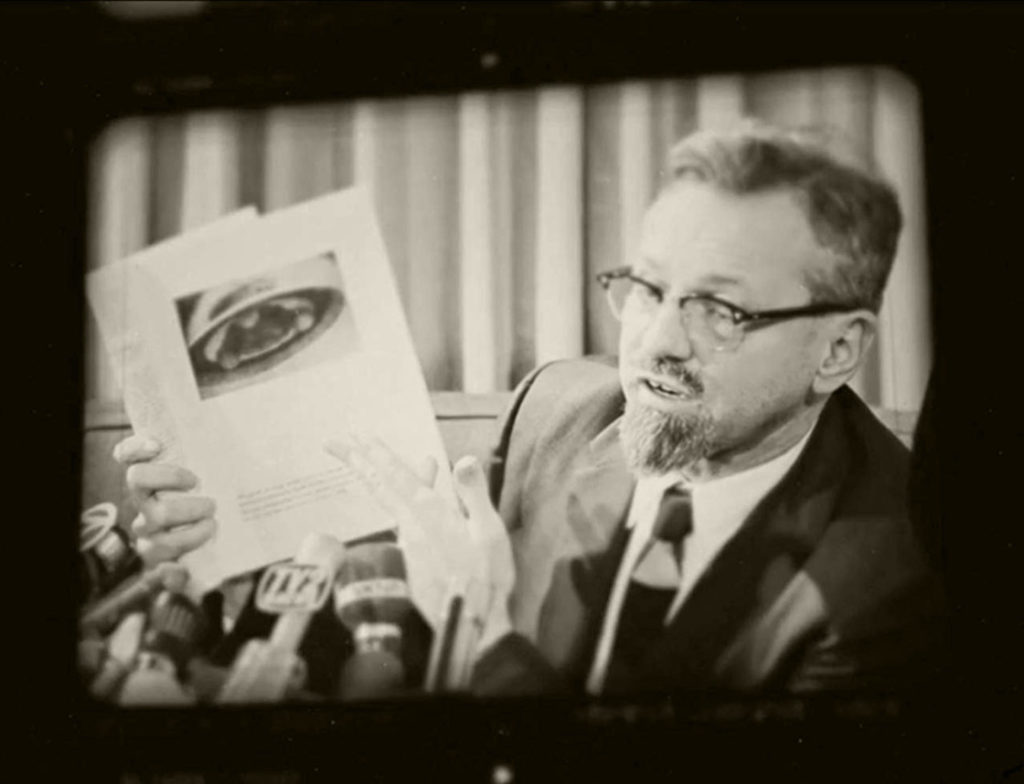
In 1966, there was a series of UFO sightings in Michigan that got the attention of the press and the Air Force. There was a great deal of excitement and Project Blue Book (the code name for the Air Force’s UFO study) scientific consultant, Dr. J. Allen Hynek, was sent in to help calm things down. At a press conference, he offered some possible explanations. Due to sightings over a marsh, he speculated that people there had seen ignited balls of swamp gas, some going out and others igniting, and that this created the illusion of movement. The swamp gas explanation made the headlines and outraged many Michigan residents, including Michigan Representative and House Minority Leader Gerald Ford. He sent a letter dated March 28, 1966, to the chairmen of the Science and Astronautics Committee and the Armed Services Committee, suggesting that one of them schedule “hearings on the subject of UFO’s”. He mentioned Hynek’s explanations in the letter and, in a press release that same day, it is noted that he described Hynek’s swamp gas explanation as “flippant.” Documents relating to Ford’s efforts and the resultant open hearing are housed at the Gerald R. Ford Presidential Library and Museum. Read more →
Just before Stanton Friedman got Roswell fever, one of the earliest saucer researchers, Leonard Stringfield, was hard at work researching and investigating reports that involved military recovery of crashed flying saucers and alien bodies. He presented the results of his work in the form of a paper titled “Retrievals of the Third Kind” at the July 28, 1978 MUFON Symposium. A three-part series by Stringfield based on that paper was published under the same title in Volume 25, numbers 4, 5, and 6, in the British magazine, Flying Saucer Review, starting with the July-August 1979 issue.
Stringfield begins his paper by presenting the “facts” that the “world public at large” and the scientific community do not believe in UFOs. He then expresses the frustration of those in the UFO community who have “no doubt that a real interloper from somewhere exists.” Read more →
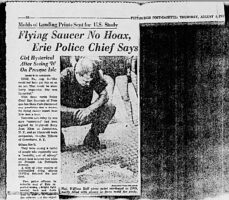
In 1966, John Keel, longtime fortean and author of several books on UFOs, including his most famous book published in 1975, The Mothman Prophecies, was just beginning to focus on the UFO phenomenon. At this time in his life, he was writing articles for the British publication, Flying Saucer Review and sharing his research with Jim and Coral Lorenzen of the Aerial Phenomena Research Organization. He wrote an article (page 6 of pdf) about one case he looked into that year, headlined “New Landing and Creature Reports” that was published in the November-December 1966 Flying Saucer Review. The article’s main focus is on one incident that took place on July 31, 1966. Keel shared the details of the case with APRO, and they published their take on it (page 3 of pdf) headlined, “The Presque Isle Landing,” in the July-August 1966 APRO Bulletin.
 In 1975, after the Travis Walton Incident on November 5, because of the attention it received in the press and among the UFO community, there were two flaps in Florida that fell through the cracks and have all but been forgotten. The first one was in the area of Miami- Dade County that started on the same day as the Walton incident, and the second was a little over a month later around 50 miles south of Jacksonville in the small farming community of Hastings. The Miami-Dade reports received a good amount of local press, as did the Hastings reports. The Hastings reports were looked into by the Aerial Phenomena Research Organization, and there is an article on the case in the January 1976 APRO Bulletin.
 In part 1 of this
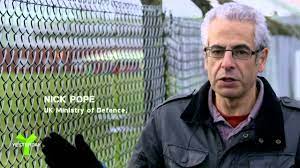 On March 30, and 31, 1993, reports of a UFO over Southern England came in to the Ministry of Defense. Nick Pope was manning the “UFO desk” at the time, and he described that “the phones were ringing off the hook.” He posted a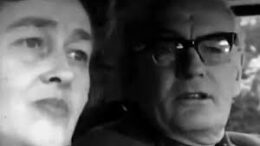

 It greaves me to announce, a wonderful friend, and one of the true icons of the UFO world, Lee Speigel passed away from a short-term illness on August 15.
 by Charles Lear, author of
  In October 1970, the publishers of the British magazine Flying Saucer Review put out the first
  In 1966, there was a series of UFO sightings in Michigan that got the attention of the press and the Air Force. There was a great deal of excitement and Project Blue Book (the code name for the Air Force’s UFO study) scientific consultant, Dr. J. Allen Hynek, was sent in to help calm things down. At a press conference, he offered some possible explanations. Due to sightings over a marsh, he speculated that people there had seen ignited balls of swamp gas, some going out and others igniting, and that this created the illusion of movement. The swamp gas explanation made the headlines and outraged many Michigan residents, including Michigan Representative and House Minority Leader Gerald Ford. He sent a letter dated March 28, 1966, to the chairmen of the Science and Astronautics Committee and the Armed Services Committee, suggesting that one of them schedule “hearings on the subject of UFO’s”. He mentioned Hynek’s explanations in the letter and, in a press release that same day, it is noted that he described Hynek’s swamp gas explanation as “flippant.” Documents relating to Ford’s efforts and the resultant open hearing are housed at the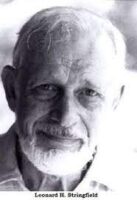
 In 1966, John Keel, longtime fortean and author of several books on UFOs, including his most famous book published in 1975, The Mothman Prophecies, was just beginning to focus on the UFO phenomenon. At this time in his life, he was writing articles for the British publication, Flying Saucer Review and sharing his research with Jim and Coral Lorenzen of the Aerial Phenomena Research Organization. He wrote an