by UFO History Buff & Author, Charles Lear
Ray Stanford, longtime friend of the show and longtime fixture in the UFO/flying saucer scene, passed away on June 14. In the early days of Podcast UFO, he was a regular guest and caller, and was always enthusiastic and passionate in any discussion he was engaged in. He reached out to me when I was just starting out as a blogger with both praise and caution, and in one instance, chastised me for using a picture of a saucer nest as an illustration for one reported in Westall, Australia, for which there was no picture.
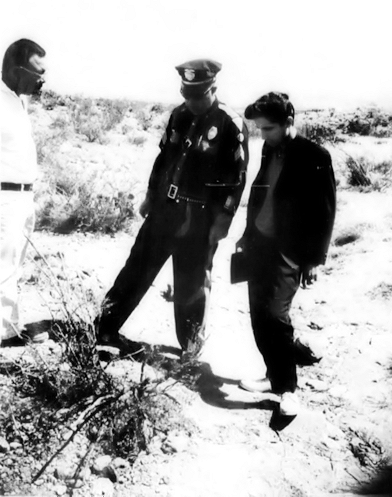
Ray was born on June 21, 1938, and was a colorful and controversial figure on the scene, having started out as a contactee, along with his brother Rex. They cowrote a book together titled Look Up, which was published in 1958 when Ray was just 19. He claimed up until 1980 to be in communication with various entities via trance channeling. Books he’s written on his own have subjects ranging from aura reading (What Your Aura Tells Me, 1978) to the Socorro Incident (A Socorro “Saucer” in a Pentagon Pantry, 1976) involving the report of a landed craft and two humanoids by Socorro Police Sgt. Lonnie Zamora. This is what I wrote in a blog way back when about Ray’s involvement in that case:
A researcher and NICAP member, Ray Stanford, had arrived in Socorro after Hynek and had tried in vain to make contact with Zamora. He went to the police station on Wednesday morning and was told by the dispatcher, Mike Martinez, that Zamora was in the southern section of town. Stanford, convinced Zamora was at the landing site, asked Martinez to make a call on the radio. Chavez answered and said they wanted privacy while Hynek was investigating, but Hynek interrupted and invited Stanford to come out as long as he came alone. Read more
 In last week’s
  While 1973 was dubbed “The Year of the Humanoids,” by David Webb in his
  It has been determined by many researchers in the scientific community that during hypnosis, false memories are very likely to be generated, and distinguishing them from real memories is difficult, if not impossible without some means of confirmation. This is, for instance, the conclusion of a
 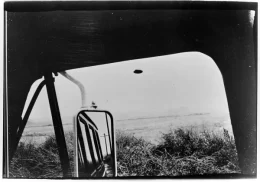 Pictures of UFOs have played a large part throughout the history of investigations into the mystery. The first organization to present them on a regular basis in its publication was the Aerial Phenomena Research Organization, which, in 1956, upgraded from using mimeograph and started printing the APRO Bulletin, enabling the reproduction of photos with a reasonable degree of quality. While some cases, such as the one involving a series of photos taken by
 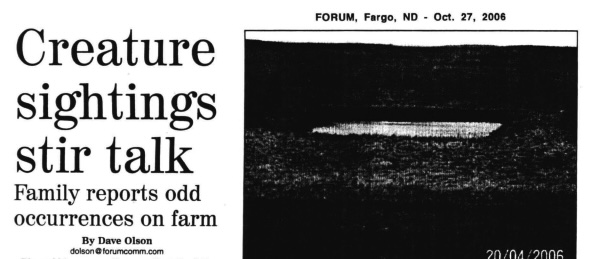 In 2006, a report of strange creatures being encountered on a farm in North Dakota was looked into by a MUFON investigator who considered the witness to be credible. It was first covered on local radio and then picked up by the Fargo, North Dakota, Forum. The
 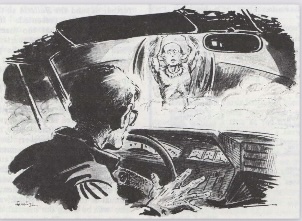 The 1970s saw a shift in what sorts of UFO reports newspapers would print and what UFO researchers would consider worthy of investigation. John Keel wrote an article headlined “Never Mind the Saucer! Did You See the Guys Who Were Driving?” that was published in the February 1967 issue of True magazine. According to Brent Raynes on page 4 of his
 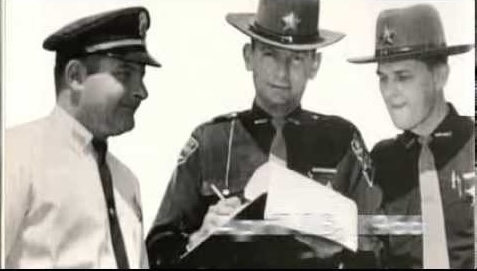 Many people who have more than a passing interest in the UFO subject might be aware that the scene in Steven Spielberg’s 1977 movie, Close Encounters of the Third Kind, where several UFOs go speeding by the main character’s stalled car, followed by police cars in hot pursuit, was based on a real case. This was the 1966
  In the January 28, 1974, Jacksonville Journal out of Florida, there is an
 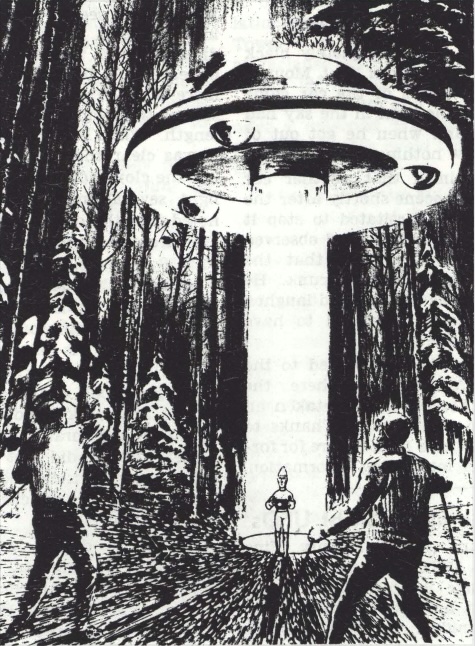 The first two years of the 1970s seems to have been a slow period for UFO reports in the U.S. if the 1970 and 1971 UFO Chronology hosted on the National Investigations Committee on Aerial Phenomena website is any indication, with the
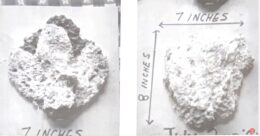 In 1981, there was a highly strange report out of Ohio that involved UFOs, Bigfoot-type creatures, and “black forms,” all of which reportedly besieged a family in Ohio during the months of June and July. Reports of Bigfoot-type creatures and UFOs being seen in the same area at or near the same time are not all that unusual, particularly in the area around Chestnut Ridge in next-door Pennsylvania, focused on by researcher Stan Gordon. However, questions remain about the Ohio case, and unfortunately, the main investigator passed away in 2022. Also, the main witness has never been identified, so following up on the story is difficult.
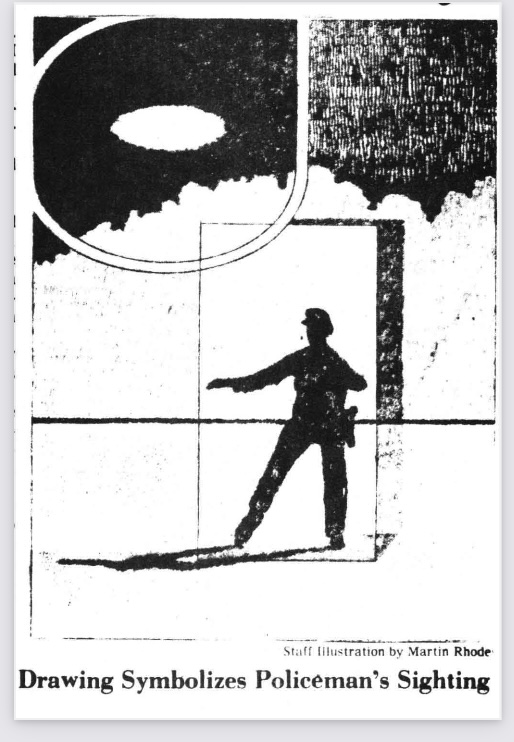 On the morning of April 17, 1966, two sheriff deputies, Dale Spaur and Wilbur “Barney” Neff, chased a UFO from Portage County, Ohio, for 86 miles all the way into Pennsylvania. They chased the object at speeds ranging from 80 mph to 105 mph. According to them, there were times when the object actually stopped and waited for them to catch up to it. Other law enforcement officers witnessed the object after being alerted by radio communications between the deputies and their dispatcher. According to Project Blue Book Director Hector Quintanilla, the officers chased the planet Venus. Spaur stuck to the story that they had chased a physical object as others went silent, and he ended up losing his job and his family. A case that is remarkably similar is reported to have occurred in June of that year, and the officer who reported it also seems to have suffered for speaking out, but to a lesser extent than Spaur.
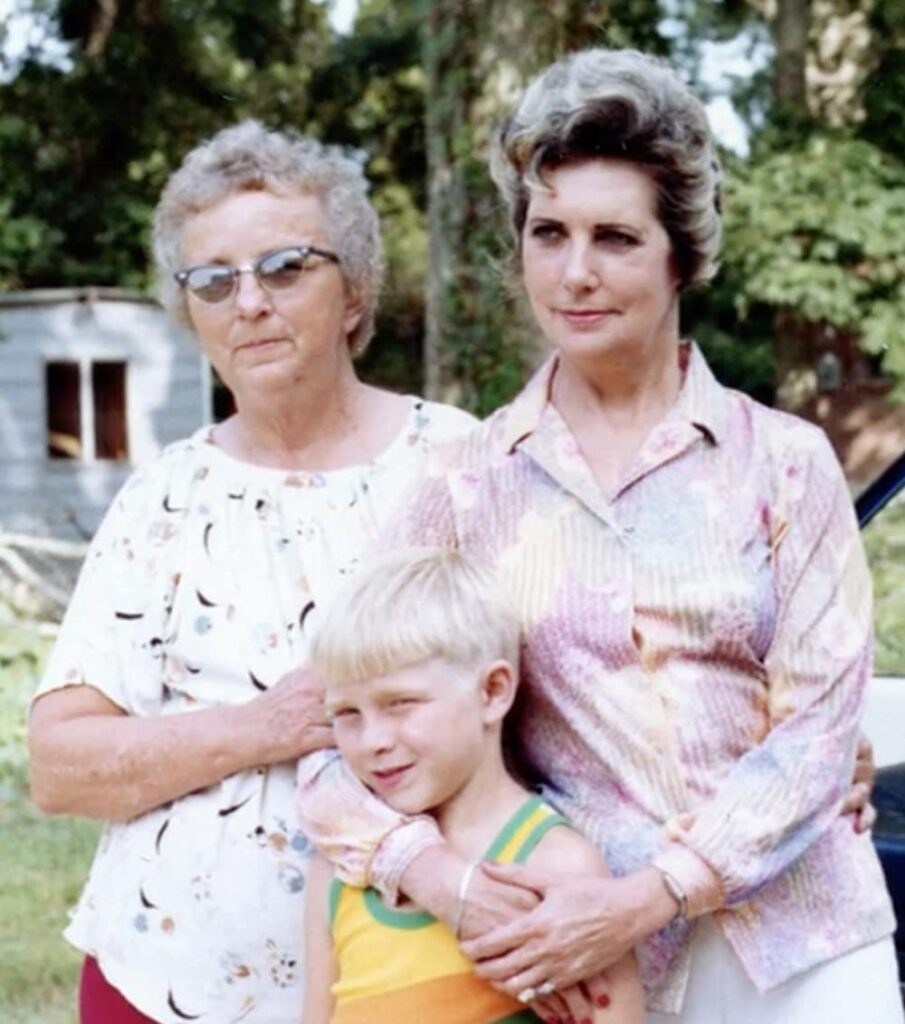 In 1980, The Roswell Incident by Charles Berlitz and William Moore was published that told the sensationalized story of a forgotten 1947 report by the U.S. Army Air Forces that they recovered a “flying disk” on a ranch in New Mexico, north of Roswell Army Air Field. This was also the year of the Rendlesham Forest Incident, which is sometimes referred to as “Britain’s Roswell” (December 26-28), and the Cash-Landrum Incident (December 29). The Cash-Landrum Incident is significant because the witnesses, Betty Cash, Vickie Landrum, and her grandson, Colby Landrum, showed symptoms of what seemed like radiation poisoning after they reportedly saw a large craft, seemingly in distress, being escorted by as many as 23 Chinook helicopters. While all of the above cases continue to be discussed and continue to fascinate, a case that got a lot of attention that same year has been largely forgotten. It is interesting to note that it also involved what seemed to be the effects of radiation on the witnesses prior to the Cash-Landrum incident.