Author: admin
Did Einstein Inspect a Crashed UFO and Aliens From Roswell?
by Charles Lear, author of “The Flying Saucer Investigators.”
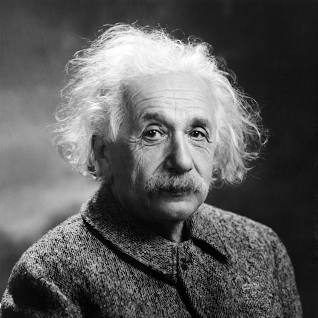
The announcement on July 8, 1947 by the intelligence office at Roswell Army Air Field that they had recovered a flying saucer from a ranch in the area quickly faded from the public consciousness after it was announced the next day that what was found was actually a weather balloon. It wasn’t until 1978 that the story was resurrected after Stanton Friedman stumbled upon it. After that, it spawned a cottage industry that many people profited from with books, speaking engagements, television appearances, videos and assorted merchandise. The original story of a flying saucer being recovered grew until there were two crash sites, recovered alien bodies, and even a living alien. Much of this is now doubtful as the credibility of the people who made those sorts of claims has been called into question, as is reported in detail on the website, roswellfiles.com. The thing about the Roswell case is, once one piece of testimony or evidence is put into question or totally debunked, someone comes along with “new evidence” that is promised to be “the smoking gun.” Read more
Show Notes: Ralph Blumenthal, The UAP Whistleblower Article & Aftermath
Simulcast on YouTube, Facebook & Twitch – Friday, June 09, @ 8:00 PM EDT (-4GMT)
Please help support the show: https://www.patreon.com/MartinWillisPodcastUFO
Veteran journalist, Ralph Blumenthal on co-authoring the bombshell article: INTELLIGENCE OFFICIALS SAY U.S. HAS RETRIEVED CRAFT OF NON-HUMAN ORIGIN published on The Debrief a few days ago. He discusses what he and co-author Leslie Kean went through to verify David Grusch’s claim of who he was, and the nature of the whistleblower complaint he as filed. He addresses some of the issues that have been put out there since the release, and what impact he believes this article could make.
BIO: Ralph Blumenthal, a Distinguished Lecturer at Baruch College of the City University of New York, and summer journalism instructor at Phillips Exeter Academy, was an award-winning reporter for The New York Times from 1964 to 2009, and has written seven books on organized crime and cultural history. He led the Times metro team that won the Pulitzer Prize for breaking news coverage of the 1993 truck-bombing of the World Trade Center. In 2001, Blumenthal was named a Fellow of the John Simon Guggenheim Memorial Foundation to research the progressive career and penal reforms of Warden Lewis E. Lawes, “the man who made Sing Sing sing.” The book on Warden Lawes, Miracle at Sing Sing, was published by St. Martin’s in June, 2004. Read more
Special Edition Blog: Las Vegas Family Claims to See Aliens After Several Report Something Falling From Sky
by Charles Lear, author of “The Flying Saucer Investigators.”
NOTE: At this time, we are not certain about whether this is a hoax or not.
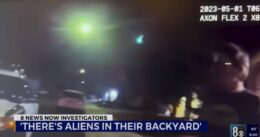 While UFO news involving the GOVERNMENT has drowned out civilian UFO reports, a case out of Las Vegas, Nevada, managed to get through that’s got some credibility in the form of a police call log obtained by KLAS 8 News Now investigators.
According to the article by David Charms posted June 7, 2023, headlined “Las Vegas Family Claims to See Aliens After Several Report Something Falling From Sky,” the Las Vegas family who called 911 with their claim weren’t the only ones to see the UFO. On April 30, 2023, at around 11:50 p.m., a Las Vegas police officer’s body cam caught something streaking low through the sky, and there was a report from the American Meteor Society that “several people” in eastern California, Utah, and Nevada reported seeing a flash.
Show 560 Notes: Tony Harris
Simulcast on KGRA Radio, YouTube, Facebook & Twitch – Tuesday, June 06, @ 7:00 PM EDT (-4GMT)
Trailer: https://www.youtube.com/watch?v=ClzjpA8NBfY
BIO: Tony Harris is an Emmy Award-winning journalist and filmmaker. He is currently the host of the HISTORY Channel’s The Proof is Out There, a non-fiction series that takes an in-depth look at some of the most incredible and thought-provoking videos of unexplained phenomena and mysterious must-see moments of all time. For six years, Harris anchored CNN Newsroom w/Tony Harris, where he earned George Foster Peabody Awards for coverage of the British petroleum oil spill and Hurricane Katrina. He also earned an Alfred I. duPont Award for coverage of the Southeast Asia tsunami. Tony is president of Merge Media Group LLC, which looks to produce and co-produce original factual and fictional content across all platforms. In a diverse broadcast career, Tony has served as an international news anchor for Al Jazeera English in Doha, Qatar during the 2011 Arab Spring and as a New York-based correspondent for Entertainment Tonight. His first podcast, Monster: DC Sniper for iHeart Media and Tenderfoot TV is still a top-rated, true crime podcast, with more than 12 million downloads after reaching number three in all of podcasting early in 2020.
UFO Sightings and Contact as Reported by Dave Davies
by Charles Lear, author of “The Flying Saucer Investigators.”

Rock musicians, like people from all walks of life, have reported encounters with UFOs. Famous examples include Jimi Hendrix, his former roadie and Motörhead frontman Lemmy Kilmister, John Lennon, and Shaun Ryder of the Happy Mondays. However, unlike people with more average day jobs, rock musicians tend to be treated less seriously in the press, often due to their sometimes publicly acknowledged drug use. A good example is Dave Davies of The Kinks, who reported an experience stranger than most, but students of this subject should recognize that some of what he reported has been reported by others. Read more
Show #559 Notes: Ron James
Simulcast on KGRA Radio, YouTube, Facebook & Twitch – Tuesday, May 30, @ 7:00 PM EDT (-4GMT)
Ron’s site – https://mufontelevision.com/atinsider/
Where to watch the film – https://geni.us/AccidentalTruth
BIO: Ron James is is a filmmaker, on-camera personality, writer, editor, researcher, content creator and entrepreneur. He is also the Director of Media Relations for MUFON. James is the co-founder of MUFON Television, an online TV channel boasting the world’s largest collection of commercial-free UAP related material.
He has created 7 feature length documentaries and dozens of original independent series episodes. His newest film “Accidental Truth” was released in March by 1091 Distribution.
James has also been involved at the highest levels of production for musical acts such as Guns & Roses, The Smashing Pumpkins, The Beach Boys, Earth Wind and Fire, Kendrick Lamar, and many more.
He has won 19 national awards, including 4 EBE awards, The Telly Award and the Aegis Award for Excellence in Broadcasting four times. He currently makes his own shows including “Bigger Questions”, “Spacetime”, “MUFON Presents” and more. He maintains his own independent production studio in Los Angeles.
The Snoopy II Helicopter UFO Encounter
by Charles Lear, author of “The Flying Saucer Investigators.”
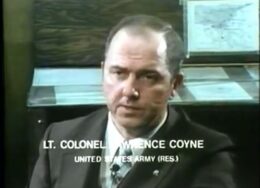 When it comes to helicopter UFO encounters, many people interested in this subject are familiar with what has become known as “The Coyne Incident,” named after the Army Reserve helicopter pilot, Captain Lawrence Coyne. There was another helicopter incident four years later that is lesser known, but investigators at the time were quite interested in it.
According to Coyne in the UPI story out of Cleveland, he and his crew were flying from Columbus to Cleveland, Ohio, at 11:00 p.m. on October 18, 1973, when the crew chief, Robert Yanacsek saw a red light approaching them. Coyne described it as, “shaped like an airfoil or a streamlined fat cigar.” He said it had a red light on the front, a dome in the center, and a green light on the rear. He said: “I’m a military commander. I don’t believe in UFOs, little green spacemen, and all that stuff. But I had to file an official report in detail to the Army on this thing.” Read more
Show #558 Notes: Chrissy Newton
Simulcast on KGRA Radio, YouTube, Facebook & Twitch – Tuesday, May 23, @ 7:00 PM EDT (-4GMT)
CHRISSY NEWTON: With an eye on the cosmos, the world beyond our own has always been a fascination for Chrissy. From UFOs, astronomy to ancient civilizations – her curiosity is as limitless as the universe. By day she’s an owner of VOCAB Communications and an award-winning PR professional with a knack for getting people talking and by night she co-hosts a podcast called Alt.Pop.Repeat, where she “syncs” counterculture & subculture with pop culture trends and movements. The show can be found on all major streaming platforms or on The Big Comedy Network in Los Angeles.
When she’s not co-hosting her own podcast, you can find Chrissy producing and hosting a tech, science, defense and UFO themed show called “Rebelliously Curious with Chrissy Newton” on The Debrief YouTube Channel and website, along with being a Partner and Director of Media & PR. If two podcasts were not enough, Chrissy co-host occasionally on the number #1 UFO podcasts on Apple called “Somewhere in the Skies” with CW Network star Ryan Sprague.
James W. Moseley Considers a UFO Crash Story in 1955
by Charles Lear, author of “The Flying Saucer Investigators.”
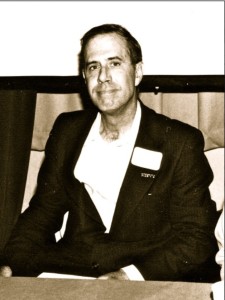
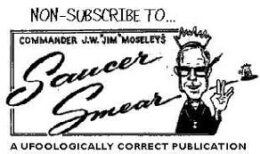 James W. Moseley was a part of the UFO scene from the days of the first private investigators in the early 1950s up until his death in 2012. He ran the longest running saucer group, the Saucer and Unexplained Celestial Events Research Society or S.A.U.C.E.R.S. (he and the group picked the acronym before they figured out what it could stand for) and steadily published a newsletter, known for most of its existence as Saucer Smear. Moseley has been called the Court Jester of UFOlogy due to his habit of poking fun at those who took themselves and the subject too seriously, and was involved in some hoaxes/pranks with his friend Gray Barker that became infamous. He wrote a book with Karl Pflock about his exploits in saucerdom that was published in 2002 titled Shockingly Close to the Truth: Confessions of a Grave-Robbing UFOlogist. In spite of his less-than-serious nature, he did do some serious investigation in his early days, and in one instance, looked into a saucer crash story and wrote an article about it that was published in the January 1955 issue of Gray Barker’s magazine, The Saucerian. Read more
Show #557 Notes: Gari Jones
Simulcast on KGRA Radio, YouTube, Facebook & Twitch – Tuesday, May 16, @ 7:00 PM EDT (-4GMT)
Two UFO Occupant Cases From France
by Charles Lear, author of “The Flying Saucer Investigators.”
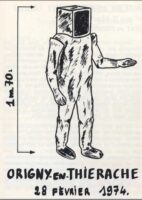 There are two cases out of France, around the time of the 1973 United States humanoid wave, that are remarkably similar in some aspects and occurred within a few months of each other. The first case, from 1973, shows up in the second edition of the Center for UFO Studies publication by David Webb, titled 1973—The Year of the Humanoids (page 16 of the pdf), and the second case, from 1974, shows up in the 1976 book by Jim and Coral Lorenzen, titled UFO Occupants (page 61 of the pdf.) Read more
Show #556 Notes: Ben Moss & Tony Angiola
showSimulcast on KGRA Radio, YouTube, Facebook & Twitch – Tuesday, May 09, @ 7:00 PM EDT (-4GMT)

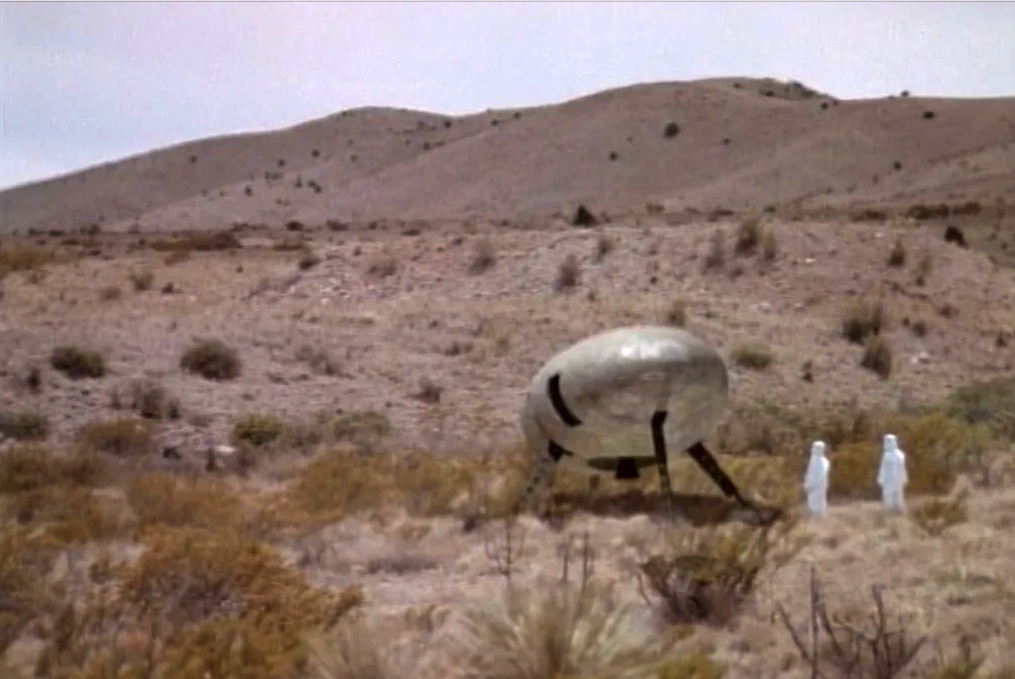
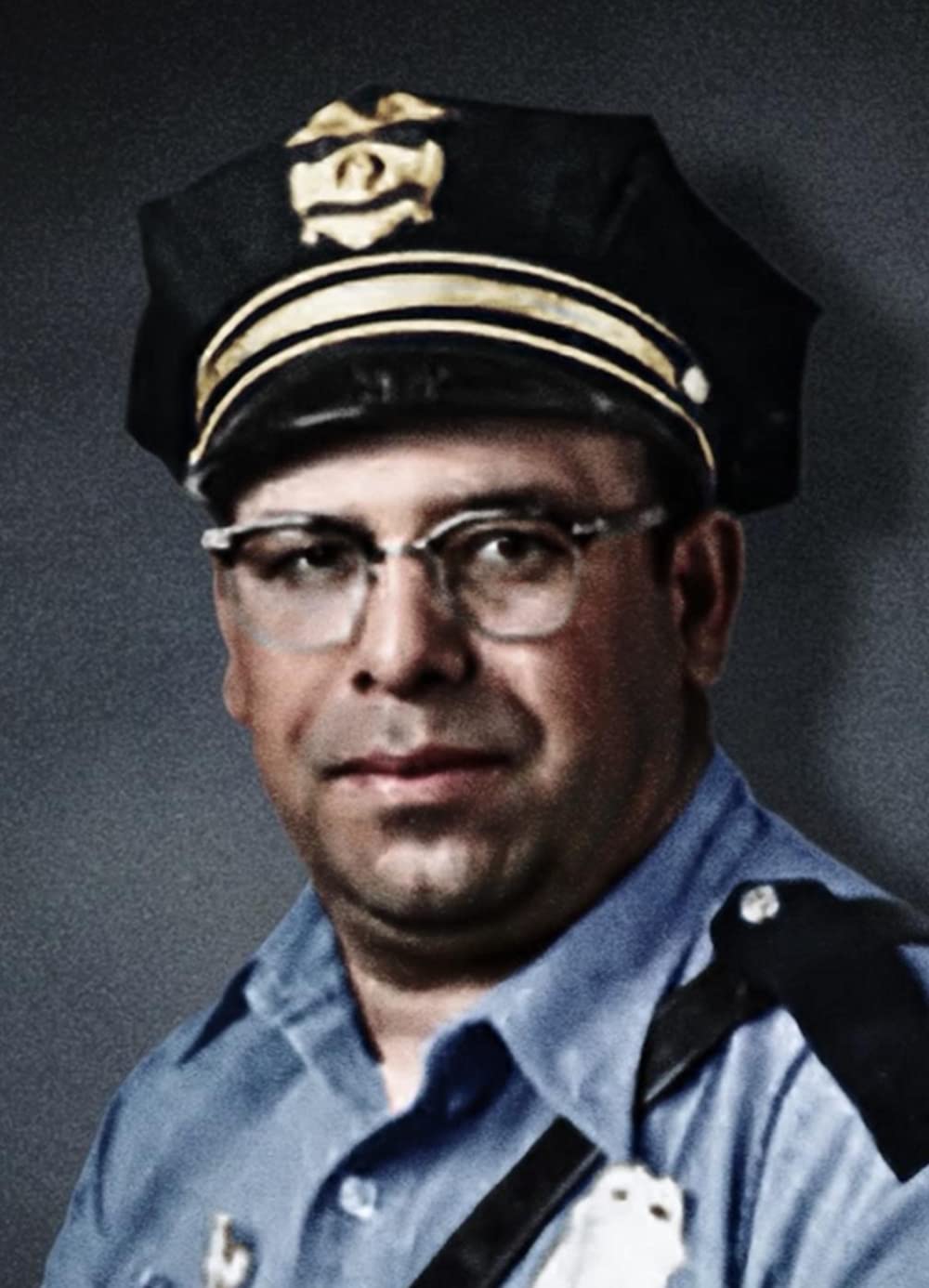
https://www.amazon.com/SOCORRO-Witness-Policeman-Lonnie-Zamora-ebook/dp/B08S5JLXRG
BIO: Ben Moss is a native of Richmond, Virginia. He is the son of the late Dr. John Langdon Moss and Barbara Moss, who was a Registered Nurse.
Ben is an Independent UFO Researcher and Investigator. Previously he was a Field Investigator for MUFON, and later became the Chief Field Investigator for MUFON in the state of Virginia. He was also a Senior Investigator for UFORA.
Ben studied at Ferrum College, and the University of Richmond, with a major in Psychology. He continues to study many of the sciences including Physics, History, and Religion and others in order to try and understand one of the world’s most perplexing mystery, the UFO Enigma.
Ben has appeared on several UFO documentaries and shows, including Hangar 1 on the History Channel, American Mysteries and UFO Witness on The Travel Channel. Ben and Tony Angiola can be reached through The UFO Guys on Facebook. https://www.facebook.com/groups/13999…
BIO: Tony Angiola began UFO research in the early 90’s. He served as an investigator and Assistant State Director for MUFON VA. In 2019 Tony worked with Ben Moss star ng their own research under T.U.F.O.G (The Ufo Guys) along with Norm Gagnon and a host of friends in the field that share the same passion for the field of Ufology and hard work. Tony and Ben spent 4 years of research into the Socorro NM case of Lonnie Zamora and 2 visits to the site they uncovered additional information and witness testimony. Working closely with Ray Stanford they are ready to reveal the truth about what landed on April 24, 1964.
As a Computer Network Engineer for over 30 years, Tony continues to work in this field. He is an advanced scuba diver and has a great interest in preserving our oceans as well as gaining a be er understanding USO’s.. He is also a public speaker and guest expert on The History Channel “Hangar 1” and Syfy network “Nasa’s Unexplained Files.”
Truckers Report Attack by Bird-like Creatures From a UFO
by Charles Lear, author of “The Flying Saucer Investigators.”
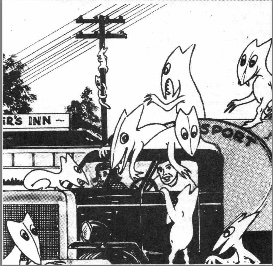 1984 was a serious year in UFOlogy. Researchers were taking advantage of a more efficient and accessible process for putting in FOIA requests and finding documents showing that agencies such as the FBI and CIA did have some involvement with UFOs despite statements to the contrary. The Hudson Valley wave was in full swing, and the British UFO Research Association got ahold of the tape recording made by Col. Charles Halt on one of the nights when UFOs were seen in Rendlesham Forest. With so much evidence that there was something to the mystery and official interest in it coming to light, the reporting on the UFO subject took a turn away from ridicule, and the press started being serious about UFOs as well. In the midst of this, there was a case that many researchers might find worthy of ridicule, and it’s probable that researchers of the day did as well because it came and went and remains obscure, but the reporting on it was straight forward and restrained. Read more
UFOs Over the Indian Point Nuclear Plant
 by Charles Lear, author of “The Flying Saucer Investigators.”
Beginning on New Year’s Eve, 1982, there was a series of sightings throughout the Hudson River Valley north of New York City by hundreds of people willing to go on the record. They reported seeing boomerang-shaped craft the size of 1, 2, and 3 football fields, that moved slowly, hovered, and turned on an axis. This is according to the first comprehensive book on the sightings, Night Siege, which was co-authored by J. Allen Hynek, Philip J. Imbrogno, and Bob Pratt, and published in 1987. One of the standout incidents in the book, covered in Chapter Eleven titled, “Close Encounter at Indian Point,” is a sighting by what are said by the authors to be security guards (they are all un-named) over the nuclear power plant on Indian Point, on the shore of the Hudson River in Buchanan, NY, just south of Peekskill, NY. Read more