by UFO History Buff & Author, Charles Lear
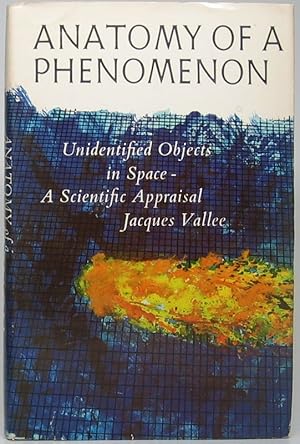 By the time Project Blue Book was terminated, most UFO researchers, especially in the United States, were of the opinion that UFOs were nuts and bolts craft piloted by flesh and blood creatures from other planets. This is what has become known as the extraterrestrial hypothesis or ETH. At around the same time, as the 1960s gave way to the 1970s, Jacques Vallée had one book published and John Keel had two published, that challenged the ETH, and caused many in the UFO community to consider other options.
Vallée had his first UFO book, Anatomy of a Phenomenon, published in 1965 and his second, Challenge to Science, co-written with his wife, Janine, published in 1966. Both books make the argument that the UFO mystery is worthy of scientific study and present the elements of the problem in an organized manner in an effort to facilitate such study. In what would become characteristic in Vallée’s books, he presents accounts going back to antiquity, and he presents a lot of them. The books are lengthy and dry and hold little appeal for the average UFO enthusiast looking for sensational accounts of sightings and encounters.
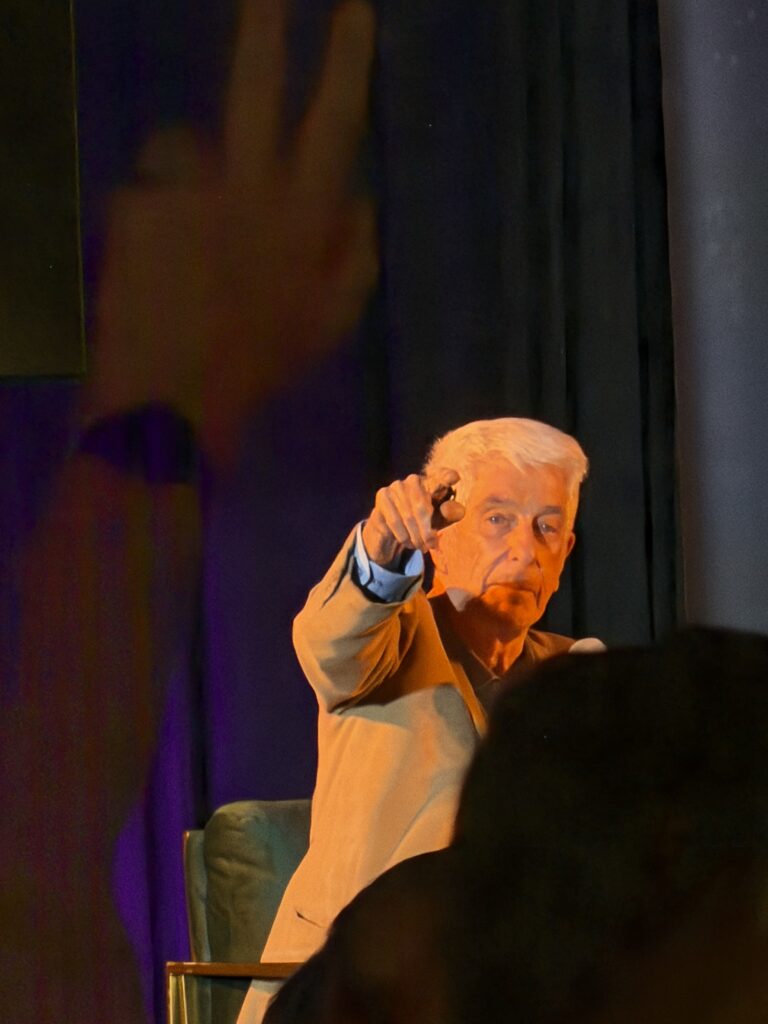
On October 1, 1969 (according to the Kirkus review), Vallée had his book Passport to Magonia published, and it was quite a departure from the first two books. His central thesis in the book is that there is a link between UFOs and tales told in religious texts, legends of old, fairy lore, and folk lore. The full title of the first edition is Passport to Magonia: From Folklore to Flying Saucers.
Vallée doesn’t dismiss the UFO mystery as a modern myth, but rather, suggests that it might stem from somethings or someones interacting with humanity that have been doing so since antiquity. He also suggests there might be a trickster element involved, saying in the section at the end of the main body of the book titled “Conjectures” (Fact 4), “The behavior of the entities is consistently absurd…” and “their assertions have been systematically misleading.”
After the main body, in the appendix, Vallée presents “A Century of UFO Landings (1868-1968.) In his introduction he says “The study of UFOs is more than a descriptive analysis of folklore, but it has not developed into a scientific field.” He argues that what is lacking is “a proper definition of the phenomenon to be studied.”
As for the book’s reception, Vallée wrote in the foreword to the 2014 edition that the hardcover edition only sold 5000 copies. However, he explains that while it “was ignored or rejected in the U.S., it was well received in Europe, where audiences have a greater appreciation of history and the importance of folklore in defining a culture.”
Just after Passport was published, Keel’s book, Strange Creatures From Time and Space, came out on January 1, 1970, and it is definitely the sort of book that would appeal to the average UFO enthusiast as well as lovers of what we now call cryptids. It has a fantastic cover by Frank Frazetta and is chock full cases involving what the title promises. However, what sets it apart from the usual UFO books of that era is Keel’s commentary. It was here that Keel introduced his idea that there were “widow” areas where UFOs and strange creatures appeared in the midst of other oddities repeatedly throughout history.
Like Vallée, Keel was considering alternatives to the ETH, but his thinking was much more evolved, most likely due to his field investigation work that began 1966. It was mostly centered around the events in Point Pleasant, West Virginia, involving UFO encounters and the cryptid known as the Mothman.
Keel had another book, Operation Trojan Horse, in which he took a more scholarly approach to presenting his ideas, published on the same date. An ad for both books in the Vol. 16, No. 3, May/June 1970 Flying Saucer Review explains that Keel’s original manuscript covering his UFO study was so big that it was “divided into two 90,000-word books.”
Strange Creatures is described as “a casebook recounting hundreds of bizarre incidents involving unknown animals and humanoids, demonstrating the surprising correlations hidden in the testimonial evidence.” As for Keel’s commentary, “The seeming hostility of the central phenomenon is defined and graphically explained.”
Operation Trojan Horse is described as “a hardcover containing hundreds of carefully documented cases, and revealing for the first time the author’s personal contact experiences in 1967 which turned him from a ‘believer’ into a sceptic.” As for its impact on the UFO community, “Advance reviewers have declared: ‘It is certain to become the greatest classic on the subject… It will undoubtedly alter the course of all future UFO research.’”
Keel’s UFO study actually started off as an assignment. In his 2002 interview with Art Bell, Keel says he was on assignment for Playboy magazine to “get to the bottom of the UFO mystery.” According to Doug Skinner in his February 11, 2015, post on johnkeel.com, Keel’s article was to be called Operation Trojan Horse, but it was rejected. He explains: “John decided to write the definitive article, and it grew longer and longer, as the correspondence grew more acrimonious. Eventually, the piece was rejected.” Playboy, instead, went with Dr. J. Allen Hynek who wrote an article headlined, “The UFO Gap,” that was published in the December 1967 issue.
While Passport to Magonia and Operation Trojan Horse have become classics, are still in print, and continue to influence paranormal enthusiasts to this day, the struggle for serious scientific study of the UFO mystery wasn’t going to be helped along at that point by the ideas in those books. As can be seen in their publications, groups such as APRO in the U.S., and the British UFO Research Association in Europe, stuck to the ETH.
However, FSR was open to the ideas of Vallée and Keel, as the publishers had formed very similar ideas themselves. Started in 1954, FSR was published in England, and both Vallée and Keel were frequent contributors. They maintained an audience and a presence and the idea that UFOs and their associated occupants might be from a realm other that outer space continues to be entertained by researcher/investigators to this day.
Podcast: Play in new window | Download