by Charles Lear, author of “The Flying Saucer Investigators.”
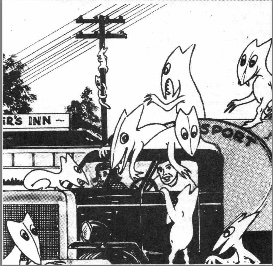 1984 was a serious year in UFOlogy. Researchers were taking advantage of a more efficient and accessible process for putting in FOIA requests and finding documents showing that agencies such as the FBI and CIA did have some involvement with UFOs despite statements to the contrary. The Hudson Valley wave was in full swing, and the British UFO Research Association got ahold of the tape recording made by Col. Charles Halt on one of the nights when UFOs were seen in Rendlesham Forest. With so much evidence that there was something to the mystery and official interest in it coming to light, the reporting on the UFO subject took a turn away from ridicule, and the press started being serious about UFOs as well. In the midst of this, there was a case that many researchers might find worthy of ridicule, and it’s probable that researchers of the day did as well because it came and went and remains obscure, but the reporting on it was straight forward and restrained. Read more
 by Charles Lear, author of
  In last week’s blog, we looked at some correspondence we came across in the January-February 1969 Merseyside UFO Bulletin between Unidentified Aerial Phenomena Research Association Director Gary Lesley and Maury Island principals, Fred Crisman and Harold Dahl. We started by looking at an exchange between Lesley and Dahl. In a letter dated July 23, 1967, Lesley asked Dahl for copies of photos that were allegedly taken of a flying saucer, a written statement from Dahl, and for Dahl to contact Crisman and get a written statement from him as well. Dahl replied in a letter dated August 22, 1967, that he would “allow” Lesley to have copies of the photos, would provide a statement that would have to be approved by Crisman, and would contact Crisman but added that it would be unlikely that Crisman would reply to Lesley. Dahl went on to paint a picture of Crisman that didn’t seem to fit the facts that researchers looking into Crisman’s life uncovered. In contrast to what Dahl told Lesley to expect, Lesley got a letter from Crisman, and this is what we’re looking at this week.
 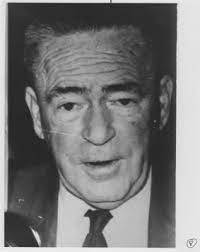 Throughout the history of flying saucers/UFOs, there have been characters that those being kind would describe as “colorful,” and those being blunt would describe as liars, hoaxers and con men. One of these characters was Fred Crisman, who became famous/infamous due to his involvement in the Maury Island case. Crisman was accused of hoaxing the case along with his business partner, Harold Dahl, and the two confessed as much to an FBI agent who
  by Charles Lear, author of
 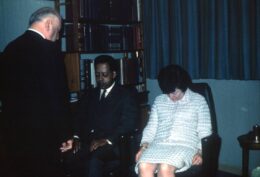 The story of the September 1961 case involving the possible abduction of Betty and Barney Hill by UFO occupants has been related and examined in numerous publications and formats. It’s an intriguing case and was the first of the late 20th century UFO abduction reports to receive serious consideration (and publication) by investigators. This makes it a case worthy of attention because the story told by the Hills couldn’t have been influenced by previous abduction narratives. The main source for the abduction story that is focused on by most researchers, such as John Fuller who wrote the 1966 book about the case titled The Interrupted Journey, is the tapes from the hypnosis sessions the Hills went through in 1964 with Dr. Benjamin Simon. Before that, the case was considered to be merely a sighting report. That’s how it was presented by Walter Webb, the primary investigator who submitted a
 by Charles Lear, author of
 In 2010, an
  Out of the three most prominent people in UFO abduction research, Budd Hopkins, David Jacobs, and John Mack, only Mack had any formal training in psychology. Hopkins was an artist, Jacobs was an historian, and Mack was the head of the psychology department at Harvard Medical School. Mack’s interest in UFO abduction research first gained major media attention when he co-chaired the Abduction Study Conference at M.I.T. in June of 1992. His position at Harvard lent credibility to the subject, and he worked to convince other academics to consider it seriously. Harvard’s leadership didn’t interfere with Mack’s interest until he published a book in 1994 titled Abduction: Human Encounters With Aliens based on his research with 13 subjects. Mack had had previous success as an author with a 1976 book on T. E. Lawrence, A Prince of Our Disorder, which won him a Pulitzer Prize in 1977. Abduction was a hit and Mack was featured in many newspapers, television news shows, and talk shows. As Mack’s position at Harvard was part of the story, there were some there who felt it was necessary to examine the validity of Mack’s investigations.