
Martin will be away for several weeks due to emergency open-heart surgery. Dean Alioto will be hosting shows until Martin is able to return. Thank you!
Audio Podcast may be few weeks late!
BIO: Dean Alioto is an award-winning feature filmmaker and TV documentarian who has produced numerous specials for A+E, Bravo, and Discovery, as well as consulting on the James Fox The Phenomenon. Recently, Dean was featured in the Paramount + Documentary Unknown Dimensions as the creator of the first ever found footage movie The McPherson Tape and the enigmatic Paramount TV movie Alien Abduction: Incident In Lake County. Currently Dean is finishing up a four year long 3-part limited science series looking at the UFO/alien phenomenon from a whole new point of view.
 Ariel Phenomenon premiere at the Academy of Music Theater in Northampton, Massachusetts October 7th and 8th.
 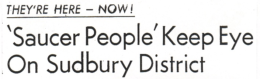 In 1953, there were several UFO reports throughout the year in Canada around the area of Sudbury, Ontario.
 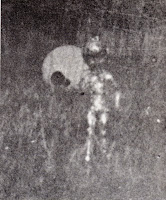 In July of 1967, Ronnie Hill, a 14-year-old North Carolina boy, reported that he’d taken a picture of a UFO with a humanoid in front of it. According to John Keel, who wrote about the story in his article, “The Little Man of North Carolina,” published in the January-February 1969
 According to an
  Often, a UFO case can be explained as being a hoax or a misidentification of natural phenomena or a human-made object. During the early history of American UFO research, these were foremost among the possible prosaic explanations that investigators explored. Then, as the Cold War developed and the American public’s trust in in its governing bodies began to erode in the wake of the Kennedy assassination, Vietnam, and the
 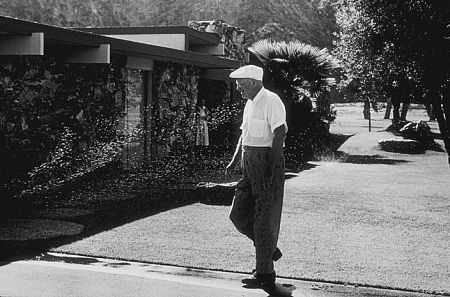 From February 17 to February 24, 1954, President Dwight D. Eisenhower was in Palm Springs, California, on what was described to the public as a “vacation.” On February 20, he disappeared from public view and rumors spread to the point that the headline, “Pres. Eisenhower died tonight of a heart attack in Palm Springs.,” appeared on the Associated Press newswire. The story was removed two minutes later and the AP reported that he was still alive. UFOlogists have speculated on where he was that day, and some have come to the conclusion that Eisenhower went to Muroc Air Force Base for a secret meeting with alien visitors.
 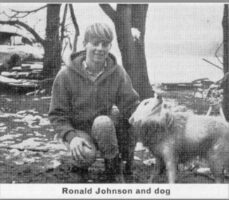 On December 17, 1969, a press release announced the closing of the Air Force’s UFO investigation, Project Blue Book. Despite this, the UFOs didn’t go away, and once the media stopped focusing on the end of Blue Book, stories of UFO sightings again made the news and graced the pages of many newspapers throughout 1970 and 1971. Toward the end of 1971, there was a case that would become a classic that was looked into by an investigator who would become well known as a specialist in UFO trace cases over the coming years.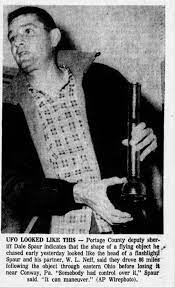
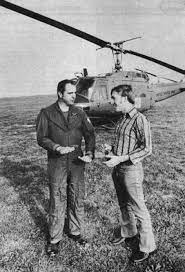 As far as classic UFO cases go, Ohio may very well have more than any other state. There was the 1966 case where Deputy Sheriff Dale Spaur and his partner chased a UFO from Portage County, Ohio, all the way into Pennsylvania at speeds up to 100 mph. In 1973, there was the Coyne Incident, where four men in the Army Reserve reported an encounter near Mansfield, Ohio, with a UFO that pulled their helicopter, commanded by Lawrence J. Coyne, up from 1,700 feet to 3,500 feet while the controls were set for a descent. In 1994, police in Trumbull County responded to a police dispatcher who said she’d received calls about a UFO from local citizens. Before the night was over, police from five different departments gave chase, and a recording of their radio exchanges with the dispatch was given to researcher Kenny Young, who brought the case to the attention of the UFO community and the world. A 1971 case from Huron County, Ohio, that had multiple witnesses, including police officers, didn’t gain nearly was much notoriety as those above, and one might wonder if it might have been because of the way it was treated by the National Investigations Committee on Aerial Phenomena. The main witness sent a report to NICAP, but NICAP was in the midst of changes that may or not have been overseen by either or both the Air Force and the CIA.
  UFOlogy in China is deeply interwoven with China’s politics. In 1978, China began what is known as “the reform,” which involved China opening up its economy to the West and the lifting of many restrictions. According to the
 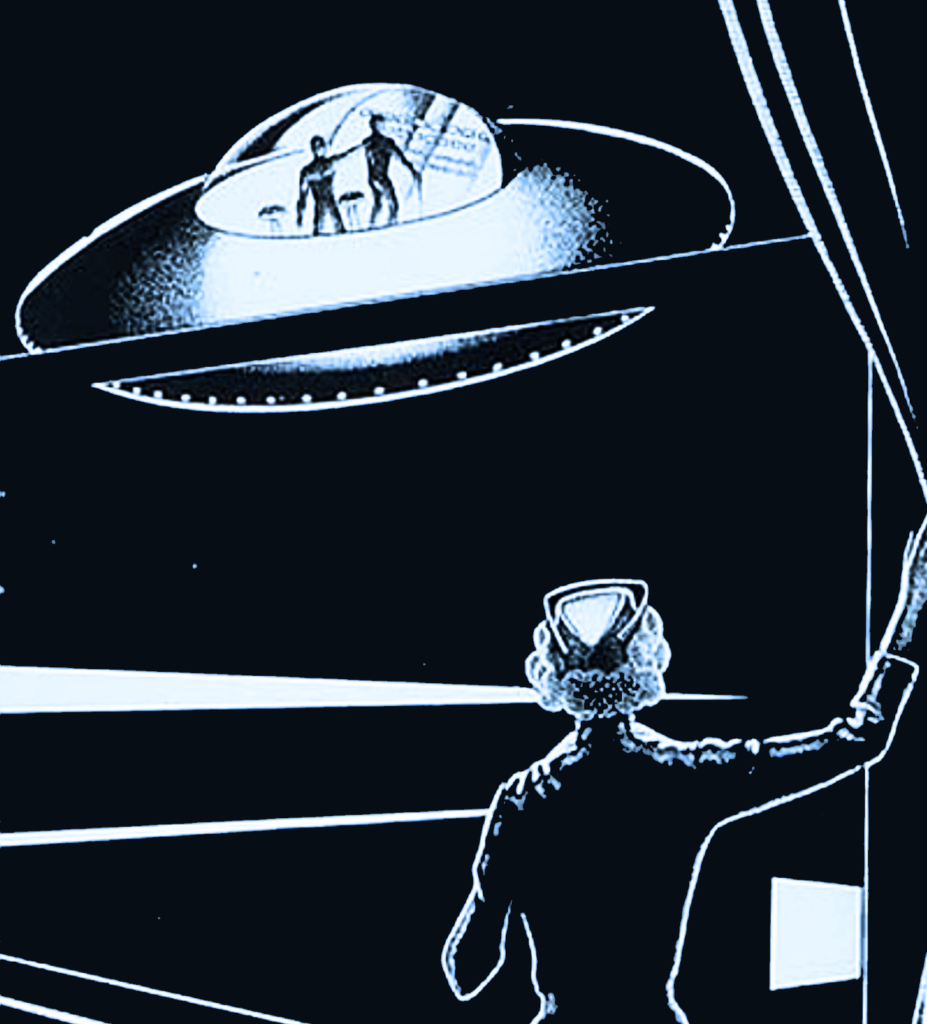 On January 1, 1970, the new year dawned in Canada with a UFO and occupants report. This was in the midst of a flap centered on Vancouver Island, British Columbia. It was investigated by John Magor, editor and publisher of the Canadian UFO Report, and he provided a report to the Victoria Times. The Victoria Times published an article on the case on page 1 of the January 5, 1970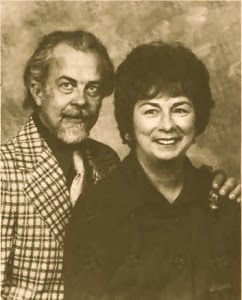
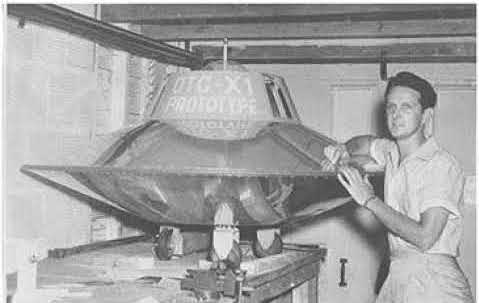 In the late 1950s flying saucers had been in the public consciousness for about a decade. The shock of the Arnold sighting and UFOs over Washington DC had worn off; saucers, though still mysterious, were now familiar. The government was actively running its third investigation into the reports of unidentified flying objects. Hollywood was incorporating the now iconic saucer craft into films of all budgets. Books had been printed on saucers and UFO magazines were on the newsstands every week. A new culture was being born around the flying saucers and possibility of alien contact. Many people claimed to have been contacted by extraterrestrials and some even claimed to have ridden in their craft. Others maintained that they had been given messages for their fellow Earthlings from the Space Brothers or comely Venusians.