by Charles Lear
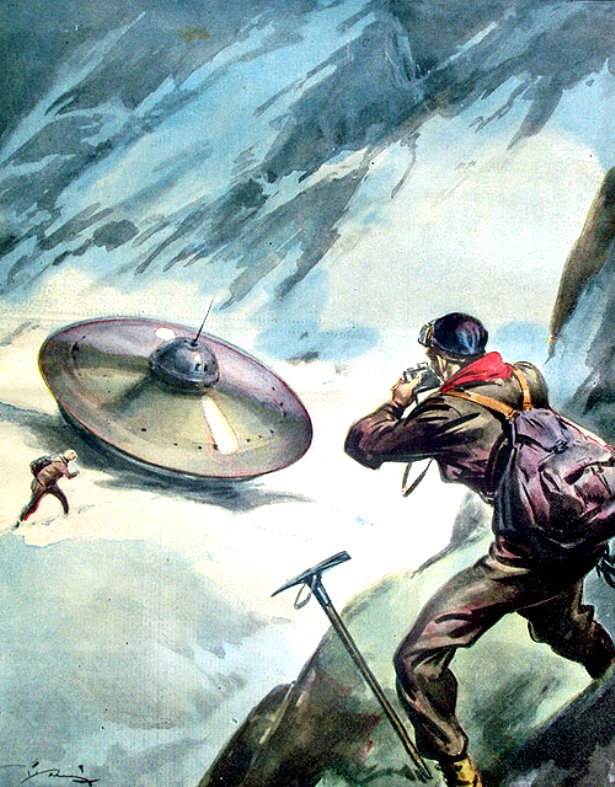 In the hunt for proof that strange vehicles are flying through our atmosphere, possibly under the guidance of alien pilots, researchers have long looked to photographs. There are some, such as the McMinnville photos, that have become classics that continue to spark debate. Many have been passed through time by newspaper articles, books, magazines, documentaries, and websites. Of course, along with the photo, there is the story of the photographer, though getting that story straight might prove difficult.
In October of 1952, a story went across the newswires that a man in Italy had claimed to have taken pictures of a flying saucer and its occupant while climbing in the Bernina section of the Italian Alps. He told reporters that he saw a flying saucer land on a glacier. According to him, “a human shape wearing some sort of diving suit” got out, walked around the ship, and then got back in. The saucer rose up and “it took off without a sound at breathtaking speed.” He said he sold the photos to a French magazine.
The man was 29-year-old Italian engineer Gianpietro Monguzzi. His story is told in detail and his pictures are presented in the Sept.-Oct. 1958 issue of Flying Saucer Review. According to the article “Monguzzi Takes Saucer Photos of the Century,” written by Lou Zinstag, Monguzzi (first name given as Giampiero by Zinstag) worked as an engineer in Monza, near Milan, and was a member of the Edison Society of Italy. On July 31, 1952, he was hiking in the Bernina Mountains with his wife when they came across an object, shaped like a flying saucer, sitting on a glacier. Moguzzi wanted to get closer, but his wife was frightened and insisted he stay with her. He did so and took a series of pictures showing the saucer on the ground, a humanoid walking around it, and two “excellent photos of the ship’s departure.” Monguzzi ended up with a total of seven photos. At the top of the article, in a photo with a number two written on it, the saucer and the humanoid are both seen to have antennas.
 by Charles Lear
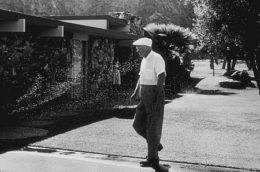 From February 17 to February 24, 1954, President Dwight D. Eisenhower was in Palm Springs, California, on what was described to the public as a “vacation.” On February 20, he disappeared from public view and rumors spread to the point that the headline, “Pres. Eisenhower died tonight of a heart attack in Palm Springs.,” appeared on the Associated Press newswire. The story was removed two minutes later and the AP reported that he was still alive. UFOlogists have speculated on where he was that day, and some have come to the conclusion that Eisenhower went to Muroc Air Force Base for a secret meeting with alien visitors.
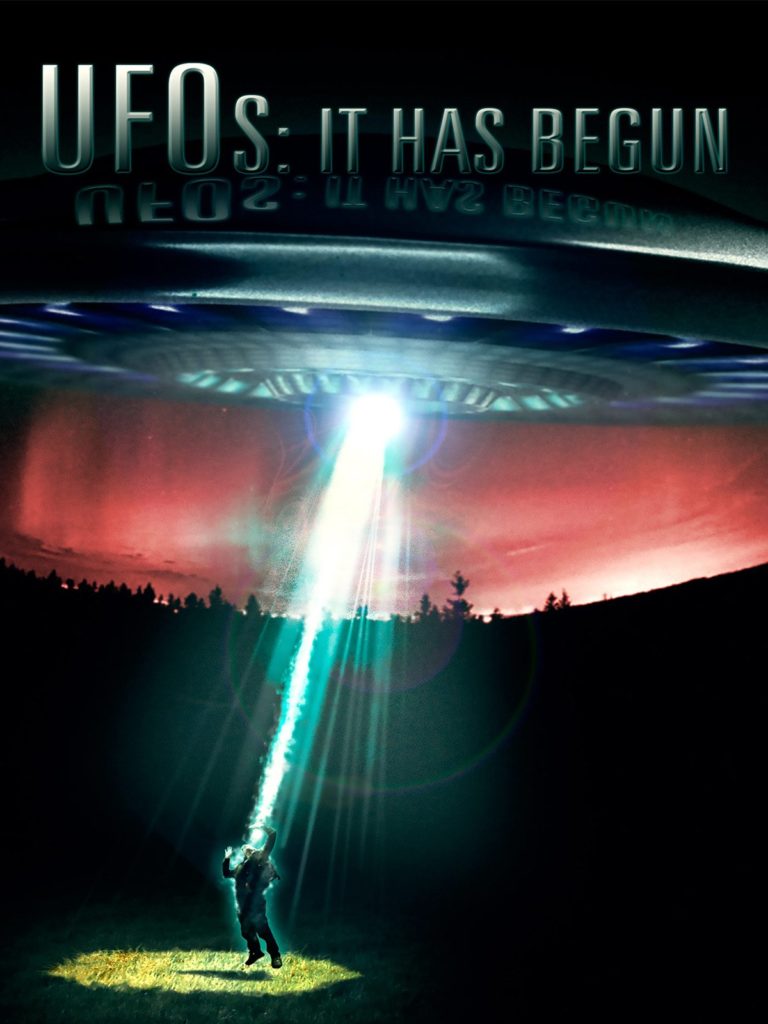 UFO documentaries, besides being informative and entertaining, also serve to preserve UFO history for future researchers. However, one documentary, “UFOs: It Has Begun.” has itself become a part of UFO history. One of its producers has claimed that the U.S. Department of Defense offered him and his partner the use of some film footage taken by the Air Force at Holloman Air Force Base. According to him, it showed a UFO landing and a meeting between its occupants and Air Force officials, and it was going to be the finale of the documentary until the DoD withdrew the offer at the last minute.
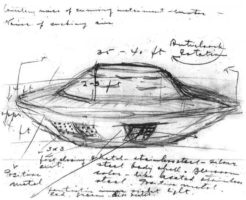 1967 was quite a year in UFO history. In Canada there was the
 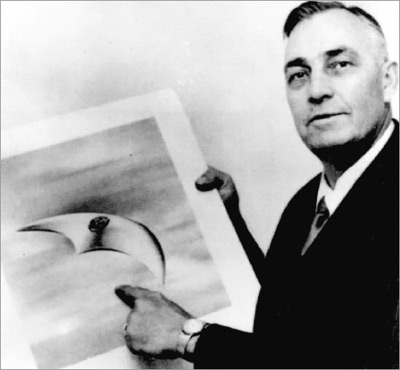 Pilot UFO sightings have been a constant in the world of UFOlogy ever since the sighting in 1947, that started the public fascination with the subject, by Kenneth Arnold, who was flying in his own plane near Mount Rainier in Washington State. Even though these are often single witness sightings, researchers generally take them seriously, as pilots, especially a commercial pilots, risk their reputations and continued employment by coming forward. But, what about airplane passengers? In the case of passenger sightings, you often have multiple witnesses, or at least one witness that can corroborate the pilot report.
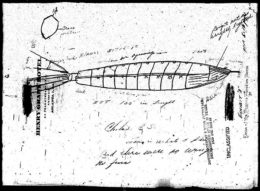 An instance where a passenger witness came forward to back up a pilot report occurred in 1948 in the case of the classic Chiles-Whitted UFO encounter. On July 24, 1948, pilot Clarence Chiles and co-pilot John Whitted, were flying a DC-3 over Alabama. At about 2:45 a.m., Chiles spotted a red glow up ahead and brought Whitted’s attention to what he assumed was an Army jet. It closed in on the DC-3 quickly, shot past the right side of the plane, and then, with a burst of flame coming out of its rear, climbed up into the clouds. The pilots reported that the object was torpedo-shaped, had no wings, was 100 feet long, and 25 to 30 feet in diameter. Passenger Clarence L. McKelvie added to the credibility of the sighting by reporting that he saw a bright light streak by his window at that time. He later appeared in the documentary,
 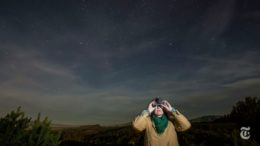 On February 9, 2021, at around 10:30 p.m., a helicopter pilot with U.S. Customs and Border Protection flying over Tucson, Arizona, reported to air traffic control that he had just had a near collision with a drone. A Tucson Police Department helicopter was sent into the area and the two helicopters followed the object and attempted to determine the location of whoever might be operating it. While it was described as a drone and a quad-copter, it was mostly tracked using night vision, and the only visual description was of a blinking green light. If it was indeed a drone, it attained an altitude well above the 400 foot limit set by the FAA, performed extraordinary evasive maneuvers, and had a power source that lasted far longer than a normal drone battery.
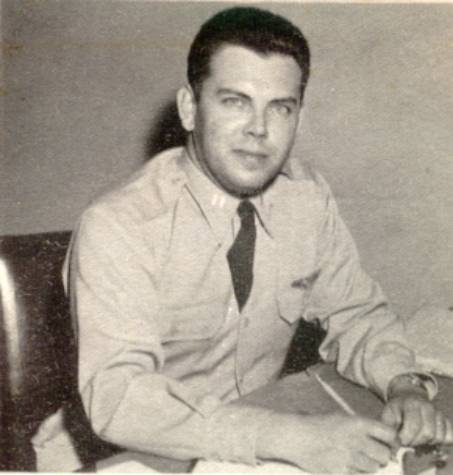 in his 1956 book “The Report on Unidentified Flying Objects,” in Air Force parlance, a flap was a state of confusion just below panic that could be brought on by any number of things. This week, we’ll look at a 1965 flap in the Virginia area that involved reported EM effects, creatures, and armed citizens ready to defend the planet.
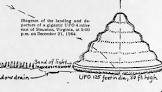 Burns described the object as shaped like a beehive, 125 ft in diameter, and 80 ft tall. He observed it as it rested for 60 to 90 seconds and then rose up and flew away to the northeast. He was able to restart his car and drive home.
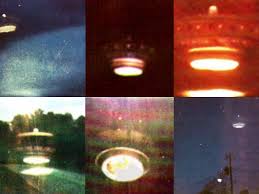 Many readers may be familiar with the controversial case of the Gulf Breeze, Florida, UFO photographs taken in 1987 by local contractor Ed Walters. The photos were clear and detailed and stirred up a great deal of excitement within the UFO community. Some, such as former Navy optical physicist turned UFO researcher Dr. Bruce Maccabee, believed the photos were genuine, while others believed they were hoaxed.
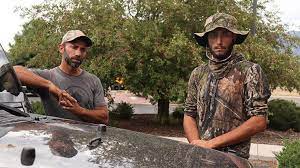 According to an article by Staci Matlock in the September 5, 2019
  In the 1970s, New York artist and UFO investigator Budd Hopkins began to specialize in abduction research after being confronted by multiple reports. He wrote about his research in the 1981 book “Missing Time” and it wasn’t long after the book was published that people started to be featured in the press and on television with claims of their own abduction experiences. In an
  Hopkins described the “Linda Case” in his 1996 book, “Witnessed.” According to him, Linda had written him a letter in spring of 1989 after reading his 1987 book, “Intruders.” In the letter she described seeing strange nighttime visitors while lying paralyzed in bed as a child. She also wrote that she was asked by a doctor about what looked like evidence of surgery inside her nose as he was dealing with some built up cartilage that caused a lump that had concerned her. She wrote that she had never had surgery in her nose and that this was confirmed by her mother.