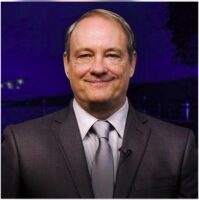
Martin Willis welcomes filmmaker and MUFON Media Relations Director Ron James for an outspoken discussion about the state of UFO disclosure. When unexpected technical problems interrupt the show, UFO Jack steps in to keep the conversation going. Ron argues that today’s disclosure movement is repeating a decades-old pattern, questions the role of government-approved whistleblowers including Lue Elizondo and David Grusch, and discusses whether journalists and researchers are becoming part of the secrecy surrounding UAPs. The conversation also explores alleged crash retrieval programs, consciousness, simulated reality, and Ron’s provocative theory that advanced artificial intelligence may play a significant role in the UFO phenomenon. Ron shares updates on MUFON, Accidental Truth: NEXT, and his upcoming documentary with Michael Schratt examining 37 alleged crash retrieval cases from Leonard Stringfield’s files. This episode is dedicated to the memory of our dear friend Mario Woods, who recently passed away.
Podcast: Play in new window | Download
 Martin Willis welcomes back Dave Scott, creator and host of Spaced Out Radio, for a candid conversation about UFO disclosure, government secrecy, and the unexplained. Dave shares why he has become increasingly skeptical of the disclosure movement, questions the government’s narrative, and explains why firsthand witnesses may hold more answers than insiders. He also discusses his involvement in connecting Canadian officials with prominent U.S. UFO figures, including Lue Elizondo and Christopher Mellon. The conversation takes a fascinating turn as Dave recounts strange experiences at the remote Flight 21 crash site in British Columbia, including alleged Sasquatch encounters, mysterious footprints, UFO activity, and other paranormal phenomena. Martin and Dave also explore Roswell, the hitchhiker effect, and why mainstream media continues to shy away from serious UFO coverage.
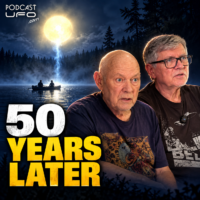 Martin Willis sits down with Charlie Foltz and Jim Weiner, two of the original witnesses to the famous 1976 Allagash UFO encounter in northern Maine. Fifty years later, they recount the enormous glowing object that approached their canoe, a mysterious beam of light, apparent missing time, and the unsettling memories they say emerged during separate hypnotic regression sessions with investigator Raymond Fowler. They discuss their alleged encounters with nonhuman beings, how the experience transformed their art and careers, and the profound effect it had on their lives. Jim also shares a remarkable near-death experience following a serious accident. Recorded after the Exeter UFO Festival, this is an intimate and revealing conversation about one of the most debated abduction cases in UFO history.
 Martin Willis sits down with Anne Ramsey Cuvelier, who for years opened her historic Newport, Rhode Island mansion to UFO experiencers, researchers and investigators seeking a private place to share extraordinary encounters without ridicule. Anne recalls gatherings that included Dr. John Mack, Budd Hopkins, Barbara Lamb, Peter Robbins and members of the Allagash abduction case. Now 92, she reflects on a lifetime connected to the UFO mystery, including her father’s comments about unusual aerial objects, his friendship with former Secretary of Defense James Forrestal, her experiences investigating crop circles in England, and her memories of leading figures in the experiencer community. The conversation explores the stigma once surrounding abduction reports, how attitudes have changed, and the important role Anne played in giving experiencers a place where they knew someone would listen.
 Martin Willis sits down in person with Lue Elizondo for a wide-ranging conversation about UAP disclosure and what may be happening behind the scenes in Washington. Elizondo reveals that he has returned to the Washington, D.C. area and says he is once again working for the U.S. government, although he cannot disclose his specific role. He discusses why some UAP information remains classified, his restrictions on discussing alleged crash-retrieval programs, and the long-rumored 23-minute UAP video, which he says isn’t the most compelling footage that exists. The conversation also covers NASA and unusual observations involving the Moon, historical UAP performance, Ross Coulthart’s recent claims about Elizondo, whether the government truly understands the phenomenon, and the possibility that humanity perceives only a tiny fraction of a much larger reality.
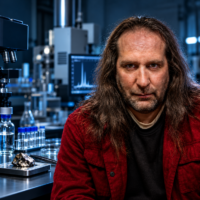 Martin Willis welcomes analytical chemist and longtime paranormal researcher Matt Moniz for a fascinating discussion of the physical evidence surrounding UFO and abduction cases. Matt describes his laboratory examination of material from Betty Hill’s dress, including microscopy and chromatography comparing affected areas with control samples, and discusses other materials he has collected or studied from notable UFO cases. He explains the importance of provenance, contamination, metallurgy and isotope ratios when evaluating alleged UFO materials and discusses several classic cases he believes deserve further scientific investigation. The conversation then becomes deeply personal as Matt recounts his own claimed abduction experiences beginning in early childhood, including encounters he says continued throughout his life and an extraordinary later meeting with someone he remembered from one of those experiences. Martin and Matt also explore consciousness, ghosts, paranormal investigation and the difficult question of how science can approach phenomena that are unpredictable and difficult to reproduce.
 Former British military intelligence officer Franc S. Milburn joins Martin Willis to discuss military accounts of an alleged UFO retrieval in northern England and RAF encounters, distinguishing what his sources told him from what he can verify. He also explores the Nimitz Tic Tac incident, his exchanges with Eric Davis, and his family’s reported experiences. Milburn then presents his case for Russian drone operations behind incidents at UK airbases and around the Baltic Sea, emphasizing the importance of separating conventional threats from unexplained UAP.
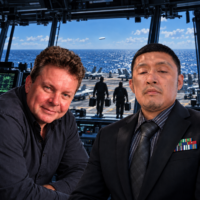 Martin Willis welcomes Navy veteran Jimmy Hernandez III and filmmaker David Beaty for a closer look at the 2004 USS Nimitz Tic Tac encounter. In his first live public interview, Jimmy recounts hearing Commander David Fravor’s startled radio communications while working in Primary Flight Control, witnessing men removing recordings, and signing a nondisclosure agreement. He explains why he remained silent for years, even with his wife. Beaty discusses his expanded documentary, The Nimitz Encounters, as the conversation explores conflicting witness accounts, missing data, radar spoofing theories, and the unanswered questions surrounding this remarkable UFO case.
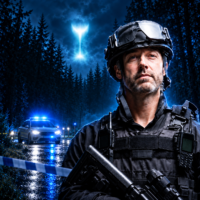 Serving UK Police Inspector Roy Teague joins Martin Willis to discuss Close Encounters of the Police Kind and his interviews with more than 300 serving and retired officers about UFO and paranormal experiences. Roy shares accounts of a police helicopter crew watching a craft apparently disappear into a “hole in the sky,” an unusual RAF radar incident, and a black triangle encounter involving electrical failures and missing time. They explore alleged abductions, Roy’s investigative methods, and the professional stigma that can keep officers silent for decades.
 Guitarist Kevin Estrella joins Martin Willis to recount a 2014 UFO sighting over Hamilton, Ontario, and the ongoing encounters he believes have influenced his music as Pyramids on Mars. Kevin describes “musical downloads,” invisible visitors, and a melody he believes translates to “Do you hear me?” Martin asks about evidence and the purpose of these reported encounters, while audience questions explore telepathy, first-contact predictions, and humanity’s readiness for contact.
 Longtime UFO researcher Norio Hayakawa joins Martin Willis to explore whether UFO encounters could involve something other than physical extraterrestrial spacecraft. From his father’s reported 1947 sighting in Japan to the Socorro encounter and the mysteries of Dulce, Norio shares the experiences and research behind his unconventional perspective. Topics include his “paraphysical” theory, government secrecy and disclosure, the Farmington sightings, Fátima, Project Gasbuggy, and cattle mutilations. Martin offers questions and pushback throughout a conversation that examines the distinction between witness reports, personal beliefs, and verifiable evidence.
 British UFO researcher, author and publisher Philip Mantle joins Martin Willis to discuss UFO Reflections and more than four decades of investigation. Topics include Charles Forgus’s claimed Roswell testimony, the Alien Autopsy hoax, the reported 1980 Normanton UFO landing, and new witnesses and recordings connected to the Pascagoula encounter. Philip also reflects on his friendship with Calvin Parker, the importance of preserving forgotten testimony, and the growing challenge of AI-generated UFO misinformation.
 Former U.S. Navy F/A-18 pilot Alex Dietrich joins Martin Willis for a candid conversation about the November 14, 2004, Tic Tac UFO encounter off Southern California. Flying alongside Commander David Fravor, Dietrich witnessed an unidentified white object near an unusual disturbance in the ocean during a routine training mission with the USS Nimitz Carrier Strike Group. Dietrich recounts what she saw, the uncertainty she felt, and what she learned years later about the USS Princeton’s unusual radar contacts before the encounter. She also reflects on the personal challenges of speaking publicly and why acknowledging what we don’t know matters. It’s a thoughtful firsthand account of one of the most widely discussed UFO encounters in modern history.
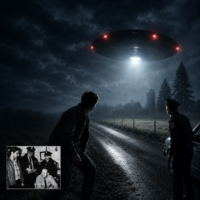 Martin Willis interviews Dean Merchant live at the Rye Public Library for a fascinating discussion about UFOs in New Hampshire, including the legendary 1965 Incident at Exeter. The program features firsthand testimony from Mike Geanoulis who describes seeing a massive object with extremely bright red lights over the Exeter area, as well as retired Exeter police officer George Dufour, who served on the force at the time and personally knew officers Gene Bertrand and David Hunt. Dean also explores the Betty and Barney Hill case, Stratham Hill, Pawtuckaway, Raymond, Ossipee, the White Mountains, and other New Hampshire UFO hotspots, along with theories involving nuclear activity, geology, and decades of unexplained sightings across the Granite State.
 Veteran UFO researcher Rich Hoffman joins Martin Willis to discuss his remarkable six-decade journey, from investigating sightings near Project Blue Book as a teenager to helping lead the Scientific Coalition for UAP Studies. Rich examines the Tic Tac encounter, reported radar jamming, government transparency, private defense contractors and the limitations of UAP videos without adequate data. They also explore the New Jersey drone wave, AI-generated UFO footage, common misidentifications, near-death experiences and the possibility that science has only begun to understand the true nature of UAP and consciousness.