by UFO History Buff & Author, Charles Lear
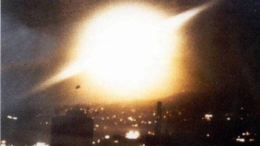 In last week’s blog, we looked at a case from the Canary Islands involving thousands of people reporting that at around 10:30 p.m. on June 22, 1976, they saw a huge sphere of light in the western sky. The Spanish Air Force investigated, and included in the case file (released on July 22, 1994) are testimonies from members of the crew of the Atrevida, a Spanish Navy corvette, and Dr. Francisco Julio Padrón. The captain of the Atrevida said that a “luminous point of intense bluish-yellow” came up from the ground and reached an altitude of 15-18 degrees where it stayed for about two minutes while “generating a large halo of intense bluish-yellow light that persisted in the same position for forty minutes.” This matches almost all of the other reports. Padrón, on the other hand, said that while in a taxi on his way to see a patient in the town of Gáldar, he saw a transparent sphere 60 yards away that had two red humanoids inside. Even though Padrón’s description was unique and dismissed by the Air Force investigator, many accounts of the case focus on it, from the first reports in the press up until the present day. The cause of the sightings remained a mystery until two Spanish investigators, Vincente-Juan Ballester Olmos and Ricardo Campo Pérez, looked into the case and came up with a likely explanation.
Campo wrote the article headlined “Dos Gigantes Rojos Cabalgando un Misil” (Two Red Giants Riding a Missile) that was posted on June 22, 2016 (the 40th anniversary of the sightings), on the Naukas website. In it, he is highly critical of the press and others who promoted Padrón’s story to the extent that what was seen by people all over the Canary Islands became known as the “Gáldar UFO.” Read more
 Guitarist Kevin Estrella joins Martin Willis to recount a 2014 UFO sighting over Hamilton, Ontario, and the ongoing encounters he believes have influenced his music as Pyramids on Mars. Kevin describes “musical downloads,” invisible visitors, and a melody he believes translates to “Do you hear me?” Martin asks about evidence and the purpose of these reported encounters, while audience questions explore telepathy, first-contact predictions, and humanity’s readiness for contact.
 Longtime UFO researcher Norio Hayakawa joins Martin Willis to explore whether UFO encounters could involve something other than physical extraterrestrial spacecraft. From his father’s reported 1947 sighting in Japan to the Socorro encounter and the mysteries of Dulce, Norio shares the experiences and research behind his unconventional perspective. Topics include his “paraphysical” theory, government secrecy and disclosure, the Farmington sightings, Fátima, Project Gasbuggy, and cattle mutilations. Martin offers questions and pushback throughout a conversation that examines the distinction between witness reports, personal beliefs, and verifiable evidence.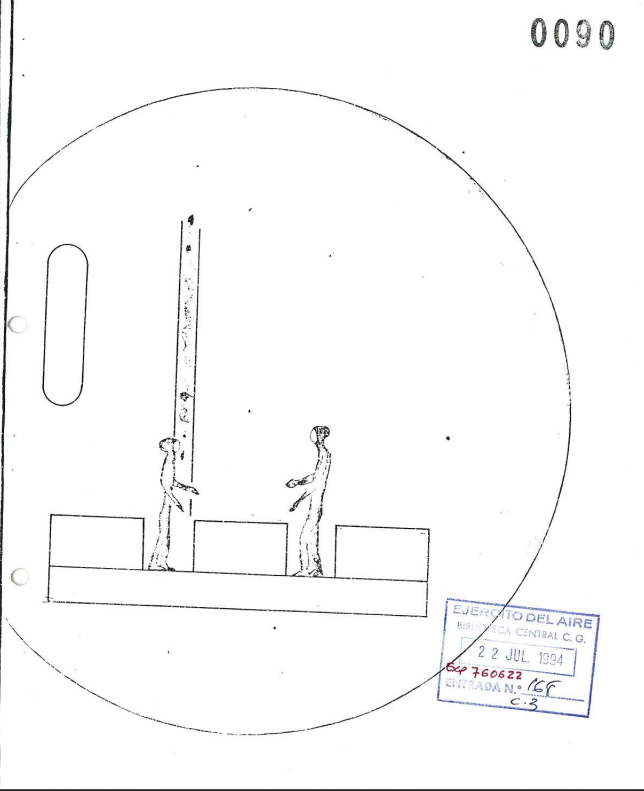
 British UFO researcher, author and publisher Philip Mantle joins Martin Willis to discuss UFO Reflections and more than four decades of investigation. Topics include Charles Forgus’s claimed Roswell testimony, the Alien Autopsy hoax, the reported 1980 Normanton UFO landing, and new witnesses and recordings connected to the Pascagoula encounter. Philip also reflects on his friendship with Calvin Parker, the importance of preserving forgotten testimony, and the growing challenge of AI-generated UFO misinformation.
 Former U.S. Navy F/A-18 pilot Alex Dietrich joins Martin Willis for a candid conversation about the November 14, 2004, Tic Tac UFO encounter off Southern California. Flying alongside Commander David Fravor, Dietrich witnessed an unidentified white object near an unusual disturbance in the ocean during a routine training mission with the USS Nimitz Carrier Strike Group. Dietrich recounts what she saw, the uncertainty she felt, and what she learned years later about the USS Princeton’s unusual radar contacts before the encounter. She also reflects on the personal challenges of speaking publicly and why acknowledging what we don’t know matters. It’s a thoughtful firsthand account of one of the most widely discussed UFO encounters in modern history.
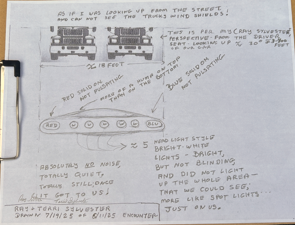 In 1969, just before the December 17th press
 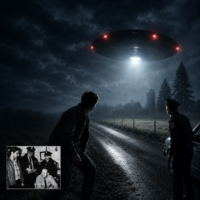 Martin Willis interviews Dean Merchant live at the Rye Public Library for a fascinating discussion about UFOs in New Hampshire, including the legendary 1965 Incident at Exeter. The program features firsthand testimony from Mike Geanoulis who describes seeing a massive object with extremely bright red lights over the Exeter area, as well as retired Exeter police officer George Dufour, who served on the force at the time and personally knew officers Gene Bertrand and David Hunt. Dean also explores the Betty and Barney Hill case, Stratham Hill, Pawtuckaway, Raymond, Ossipee, the White Mountains, and other New Hampshire UFO hotspots, along with theories involving nuclear activity, geology, and decades of unexplained sightings across the Granite State.
 Veteran UFO researcher Rich Hoffman joins Martin Willis to discuss his remarkable six-decade journey, from investigating sightings near Project Blue Book as a teenager to helping lead the Scientific Coalition for UAP Studies. Rich examines the Tic Tac encounter, reported radar jamming, government transparency, private defense contractors and the limitations of UAP videos without adequate data. They also explore the New Jersey drone wave, AI-generated UFO footage, common misidentifications, near-death experiences and the possibility that science has only begun to understand the true nature of UAP and consciousness.
 Australian UAP researcher, activist and podcaster Grant Lavac joins Martin Willis to discuss Australia’s continuing reluctance to investigate unidentified anomalous phenomena, despite its participation in the Five Eyes UAP Caucus Working Group. Grant examines Australia’s lack of a formal reporting system for military personnel and civilian pilots, what his Freedom of Information research suggests may be happening behind closed doors, and why some Australian pilots have instead submitted reports to Ryan Graves’s Americans for Safe Aerospace. The conversation also explores new developments surrounding the 1966 Westall UFO incident, the mysterious disappearance of pilot Frederick Valentich, and the Australian government’s failure to respond to calls for an independent Westall inquiry. Martin and Grant also confront the UFO community’s growing “disclosure fatigue” and ask whether it is finally time for firsthand witnesses, verifiable evidence and receipts.
 Retired U.S. Air Force Pararescueman Scott Gearen discusses the mysterious aerial object he photographed and filmed for approximately three and a half hours over Panama City Beach, Florida. He explains why he rejected the weather-balloon explanation, what appeared in the enhanced images and why he wonders whether the object could have been biological or intelligently controlled. Near the end, Scott shares his remarkable near-death experience following a catastrophic 1987 parachuting accident—and how he later returned to complete more than 500 additional jumps.
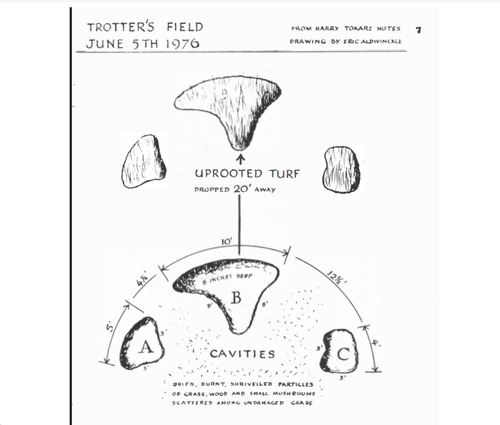 Starting in December 1975 and continuing into the middle of 1976, there was a UFO flap in the area of Madoc, a village in Ontario, Canada, halfway between Toronto and Ottawa. Investigators from the Ontario-based Neptune Research Organization went to the area, interviewed witnesses, and were able to see for themselves what may be the most unique UFO-related trace evidence ever recorded.
 Legendary UFO researcher Jacques Vallée joins Martin Willis to discuss Forbidden Science 7: Final Report, the concluding volume of his journals covering 2020–2025. Vallée reflects on today’s disclosure movement, his own unexplained 1955 sighting and missing memory, the dangers of amateur hypnotic regression, alleged structured contact with an unknown intelligence and a database containing approximately 260,000 UFO cases. After nearly seventy years of research, he leaves us with a profound question: Are we living in a reality that can be manipulated—and are our present scientific methods capable of recognizing it?
 What if UFOs do not defy gravity through advanced propulsion, but through consciousness itself? Yale-trained philosopher and author Christopher Noël joins Martin Willis to explore his proposal that consciousness may be an undiscovered field of nature capable of interacting with physical reality. They discuss the Oz Factor, altered perception, missing time, unexplained cold and silence during encounters, electromagnetic disturbances, psychokinesis, orbs, UFO propulsion and the similarities connecting UAP, ghosts, Sasquatch and other high-strangeness phenomena. Christopher also shares his provocative theory that apparent alien beings and craft may temporarily manifest from an unseen level of reality rather than simply traveling here from distant planets. The conversation also touches on the Buga Sphere, Nazca mummies, the Ariel School encounter and whether UFOs use consciousness to manipulate matter. Christopher Noël is the author of The Anatomy of Thin Air and Homegrown Monsters.