by UFO History Buff & Author, Charles Lear
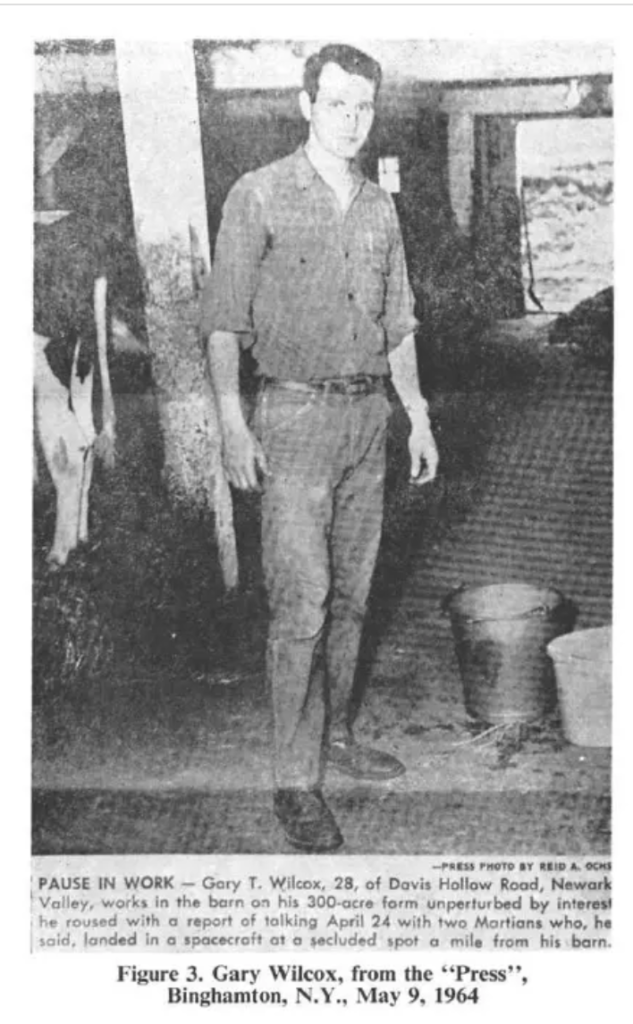 On April 24, 1964, in Socorro, New Mexico, Sgt. Lonnie Zamora of the Socorro Police reported seeing an egg-shaped object and two small humanoids dressed in white coveralls. On April 24, 1964, in Newark Valley, New York, farmer Gary Wilcox reported seeing an egg-shaped object and two small humanoids dressed in white coveralls. The difference is, Wilcox claimed he talked with the creatures he saw.
The first investigator on the scene was Wilcox’s neighbor, Priscilla J. Baldwin. She had an interest in UFOs and spoke with Wilcox on April 28th. National Investigations Committee on Aerial Phenomena advisor Walter Webb interviewed Wilcox on November 8, 1964, and there is a NICAP file on the incident.
Dr. Berthold Eric Schwartz investigated this case extensively and wrote an article (page 20 of the pdf) about it headlined, “Gary Wilcox and the UFOnauts,” published in the September 1969 Flying Saucer Review Special Issue 3. According to him in his article, material from Baldwin and Webb was made available to him, and he interviewed Wilcox along with his wife, friends, neighbors, and members of his family. Read more
 Martin Willis speaks with historian and author Matthew Bowman about the 1961 Betty and Barney Hill UFO encounter and his book, The Abduction of Betty and Barney Hill. Drawing upon archival papers, personal correspondence, early Air Force and NICAP reports, hypnosis transcripts, and John Fuller’s research files, Bowman discusses official interest in the case, Dr. Benjamin Simon’s conclusions, the reliability of hypnosis, Marjorie Fish’s star map, the influence of race and religion, and the case’s lasting impact on UFO culture. He also shares his own view of what the Hills may have encountered and why conventional explanations remain unconvincing.
 At the top of the first page of National Investigations Committee on Aerial Phenomena 1988
  Rabbi Michael “Moshe” Rothschild joins Martin Willis for a thought-provoking conversation about UFOs, extraterrestrial life, disclosure, and what confirmation of nonhuman intelligence could mean for religion. Rothschild recounts his own close sighting of a bright orange plasma-like object and explains why he believes some UFOs may represent nonhuman intelligence. They explore whether extraterrestrial life would challenge Judaism, possible interpretations of Ezekiel’s wheel, Kabbalah, consciousness, alleged abduction experiences, government transparency, whistleblower protections, and former Israeli space security chief Chaim Eshed’s controversial claims concerning a Galactic Federation and extraterrestrial cooperation. The conversation ultimately asks whether humanity is ready for disclosure and why an advanced intelligence might choose ambiguity instead of unmistakable open contact.
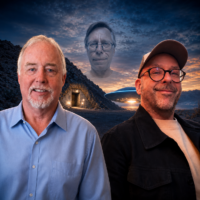 Filmmaker Luigi Vendittelli, director and producer of S4: The Bob Lazar Story, joins Martin Willis for a spirited and sometimes heated examination of Bob Lazar’s extraordinary and controversial claims. Martin remains deeply skeptical, while Luigi spent four and a half years working with Lazar and believes important parts of his story deserve serious consideration. They discuss Lazar’s disputed education, Los Alamos employment, alleged security clearance and work at S4, inconsistencies in his descriptions of the Sport Model, Papoose Lake, Element 115, the reported test flight, the lack of independently verifiable evidence and whether Lazar should truly be considered a whistleblower. It is a candid conversation between two people with very different perspectives who are willing to challenge one another without pretending they agree.
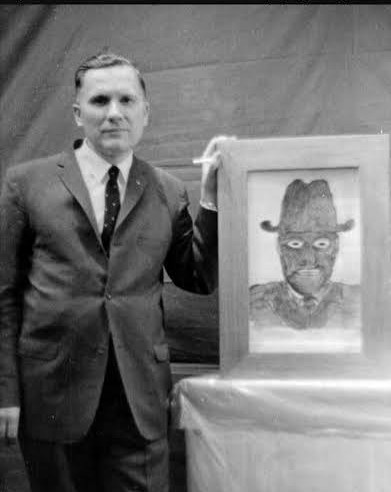 UFOlogy has always attracted its fair share of academics, and some have managed to incorporate it into their fields of study. Fields such as astronomy, psychology, sociology, history and folklore studies lend themselves easily to the subject, and the literature is filled with books, papers, and articles, often in peer-reviewed journals, by professionals in those fields. Two famous examples are Dr. J. Allen Hynek and Dr. Jacques Vallée. Some were drawn to the subject because of a personal experience (Vallée had a sighting as a teenager) and one of those was Julliard professor of humanities and folklore, Peter Rojcewicz. He focused on Men in Black stories, wrote an article that was published in an academic journal in 1987, and then made the news when he lectured on the subject.
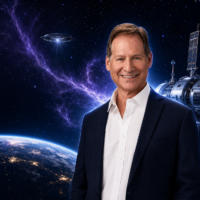 Retired NASA aerospace engineer Greg Martins joins Martin Willis to discuss his 35-year career at Goddard Space Flight Center, a childhood UFO sighting and his claimed extraterrestrial encounters through dreams, meditation and out-of-body experiences. Greg also explores consciousness, the Akashic Records, “home planets,” Oversouls and the experiences described in his book, Star Journey Home. Martin approaches these extraordinary claims with an open mind and gentle skepticism.
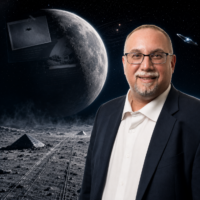 Former senior NASA official and space policy expert Mike Gold joins Martin Willis and special co-host, astronomer Marc D’Antonio, for a candid discussion about NASA, UAP and the stigma that continues to discourage serious scientific investigation. Gold explains that NASA’s UAP Independent Study Team was never asked to examine historical cases or analyze UAP evidence; instead, it was tasked with determining whether NASA should investigate the subject and which agency resources could be used. He discusses proposals to employ artificial intelligence and machine learning to search NASA’s enormous archives, add UAP to NASA’s confidential Aviation Safety Reporting System, and independently examine unexplained imagery from the Moon, Mars and space—including the unusual triangular formation photographed during Apollo 17. The conversation also examines allegations of altered or withheld NASA imagery, professional threats faced by academics who merely ask questions about UAP, and why Gold believes stigma creates a national security vulnerability by providing potential cover for adversarial drones. Gold says disclosure should be viewed as a continuing process of releasing and objectively examining data, and he believes increasingly significant material may emerge as the government works through declassification. The discussion concludes with commercial spaceflight, SpaceX, America’s competition with China, manufacturing human tissue and pharmaceuticals in microgravity, the future of Mars exploration, and why greater government transparency could help restore public trust. Join us for a thoughtful, science-based conversation that follows the evidence without assuming the answer.
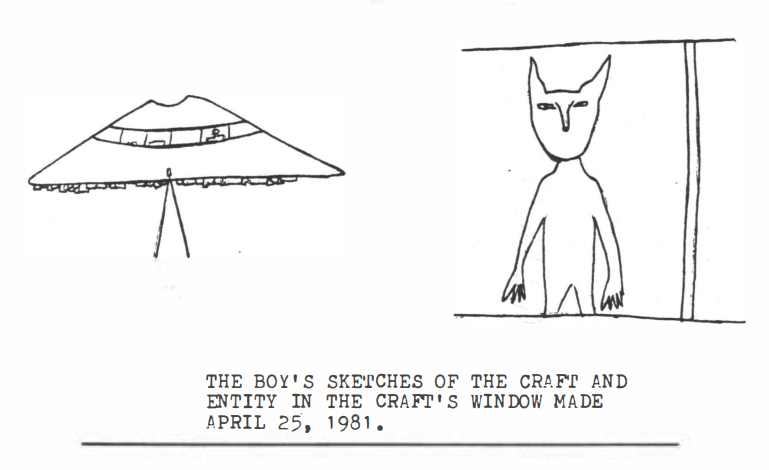
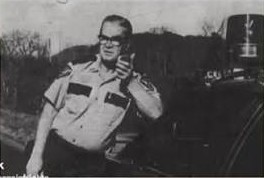 In our last blog, about a boy who claimed he’d been hit in the chest by a paralyzing beam of light from a UFO, we wrote, “Reports of people suffering physical effects after being zapped by UFOs appears often enough in UFO literature that an author could devote an entire book to them.” Proving our point, we stumbled upon a similar case involving a policeman as we were looking for material for this week’s blog. Whereas the former case only had a single witness, the case we’re looking at this week has multiple witnesses.
 Filmmaker Darcy Weir joins Martin Willis and UFO Jack for a candid conversation about psychic phenomena, remote viewing, UFO experiencers, whistleblowers, and separating credible evidence from compelling fiction. They explore Project Stargate, Phil Schneider, Travis Walton, Bob Lazar, government disinformation, secret technology, CE5, Jake Barber, and strange entities reported in cases such as Voronezh and Pascagoula. Visit PodcastUFO.com to explore hundreds of historical UFO articles by Charles Lear and support the show for an ad-free experience.
 In last week’s
  Astronomer and veteran photo/video analyst Marc D’Antonio joins Martin Willis to examine highlights from the 40 UAP files released by the government on July 10. Marc analyzes several intriguing images and videos, including possible aerostats, balloon clusters, fast-moving objects, and the widely discussed “star-shaped UFO.” He explains how infrared sensors, diffraction, parallax, camera movement, and missing metadata can make ordinary objects appear extraordinary—and identifies one case that remains a genuine puzzle. Marc also shares his own unexplained observation of two satellite-like lights making a dramatic 40-degree turn.
 Historian Samantha Graves briefly shares a new r
 Reports of people suffering physical effects after being zapped by UFOs appears often enough in UFO literature that an author could devote an entire book to them. In 1980, there was such a report out of Foxboro, Massachusetts, that was looked into by local investigators. A detailed
 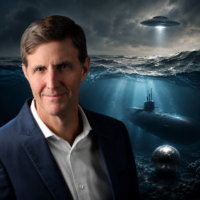 Former Rear Admiral Tim Gallaudet joins Martin Willis to discuss UAP research, undersea anomalies, and reports from submarine personnel of fast-moving unidentified objects detected beneath the ocean. Gallaudet explains his role on the UAP Science Advisory Council reporting to the Office of the Director of National Intelligence, the challenge of gaining access to relevant data, and why serious scientific investigation is essential. He also shares a brief look at his new leadership memoir, Holding Fast in Heavy Seas, reflecting on his Navy and NOAA career.