By Charles Lear
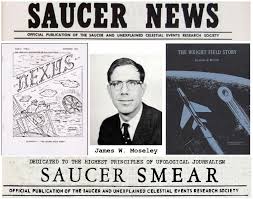 In the early days of the modern UFO era, if you were an American and you saw something strange in the sky and wanted someone to investigate, you reported it to the Air Force. If the Air Force dismissed your case as unworthy of study before 1952, there were no other organizations to turn to. There were a few private individuals who might be willing to look into it, but they were usually under contract with publications such as True Magazine, Look Magazine, and Fate, which meant that there would be some publicity involved. There was a need for a private organization of dedicated researchers and, by the end of 1952, three groups had formed to fill it. The first two were the International Flying Saucer Bureau founded by Albert K. Bender, based in Connecticut and Civilian Saucer Investigation, a Los Angeles based group. IFSB had Gray Barker, an imaginative writer, as its chief investigator while CSI was founded by North American Aviation engineer, Edward J. Sullivan and had, as one of its investigators, Walther Riedel, one of the V-2 creators who had come to America as part of operation paperclip. The third group was The Aerial Phenomena Research Organization started in January, 1952 by Jim And Coral Lorenzen. Both IFSB and CSI had ceased operations by 1954, while APRO continued until 1988. In 1954, an organization was formed in New York City called, Civilian Saucer Intelligence New York by Alexander Mebane, Isabel Davis, and Ted Bloecher, who held CSI-LA in high regard. CSI-NY is notable, not only for the caliber of their primary researchers but also, for their association with the biggest names in early saucer and paranormal research. They would also have a huge impact on UFOlogy with their assistance to a young J. Allen Hynek. Hynek, as a consultant for the Air Force’s Project Blue Book was, discretely, seeking outside help in the midst of what he felt was a less than earnest attempt by the Air Force to get to the root of the mystery. The group lasted for five years and shortened the name to Civilian Saucer Research in July of 1957. They did a lot of hard work researching and cataloguing sightings reports, held monthly meetings and published newsletters for their membership. Many of the publications were archived by the Center for UFO Studies and are available today on the CUFOS website. Reading through them, one is taken back to a time in UFOlogy when “flying saucer” was still the major term being used and some of its most colorful characters were just coming to public attention.
Read more →
 The UFO mystery is not a 20th century phenomenon, but it did in many ways come into prominence in the 20th century. Serious study of UFOs began around World War II and thrived in the following decades. During this golden age of UFO study radio was the dominant form of electronic media. Although film and television existed, radio was a much more important source of timely news and information. Also during this time UFO investigators would find audio recording devices much more portable, reliable and affordable than film equipment. All of this led to an incredible amount of information from the golden age of UFO study being stored in audio formats.
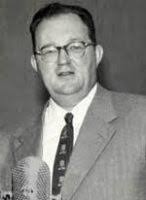 Was the death of Frank Edwards, famous newscaster and UFOlogist, predicted by the space people? This story shows up in a lot of literature from the time and many people took it seriously. An additional oddity offered up in the account is that the time of Edward’s death was a few hours before midnight, June 23rd, 1967. This was almost twenty years to the day after June 24, 1947, which was the date of the sighting by Kenneth Arnold that many consider the beginning of the modern UFO mystery.
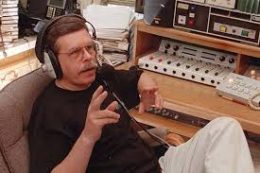 For many people, the late night radio show,
 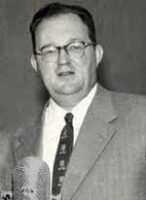 Near the end of the year 1949, Frank Edwards, newscaster for the American Federation of Labor sponsored Mutual Broadcasting System, received an advance copy of the
  The decade of the 1970’s was a strange one in America. The counter-culture of the late 50’s gained momentum through the 60’s and, by the 70’s, it had gone mainstream. Experimentation was everywhere in the arts, culture and politics of the era and the minds of the general population were open to possibilities that were, perhaps, beyond the capabilities of the science of the day to explain. It was a good time for UFOlogy and many documentaries on the subject started to appear in movie theaters that culminated in Steven Spielberg’s 1977 fictional treatment, “Close Encounters of the Third Kind.” The title of the movie comes from
 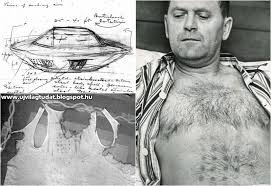 In many ways, the history of UFOs in Canada parallels that of the United States. There are early historical sightings recorded in the 1600’s and 1700’s, mysterious airships in the late 1800’s and a modern era from the 1940’s on. The two countries, concerned about a possible Soviet missile attack, worked closely with each other during the Cold War, monitoring the northern areas, including the Arctic Circle, with extensive radar facilities. Official Canadian UFO policy was then influenced by the U.S. policy, which was to down play reports to the public while quietly investigating them. In later years, the Canadian government became more open about the subject and two of Canada’s most famous cases, Falcon Lake and Shag Harbour, were recently celebrated with the release of commemorative coins from the Canadian Mint. This week’s guest, Chris Rutkowski, is Canada’s foremost UFO researcher and
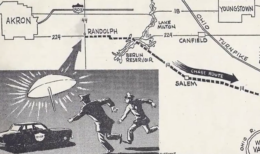
 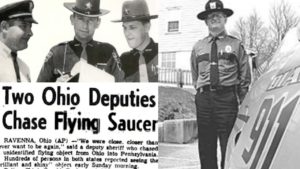 Throughout the history of UFO sightings, police involvement has been fairly common as they are often the first to be called by concerned citizens. Sometimes the officers sent to investigate end up becoming witnesses themselves and there are
 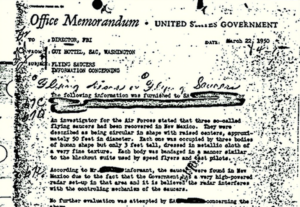 The CIA and FBI were interested in UFOs. It’s on the record and you, the public, can see for yourselves in documents released by both organizations. What’s not entirely evident is the interest those agencies had in civilian research organizations. Did the CIA and FBI plant undercover agents among members of certain groups that had achieved a certain level of popular recognition? Were there operations to discredit prominent researchers and witnesses? Were wiretaps or surveillance devices utilized to monitor researchers and those who provided them with sensitive information? If it can be determined that individuals or groups looking into the subject of UFOs were considered a threat to national security then the answer is, “most likely.”
 Throughout the 20th century it was believed by most researchers that UFOs were physical craft driven by extraterrestrials, ghosts were the spirits of dead people and Bigfoot was a large hominid as yet unclassified by primatologists. In the later part of that era, John Keel, author of “The Mothman Prophecies”, began to consider that all of these might come from a single cause and he began looking for a unifying theory. Now, in the 21st century, more and more researchers are beginning to think this way and some have focused on what have been called “paranormal hotspots” where there is a concentration of reports with many different varieties of strange activity. Investigators have included the father and son team of Paul and Ben Eno looking at areas of New England and Pennsylvania, a team from Robert Bigelow’s organization, the National Institute for Discovery Science (using our tax dollars under a
 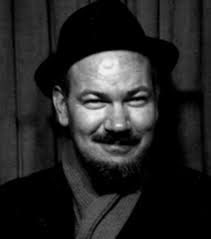 I am a fan of John Keel. For those of you who don’t know, he is best known as the author of, “The Mothman Prophecies”, a book that centers around strange events that occurred in Point Pleasant, West Virginia during a thirteen month period between 1966 and 1967. These included sightings of UFOs, Men in Black and a humanoid with wings that was dubbed “The Mothman” by the press. These events have a similarity, in terms of what is now called, “high strangeness” by modern Ufologists, to more recent events reported at a ranch in Nevada known as, “The Skinwalker Ranch.”
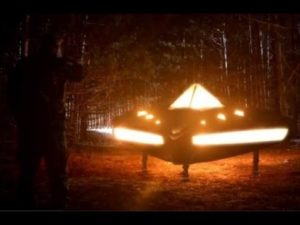 The Rendlesham Forest Incident is a British UFO case from 1980 that is comfortably familiar to those who are interested in the subject and is known, affectionately as, “The British Roswell.” It’s good, clean, UFO fun with an official memo and unofficial tape from a USAF Lt. Colonel, multiple military witnesses and an exuberant former Ministry of Defense employee, Nick Pope, championing the case as if he were the official British spokesperson. Nod and smile and on to the next case, right?