Simulcast on YouTube, Facebook & Twitter | Thursday, January 29, 2025 @ 11:00 AM EST (-5GMT)
CLICK IMAGE
BIO: Sarah Gamm’s education is a B.S is in Astrophysics and M.S. is in Countering Weapons of Mass Destruction. Most of her career has been in the Intelligence Community focused on satellite imagery analysis and as an image scientist. She has worked at ODNI-National Counterproliferation and Biosecurity Center where she was a nuclear counterproliferation strategist and led a new campaign initiative and briefed senior leaders in the US government. While Sarah worked with the United States Army Corp of Engineers (USACE) on the Mosul Dam Task Force, years of imagery collection led to a co-authored published paper that provided precise ground truth data blended with satellite imagery to remotely monitor dams. Sarah recently supported the Air Force as a Nuclear Campaign Analyst in the Pentagon, and now works for USACE as a scientist in the Army’s Tactical Exploitation of National Capabilities (TENCAP) office. She was an analyst for the UAP Task Force.
BIO: Anthony is an experiencer of various anomalous phenomena who has learned the importance of taking an inclusive and integral approach in the exploration of consciousness and our greater reality. He serves as the state lead for the Virginia chapter of Citizens for Disclosure, a volunteer activist group under the New Paradigm Institute pushing for UFO disclosure and transparency in Congress and destigmatizing the topic throughout society. Previously, he held a career as an open source intelligence (OSINT) analyst, focusing on geopolitical media and disinformation analysis.
Simulcast on YouTube, Facebook & Twitter | Tuesday, January 27, 2025 @ 11:00 AM EST (-5GMT)
Billy Meier
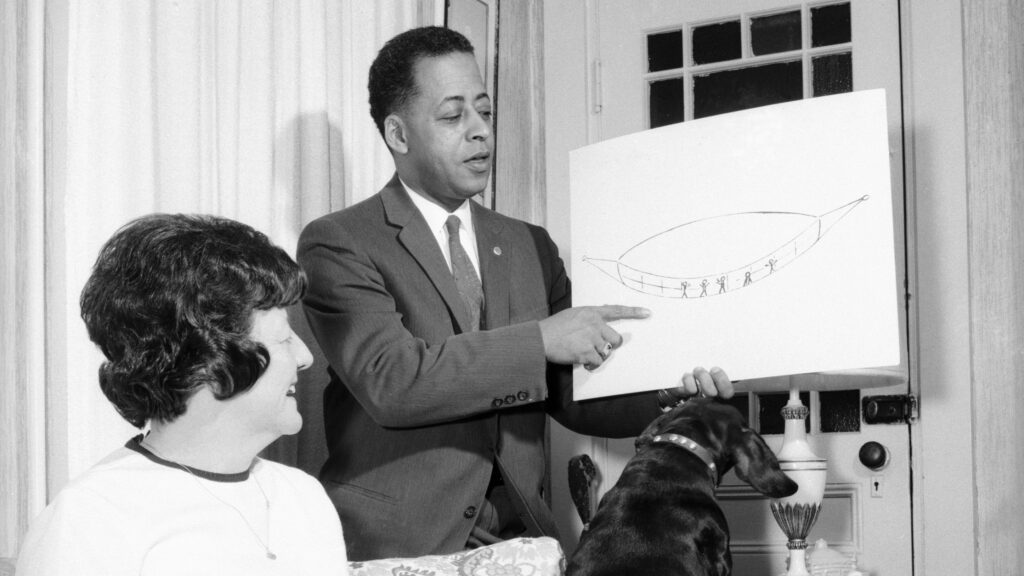
Jim & Coral Lorenzen
BIO: Allan Lavigne is a former investigator for the Aerial Phenomenon Research Organization from 1974-1980. He went on to a two-pronged career path spanning more than 45 years, as both a Physical Security Specialist and Intelligence Analyst in the private sector, working closely with the Joint Terrorist Task Force, FBI and Homeland Security. He is also an entertainment artist. His early work can be seen in the 1979 documentary UFOs are Real for which A.P.R.O. was the sole technical advisor. Allan went on to create Make-up Special Effects appliances, masks, and props for NBC’s Jack Web’s TV series Project UFO for two seasons.
In more recent years, Allan has done work for Sony Pictures on Iron Man 1 and 2, Marvel Entertainment, Disney, Lucas Films and others. There are permanent exhibits of his work at the San Francisco Cartoon Art Museum, and San Diego Comic-Con Museum in San Diego’s Balboa Park.
The cattle mutilation mystery and its association with UFO activity didn’t get the attention of researcher investigators until the 1970s. There is an article on page 2 of the March 1975 APRO Bulletin, headlined “More on Mutilations,” discussing the findings of APRO Field Investigators Bill Pitt, Lee Spiegel, and Kevin Randle. It was the opinion of APRO at the time that “no satisfactory evidence has emerged which links UFOs to mutilated animals.” The first mutilation to get the public’s attention was that of a horse named Snippy found by its owners in the San Luis Valley of Colorado on September 8, 1967. Shortly after that, in his article (page 8 of the pdf) in the July/August 1968 Flying Saucer Review headlined “West Virginia’s Enigmatic Bird,” John Keel mentions that cow and horse mutilations are “now common” in the midst of sightings of the Mothman and UFOs in the area around Point Pleasant. However, there is a report far earlier than this that, by most accounts, appeared in the April 23, 1897, Yates Center Farmer’s Advocate. This involves a mystery airship caught in the act of abducting a cow right in front of prominent Woodson County, Kansas, citizen Alexander Hamilton (not the one on the 20-dollar bill). While the Advocate article remains elusive, Redditt user Remseey2907 found an article in what appears to be the Globe Democrat that includes the details of and references the Advocate article. Read more →
For many people growing up in the 1970s (of which this writer is one), seeing a UFO documentary was their first in-depth look into the subject. These films often came along with books tied in, and major publishers such as Bantam were getting onboard. More and more people were willing to accept the idea that UFOs were worthy of serious consideration, and this meant that more and more people were willing to spend money on movies and books covering the subject. What had formerly been mostly confined to a subculture of enthusiasts, was now becoming a somewhat profitable entertainment industry. Indeed, it may come as a surprise to some readers, but between the summer of the saucers in 1947, and 1968, there were only two documentaries made in the midst of all the science fiction saucer films that became popular starting in the 1950s.
The beginning of the 1970s wave of UFO documentaries can be traced back to the 1968 book Erinnerungen an die Zukunft (Memories of the Future) by Erich von Däniken published by Econ-Verlag in West Germany. The book not only whetted the public’s appetite for UFOs and aliens (especially ancient ones), but opened up the doors for all things strange and mysterious, including Bigfoot, the Bermuda Triangle, ghosts, and lake monsters. Read more →
Simulcast on YouTube, Facebook & Twitter | Tuesday, January 20, 2025 @ 11:00 AM EST (-5GMT)
Podcast UFO will be attending and livestreaming a historic press conference at the National Press Club in Washington, DC, on January 20, 2026. 11:00am – 1:00pm ET. For the first time publicly, Dr. Italo Venturelli, a leading Brazilian neurosurgeon, will describe his direct hospital contact in 1996 with a living, non-human intelligent being following the infamous Varginha incident. Multiple Brazilian witnesses, medical professionals, and officials will present first-hand testimony regarding the reported crash of an unidentified object, the capture of non-human entities, and the subsequent involvement of Brazilian authorities and the U.S. Air Force. Organized by investigative journalist and filmmaker James Fox, the press conference will introduce new medical, forensic, and governmental evidence, including testimony from Dr. Armando Fortunato, the forensic pathologist who conducted the autopsy of a military police officer allegedly injured during the incident. The event coincides with the release of Fox’s new documentary Moment of Contact: New Revelations of Alien Encounters and follows growing calls for transparency after The Age of Disclosure. This press conference aims to present unprecedented data, encourage mainstream discussion, and prompt further governmental investigation into non-human intelligence encounters.
Simulcast on YouTube, Facebook & Twitter | Tuesday, January 20, 2025 @ 8:00 PM EST (-5GMT)
BIO: With an eye on the cosmos, the world beyond our own has always been a fascination for Chrissy Newton. From UFOs and astronomy to ancient civilizations, her curiosity is as limitless as the universe. By day, she is the owner of VOCAB Communications and an award-winning public relations professional with a talent for making complex ideas accessible; by night, she hosts and produces the space, science, futurism, and UFO-themed video and audio podcast Rebelliously Curious with Chrissy Newton for the science and space news outlet The Debrief. Chrissy has appeared on History, eTalk, HGTV, NewsNation, Dash Radio, Newstalk1010, Marketing Magazine, and numerous other media outlets, and she is a host on Alien Encounters: Fact or Fiction airing on Discovery Plus and HBO/Max. She also serves as a Partner, writer, and Director of PR for The Debrief and is a recent recipient of the Canadian Podcast Award for Best Science Series.
The first feature-length UFO documentary was titled, appropriately, Unidentified Flying Objects with the subtitle, The True Story of Flying Saucers. It was produced by Clarence Greene and released in 1956. Researcher Robert Barrow devoted a blogspot.com site to it titled UFO: The True Story of Flying Saucers and posted from June 2008 until July 2025. In his June 12, 2008, post, “The Driving Force: Clarence Greene,” Barrow includes a statement “signed” by Greene, but he tells the reader that he found it on the web “uncredited.”
According to Greene in his July 26, 1967, statement titled, “UFO: Why I Made Unidentified Flying Objects,” one night in August of 1952, a friend called his attention to something in the sky Greene describes as “a sphere of light.” They watched it for about five minutes as it moved, stopped, made turns, and then moved off over the horizon. He later learned that members of the Ground Observation Corps had also observed it. Read more →
BIO: Erling P. Strand is a Norwegian engineer and long-time investigator of the unexplained aerial light phenomena in Hessdalen Valley, Norway. He holds an MSc in Physical Electronics and Telecommunications Technology from the Norwegian University of Science and Technology (NTNU) and has a professional background in research, measurement systems, and computer science education.
Strand is one of the founders of Project Hessdalen, established in 1983 to organize systematic, instrument-based study of the recurring anomalous lights observed in Hessdalen. He led early fieldwork in the mid-1980s, authored the technical report from the 1984 investigations, and managed long-term instrumentation efforts including the installation and operation of the automatic observation station known as the Blue Box.
For more than four decades, Strand has been engaged in data collection, scientific outreach, and international collaboration. He served as project manager of Project Hessdalen until early 2023 and is now chairman of its board. He has contributed to science communication through more than 100 television appearances, over 120 radio interviews, 30+ podcast guest spots, and over 180 presentations worldwide.
In parallel with his research work, Strand was a lecturer in computer science at Østfold University College from 1988 until his retirement in 2023. His career also includes scientific expeditions to Australia, Mexico, and the United States.
He continues to support Hessdalen research and broader anomalous phenomena inquiry, serving as a consulting scientist for UFOdata.net and representing Norway in international research groups focused on unexplained aerial phenomena.
Simulcast on YouTube, Facebook & Twitter | Tuesday, January 06, 2025 @ 8:00 PM EST (-5GMT)
BIO: Anna Brady-Estevez is a founding partner of American Deep Tech, a deep technology investment firm focused on high-impact innovation. She has held senior roles across both the private sector and government, including service as a Program Director at the National Science Foundation, where she led national portfolios in energy, sustainability, space technology, and digital assets, and co-chaired interagency initiatives on the space economy and digital assets with the White House and NASA. A Kauffman Fellow and experienced early-stage investor, her work centers on advancing frontier technologies with societal and economic impact. She currently serves on the Board of Advisors of the UAP Disclosure Fund, where she supports serious, evidence-based inquiry into UAP-related science and technology within the broader context of innovation and policy.
For many people growing up in the 1970s (of which this writer is one), seeing a UFO documentary was their first in-depth look into the subject. These films often came along with books tied in, and major publishers such as Bantam were getting onboard. More and more people were willing to accept the idea that UFOs were worthy of serious consideration, and this meant that more and more people were willing to spend money on movies and books covering the subject. What had formerly been mostly confined to a subculture of enthusiasts, was on its way to becoming the profitable entertainment industry it is today. What may may come as a surprise to some readers is that between the 1947 summer of the saucers and 1968, there were only two documentaries (if any readers know differently feel free to comment) made in the midst of all the science fiction saucer films that became popular starting in the 1950s.
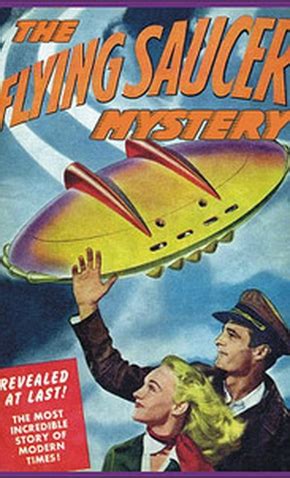
What is thought to be the first flying saucer/UFO documentary was released in 1950 as an approximately 9 ½ minute short titled The Flying Saucer Mystery. It was re-released in 1952 with added footage that brought it up to around 12 minutes. Both releases were produced by Telenews, which had a chain of 13 theatres in major cities throughout the U.S. that only showed newsreels. According to the December 20, 2019, post on The Science Fiction Encyclopedia website, the film (which release isn’t specified) was lost until the 1990s. The producer, director, and screenwriter are unnamed. Read more →
Simulcast on KGRA Digital Broadcasting, YouTube, Facebook, Twitter & Rumble | Tuesday, December 30, 2025 @ 9:00 PM EST (-5GMT)
Filmmaker and investigator James Fox joins Martin once again for an in-depth discussion of his latest release, Moment of Contact: New Revelations of Alien Encounters, which premiered this December. James is a longtime friend of the show and always brings thoughtful, firsthand insight into some of the most compelling UFO cases on record. In this wide-ranging conversation, we revisit the infamous 1996 Varginha, Brazil incident, often referred to as “Brazil’s Roswell,” and explore newly uncovered testimony that has emerged since the film’s release. As often happens after a major documentary airs, additional witnesses have come forward—adding layers of detail that continue to reshape our understanding of what may have occurred. James shares fresh updates from his recent travels to Brazil, including new witness accounts, hospital testimony, and disturbing details surrounding alleged creature encounters, military involvement, and medical examinations. We also discuss reports of unusual biological effects, conflicting official narratives, and why this case remains one of the most complex and controversial UFO incidents ever investigated. The conversation expands into broader themes as well—government secrecy, crash-retrieval programs, whistleblowers, and the long-standing question of where recovered craft and biological evidence might be kept. James also recounts his experience inside a classified government facility and what those encounters suggest about the current state of disclosure. Additionally, we touch on: Alleged military and intelligence involvement following the Varginha incident Witness intimidation and “men in suits” accounts Conflicting medical testimony and why some witnesses waited decades to speak The role of the U.S. government in international UFO recovery cases Why 2026–2027 continues to surface as a pivotal timeframe in UFO discussions This episode is pre-recorded due to scheduling, but presented unedited—bloopers and all. Check out the documentary here: https://geni.us/MOC_NewRevelations
BIO: For 30 years, James Fox traveled across the world in pursuit of the truth regarding UFOs. He directed and produced five films on the subject, “Out of the Blue, (2003); “I Know What I Saw” & Director’s Cut Edition, (2009); “The Phenomenon”, (2020) and “Moment of Contact”, (2022)“.
In 2007 orchestrated an event, with help from journalist Leslie Kean (Coalition for Freedom of Information), which to this day is hailed as the most credible civilian effort of disclosure on UFOs in history.
His last film The Phenomenon was a worldwide hit and became a hot news story event due to former minority senate leader, Harry Reid, who stated in Fox’s documentary that “Most of it (UFO evidence) hasn’t seen the light of day.” For his latest film, Moment of Contact, Fox goes where’s he’ never gone before in the phenomenon — reporting on recovered aliens. Taking place in Varginha Brazil in 1996, Fox uncovers new witnesses and reveals information on a cover up that has not seen the light on day for 30 years.
Throughout 1954 in France, there was a wave of humanoid reports that received national and international press coverage. That same year, Italy experienced a wave of its own that didn’t get nearly as much attention, although one particular case has since become a classic. A detailed account (page 12 of the pdf) of the case and a follow-up investigation 18 years later is presented in the Vol. 18, No. 5, Flying Saucer Review. Jacques Vallée included a brief account in his catalogue titled Une Siècle d’Atterisages” (a Century of Landings) published as a series in Lumières dans la Nuit starting with the April 1969 issue and ending with the February 1970 issue. However, according to editor Gordon Creighton, “so far as I am aware, no full description of it has ever appeared in English.”
The account, by Sergio Conti, appears on page 11 (page 14 of the pdf) under the headline, “The Cennina Landing of 1954.” It was translated by Creighton from Il Giornale dei Misteri No.17, published in August of 1972. Read more →
Simulcast on KGRA Digital Broadcasting, YouTube, Facebook, Twitter & Rumble | Tuesday, December 23, 2025 @ 9:00 PM EST (-5GMT)
In this in-depth episode of Podcast UFO, host Martin Willis is joined by Len Filppu, a lifelong experiencer whose 1967 Brockport, New York UFO sighting became a pivotal moment that reshaped his understanding of reality, consciousness, and the unexplained. Len recounts witnessing a low-flying, fiery orange object, accompanied by a smaller white orb, moving silently across the sky—an event corroborated by multiple police officers and dozens of civilian witnesses across western New York. The sighting later inspired the animated short documentary Psychedelic in the Sky, which explores not only the event itself, but the deeper psychological and spiritual impact it had on those involved. Beyond the UFO encounter, Len discusses a series of profound anomalous experiences, including a verified poltergeist incident, altered states of consciousness, and how stigma and ridicule once silenced witnesses for decades. Together, Martin and Len examine how public perception of UFOs has evolved—from mockery in the 1960s to serious scientific and academic inquiry today.
This conversation also touches on:
The Brockport UFO case and related sightings
Police and civilian corroboration
Consciousness, synchronicity, and personal transformation
The role of stigma in suppressing UFO testimony
Parallels between UFO encounters and other anomalous phenomena
The episode concludes with the screening of “Psychedelic in the Sky,” an animated short film by filmmaker Matthew Salton.
If you’re interested in credible UFO cases, firsthand testimony, and the deeper implications of anomalous experiences, this is an episode you won’t want to miss.
BIO: Len Filppu is a writer-screenwriter whose UAP story is described, in part, in Diana Pasulka’s book, Encounters. He did a stint in television news, served as a press secretary to the successful 1976 Jimmy Carter Presidential Campaign and on Capitol Hill, and worked for decades as an executive for numerous Silicon Valley technology firms including SRI International, Software Publishing Corporation, and Sun Microsystems. A later-in-life father, Len wrote the book, PRIME TIME DADS: 45 Reasons to Embrace Midlife Fatherhood, and was a columnist for The Huffington Post. He helped make the horror film, Fear No Evil, and has written several feature screenplays and a documentary film about the depletion of the Earth’s ozone layer. Len lives with his wife in Northern California where they raised their two children. He is currently working on his metaphysical memoir.
Jimmy Carter’s famous UFO sighting from 1969 in Leary, Georgia, was likely a high-altitude barium-sodium cloud released from a secret U.S. military rocket test at Eglin Air Force Base, consistent with his description of a luminous, color-changing, non-solid orb seen by many witnesses. While Carter never definitively claimed extraterrestrial involvement, his report sparked his lifelong openness to UFO phenomena, leading him to pledge to release UFO info if elected and remain respectful of witness accounts, viewing them as unexplained, potentially experimental, military phenomena, not necessarily alien ships.
A Kundalini experience is a profound spiritual phenomenon involving dormant life force energy rising from the base of the spine, causing intense physical sensations (heat, shaking, tingling), powerful emotional shifts, heightened intuition, and deep mystical states of bliss, oneness, or spiritual awakening, often triggered by practices like yoga, breathwork, or intense emotional release, leading to transformation but requiring guidance due to its intensity.
In 2019, U.S. Navy pilot Lt. Ryan Graves began speaking publicly about regular encounters by flight teams starting in 2013 with UFOs. On July 26, 2023, he testified before congress and said that on one occasion, two jets were forced to make evasive maneuvers to avoid a collision with an object he described as a clear sphere with a black cube inside. By the time of the hearing, the All-domain Anomaly Resolution Office headed by Dr. Sean Kirkpatrick had looked into these types of reports, and in May of 2023, Kirkpatrick informed NASA’s UFO advisory council that AARO had about 800 instances of “metallic orb” UFOs. This is according to a January 24, 2024, ScienceTimesarticle by Caleb White headlined “Cube in a Sphere UAP Could Be ‘Aliens’ or ‘Next Generation’ Spherical Drones, Pentagon Former UFO Chief Says.” Read more →
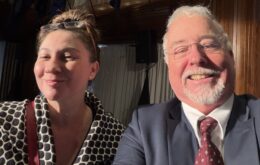 BIO: Anthony is an experiencer of various anomalous phenomena who has learned the importance of taking an inclusive and integral approach in the exploration of consciousness and our greater reality. He serves as the state lead for the Virginia chapter of Citizens for Disclosure, a volunteer activist group under the New Paradigm Institute pushing for UFO disclosure and transparency in Congress and destigmatizing the topic throughout society. Previously, he held a career as an open source intelligence (OSINT) analyst, focusing on geopolitical media and disinformation analysis.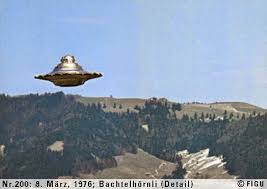
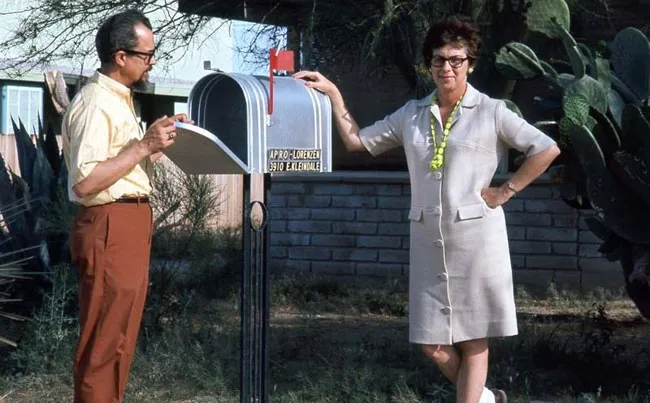
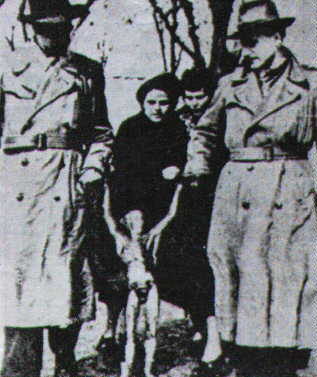
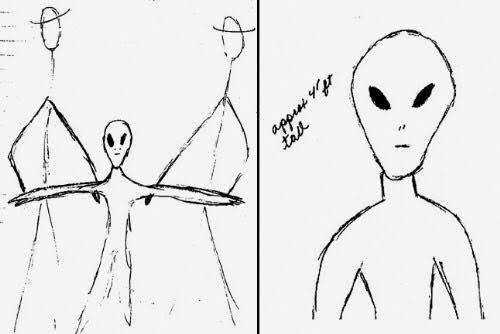
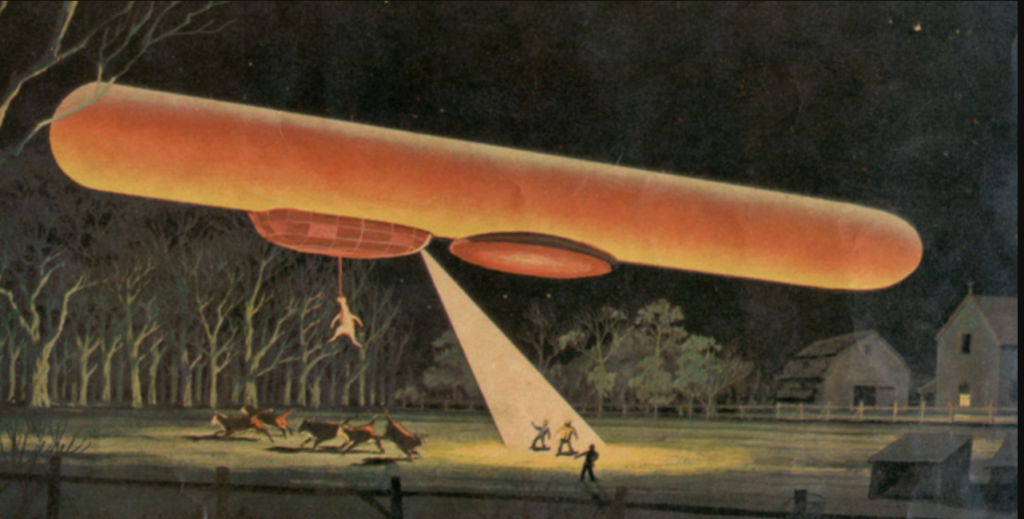 The cattle mutilation mystery and its association with UFO activity didn’t get the attention of researcher investigators until the 1970s. There is an
 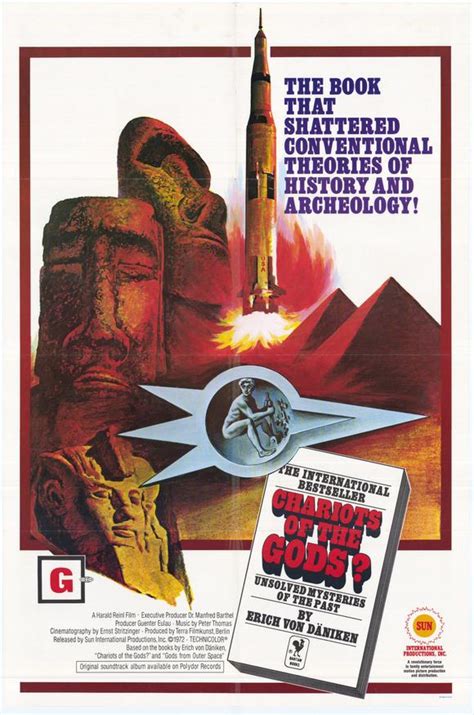 For many people growing up in the 1970s (of which this writer is one), seeing a UFO documentary was their first in-depth look into the subject. These films often came along with books tied in, and major publishers such as Bantam were getting onboard. More and more people were willing to accept the idea that UFOs were worthy of serious consideration, and this meant that more and more people were willing to spend money on movies and books covering the subject. What had formerly been mostly confined to a subculture of enthusiasts, was now becoming a somewhat profitable entertainment industry. Indeed, it may come as a surprise to some readers, but between the summer of the saucers in 1947, and 1968, there were only two documentaries made in the midst of all the science fiction saucer films that became popular starting in the 1950s.
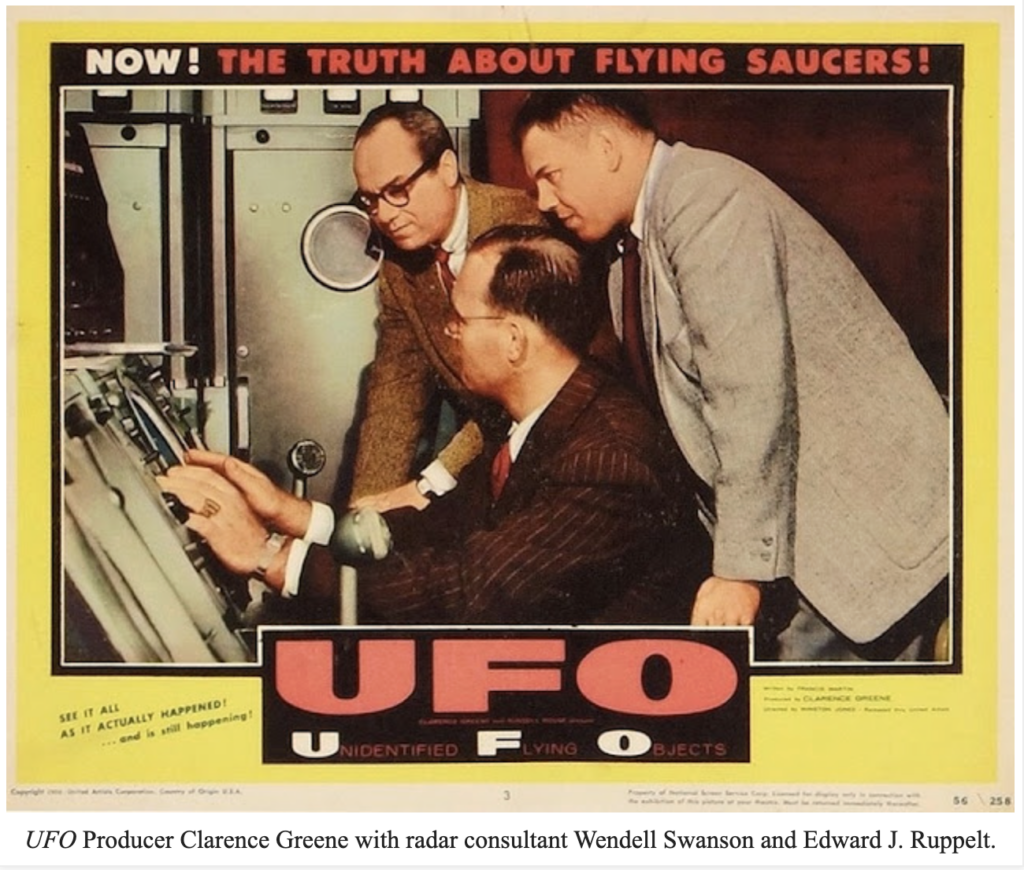 The first feature-length UFO documentary was titled, appropriately, Unidentified Flying Objects with the subtitle, The True Story of Flying Saucers. It was produced by Clarence Greene and released in 1956. Researcher Robert Barrow devoted a blogspot.com
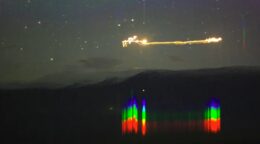
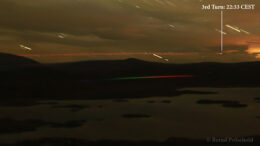 BIO: Erling P. Strand is a Norwegian engineer and long-time investigator of the unexplained aerial light phenomena in Hessdalen Valley, Norway. He holds an MSc in Physical Electronics and Telecommunications Technology from the Norwegian University of Science and Technology (NTNU) and has a professional background in research, measurement systems, and computer science education.
 For many people growing up in the 1970s (of which this writer is one), seeing a UFO documentary was their first in-depth look into the subject. These films often came along with books tied in, and major publishers such as Bantam were getting onboard. More and more people were willing to accept the idea that UFOs were worthy of serious consideration, and this meant that more and more people were willing to spend money on movies and books covering the subject. What had formerly been mostly confined to a subculture of enthusiasts, was on its way to becoming the profitable entertainment industry it is today. What may may come as a surprise to some readers is that between the 1947 summer of the saucers and 1968, there were only two documentaries (if any readers know differently feel free to comment) made in the midst of all the science fiction saucer films that became popular starting in the 1950s.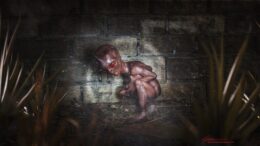
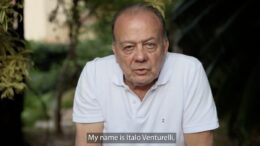


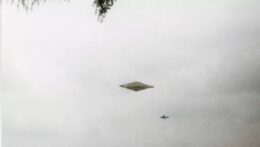 Filmmaker and investigator James Fox joins Martin once again for an in-depth discussion of his latest release, Moment of Contact: New Revelations of Alien Encounters, which premiered this December. James is a longtime friend of the show and always brings thoughtful, firsthand insight into some of the most compelling UFO cases on record. In this wide-ranging conversation, we revisit the infamous 1996 Varginha, Brazil incident, often referred to as “Brazil’s Roswell,” and explore newly uncovered testimony that has emerged since the film’s release. As often happens after a major documentary airs, additional witnesses have come forward—adding layers of detail that continue to reshape our understanding of what may have occurred. James shares fresh updates from his recent travels to Brazil, including new witness accounts, hospital testimony, and disturbing details surrounding alleged creature encounters, military involvement, and medical examinations. We also discuss reports of unusual biological effects, conflicting official narratives, and why this case remains one of the most complex and controversial UFO incidents ever investigated. The conversation expands into broader themes as well—government secrecy, crash-retrieval programs, whistleblowers, and the long-standing question of where recovered craft and biological evidence might be kept. James also recounts his experience inside a classified government facility and what those encounters suggest about the current state of disclosure. Additionally, we touch on: Alleged military and intelligence involvement following the Varginha incident Witness intimidation and “men in suits” accounts Conflicting medical testimony and why some witnesses waited decades to speak The role of the U.S. government in international UFO recovery cases Why 2026–2027 continues to surface as a pivotal timeframe in UFO discussions This episode is pre-recorded due to scheduling, but presented unedited—bloopers and all. Check out the documentary here:
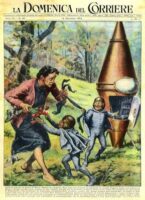 Throughout 1954 in France, there was a wave of humanoid reports that received national and international press coverage. That same year, Italy experienced a wave of its own that didn’t get nearly as much attention, although one particular case has since become a classic. A detailed
 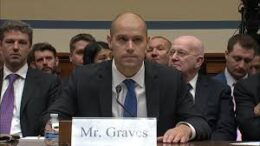 In 2019, U.S. Navy pilot Lt. Ryan Graves began speaking