Simulcast on YouTube, Facebook & Twitter | Tuesday, September 22, 2026 @ 8:00 PM EDT (GMT-4)
What happens when the people trained to investigate the unexplained become the witnesses? Serving UK Police Inspector Roy Teague joins host Martin Willis to discuss UFO encounters reported by serving and retired police officers—including accounts involving missing time and alleged abduction experiences. A British Army veteran with more than 26 years in policing, Roy’s background includes armed response, tactical firearms command and protection duties for members of the Royal Family and Parliament. His investigations into UFOs and paranormal events have led him to interview more than 250 serving and retired officers, many sharing experiences they had previously kept private.His book, Close Encounters of the Police Kind, brings together previously unheard accounts from UK police witnesses. We’ll explore what officers reported, why some were reluctant to speak, and how Roy approaches extraordinary claims with an investigator’s attention to evidence.How are UFO incidents perceived, reported and investigated within UK policing? What can an officer’s training bring to an account—and what questions remain unanswered?
BOOK: Close Encounters of the Police Kind
YOUTUBE CHANNEL: Policing the Unexplained
CONTACT: contact@policingtheunexplained.com
Insp Roy Teague Bio
Inspector Roy Teague served six years in the British Army, completing operational tours in both Northern Ireland and Bosnia before embarking on a distinguished policing career spanning more than twenty-six years across two police forces. Throughout his career, Roy has led a frontline existence working on emergency response, proactive teams and the elite Firearms Operations Unit of West Midlands Police as an Authorised Firearms Officer and both an operational and Tactical Firearms Commander, where calm judgement and decisive action are demanded in the most dangerous of circumstances. Many of these operations have led to the arrest of some of the country’s most dangerous armed criminals. He has also led protection details for some of the country’s most important figures including members of the Royal Family and Parliament. He has been awarded numerous commendations for bravery including one from a Chief Constable and another from a High Court Judge at the Old Bailey in his own attempted murder trial. His career has been built on evidence, discipline and an unwavering pursuit of the truth. Yet it is another skill that has taken him into territory few police officers have ever explored. A world just beyond our own – a place where mankind has no jurisdiction – where reality rides a razor thin seam between fact and impossibility – the world of UFOs, and the paranormal. In the perplexing field of unexplained studies, where hard evidence is often elusive, credibility remains the cornerstone of serious investigation. Roy’s reputation for professionalism and discretion enabled him to earn the trust of those trained to observe, question and report facts. That reputation opened the door to one of the most remarkable investigations of his career: interviewing more than 250 serving and retired police officers about their own encounters with unexplained aerial phenomena and paranormal events. Officers with nothing to gain and everything to lose finally broke their silence describing extraordinary close encounters involving missing time and alleged abduction experiences. The officers spoke because one of their own was asking the questions —and because they knew they would be treated with professionalism, respect and without ridicule. That research culminated in the publication of Close Encounters of the Police Kind, a unique investigation unlike any before it: law enforcement interviewing law enforcement about a phenomenon that has remained hidden behind the badge for decades. Blending the rigour of criminal investigation with first-hand testimony from experienced police officers, Roy offers readers a rare glimpse into a world where the unexplained collides with those sworn to uphold the law.
 Guitarist Kevin Estrella joins Martin Willis to recount a 2014 UFO sighting over Hamilton, Ontario, and the ongoing encounters he believes have influenced his music as Pyramids on Mars. Kevin describes “musical downloads,” invisible visitors, and a melody he believes translates to “Do you hear me?” Martin asks about evidence and the purpose of these reported encounters, while audience questions explore telepathy, first-contact predictions, and humanity’s readiness for contact.
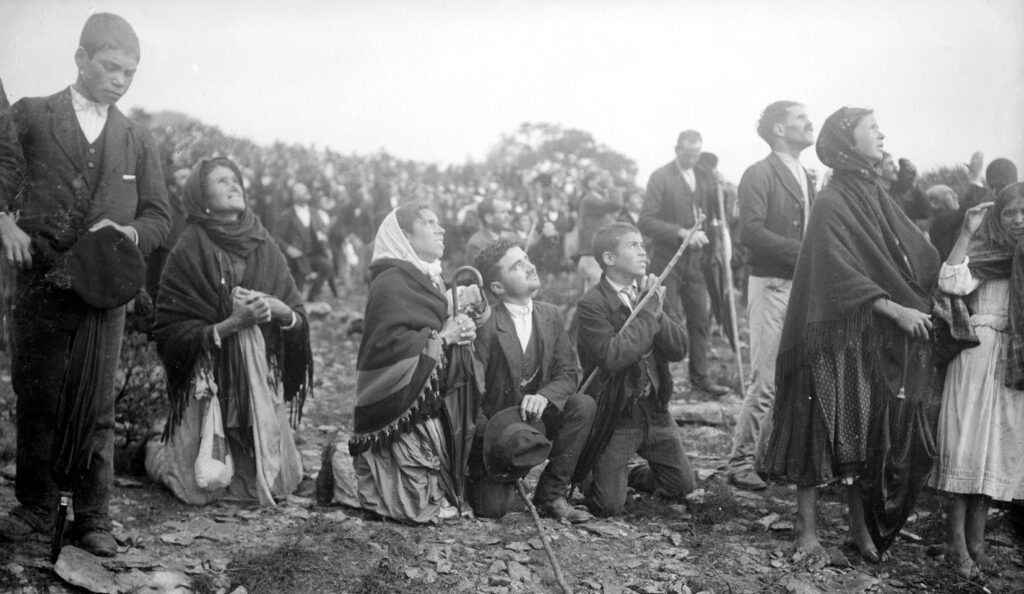
 Longtime UFO researcher Norio Hayakawa joins Martin Willis to explore whether UFO encounters could involve something other than physical extraterrestrial spacecraft. From his father’s reported 1947 sighting in Japan to the Socorro encounter and the mysteries of Dulce, Norio shares the experiences and research behind his unconventional perspective. Topics include his “paraphysical” theory, government secrecy and disclosure, the Farmington sightings, Fátima, Project Gasbuggy, and cattle mutilations. Martin offers questions and pushback throughout a conversation that examines the distinction between witness reports, personal beliefs, and verifiable evidence.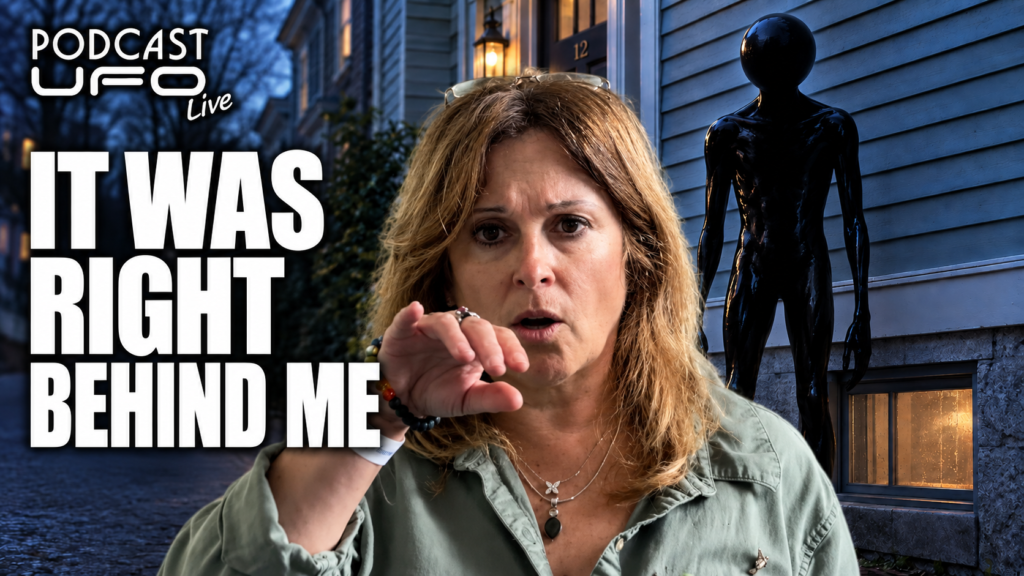
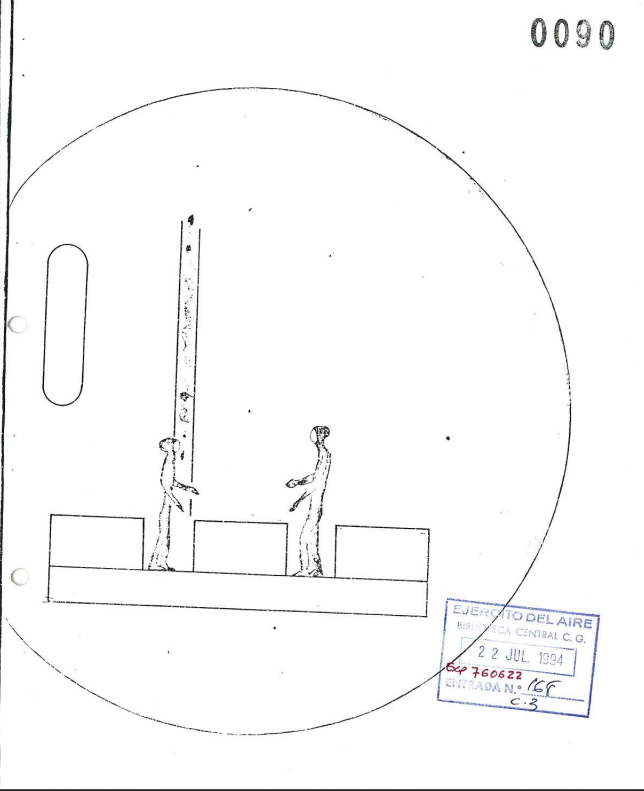
 British UFO researcher, author and publisher Philip Mantle joins Martin Willis to discuss UFO Reflections and more than four decades of investigation. Topics include Charles Forgus’s claimed Roswell testimony, the Alien Autopsy hoax, the reported 1980 Normanton UFO landing, and new witnesses and recordings connected to the Pascagoula encounter. Philip also reflects on his friendship with Calvin Parker, the importance of preserving forgotten testimony, and the growing challenge of AI-generated UFO misinformation.
 Former U.S. Navy F/A-18 pilot Alex Dietrich joins Martin Willis for a candid conversation about the November 14, 2004, Tic Tac UFO encounter off Southern California. Flying alongside Commander David Fravor, Dietrich witnessed an unidentified white object near an unusual disturbance in the ocean during a routine training mission with the USS Nimitz Carrier Strike Group. Dietrich recounts what she saw, the uncertainty she felt, and what she learned years later about the USS Princeton’s unusual radar contacts before the encounter. She also reflects on the personal challenges of speaking publicly and why acknowledging what we don’t know matters. It’s a thoughtful firsthand account of one of the most widely discussed UFO encounters in modern history.
 In 1969, just before the December 17th press
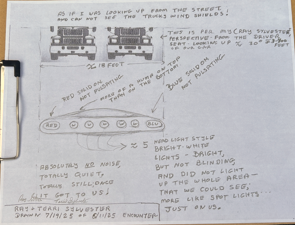
 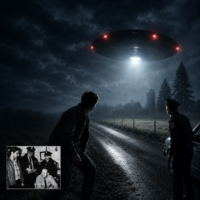 Martin Willis interviews Dean Merchant live at the Rye Public Library for a fascinating discussion about UFOs in New Hampshire, including the legendary 1965 Incident at Exeter. The program features firsthand testimony from Mike Geanoulis who describes seeing a massive object with extremely bright red lights over the Exeter area, as well as retired Exeter police officer George Dufour, who served on the force at the time and personally knew officers Gene Bertrand and David Hunt. Dean also explores the Betty and Barney Hill case, Stratham Hill, Pawtuckaway, Raymond, Ossipee, the White Mountains, and other New Hampshire UFO hotspots, along with theories involving nuclear activity, geology, and decades of unexplained sightings across the Granite State.
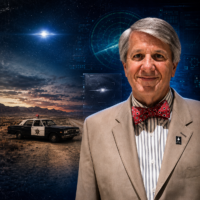 Veteran UFO researcher Rich Hoffman joins Martin Willis to discuss his remarkable six-decade journey, from investigating sightings near Project Blue Book as a teenager to helping lead the Scientific Coalition for UAP Studies. Rich examines the Tic Tac encounter, reported radar jamming, government transparency, private defense contractors and the limitations of UAP videos without adequate data. They also explore the New Jersey drone wave, AI-generated UFO footage, common misidentifications, near-death experiences and the possibility that science has only begun to understand the true nature of UAP and consciousness.


 Martin Willis interviews Dean Merchant live at the Rye New Hampshire Library, with a live audience, for a fascinating conversation about UFOs in New Hampshire. Dean, co-founder of the Exeter UFO Festival, discusses why the Granite State has long been considered one of the most active UFO regions in America. The conversation explores the legendary 1965 Incident at Exeter, the continuing mystery surrounding sightings in the Exeter/Kensington area, and other notable New Hampshire hotspots including Fremont, Brentwood, Raymond, Nottingham, Pawtuckaway, Ossipee, and the White Mountains. We also get into theories about why these areas may be so active, from geology and rare minerals to reports of USOs and long-standing witness testimony. If you’re interested in New England UFO history, regional hotspots, and the ongoing mystery of unexplained sightings in New Hampshire, this is an episode you won’t want to miss.