Simulcast on KGRA Radio, YouTube, Facebook & Twitch – Tuesday, July 26, @ 7:00 PM EDT (-4GMT)
Franck appeared in the recent documentary: ‘Aliens, Abductions, and UFOs: Roswell at 75’
Dr. Franck Marchis is a senior planetary astronomer and chair of the exoplanet group at the Carl Sagan Center of the SETI Institute and Chief Scientific Officer and Founder at Unistellar. He began full-time work at the Institute in June 2011 after leaving a joint position with Institute and the department of astronomy at University of California, Berkeley. Marchis moved to the United States in October 2000 shortly after getting a Ph.D. from the University of Toulouse in France that he acquired while traveling around the world for his research and for the sake of exploration. Over the past nineteen years, he has dedicated his work to the study of our solar system, specifically the search for asteroids with moons, using mainly ground-based telescopes equipped with adaptive optics (AO). More recently he has been also involved in the definition of new generation of AOs for 8 -10 m class telescopes and future Extremely Large Telescopes.
He has also developed algorithms to process and enhance the quality of astronomical and biological images. He is currently the collaboration manager of the Gemini Planet Imager Exoplanet Survey, which consists in imaging and characterizing Jupiter-like exoplanets using an extreme AO system designed for the Gemini South telescope. Today, Marchis dedicates most of his energy to instruments capable of imaging and characterizing Earth-like exoplanets by being involved in education, public outreach, technology, and scientific investigations related to those ambitious projects both in the United States and in Europe. Marchis is also involved in startups related to astronomy so he joined Unistellar as a Chief Scientific Officer and VR2Planets as a scientific advisor in 2017. Marchis is a member of numerous science committees including the SETI Science council, the GPI steering Committee, the TMT Science Definition Team, PLOS One editor board, the Project Blue and the PLANETS Foundation Advisory board. He has co-authored more than 380 scientific publications, trained numerous students, and served as a science consultant and interviewee for numerous documentaries and movies in English, French, and Spanish. The asteroid (6639) was named Marchis in honor of his discovery of the first triple-asteroid system in 2007. He has been an affiliated Astronomer at Observatoire de Paris since 2003
 UFOlogy in China is deeply interwoven with China’s politics. In 1978, China began what is known as “the reform,” which involved China opening up its economy to the West and the lifting of many restrictions. According to the
  Enjoyable conversation with repeat guest, Lee Speigel on what he has been up to lately, he will also be discusses what it was like to put together a 1976 vinyl album of solid witness accounts including astronaut Gordon Cooper, US Army Maj. Larry Coyne, and opinions from icons of the day such as J. Allen Hynek, Maj. Donald Keyhoe and more.
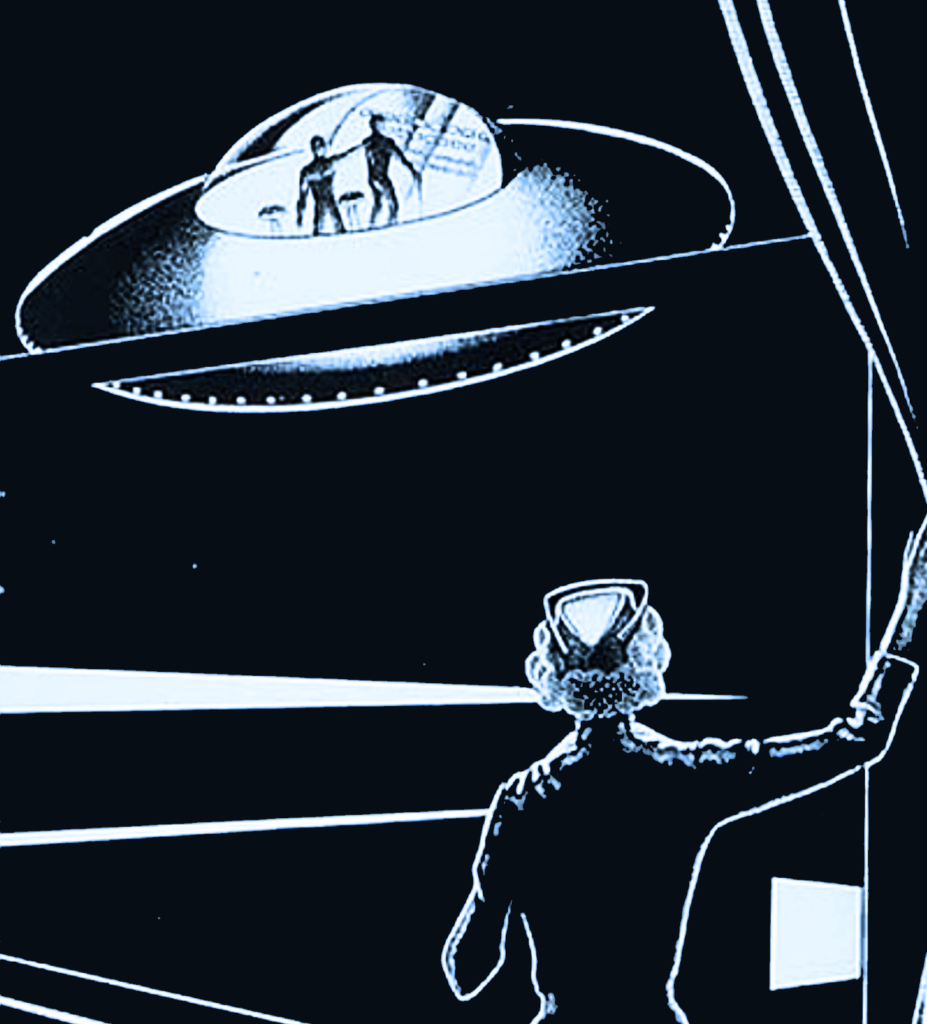 On January 1, 1970, the new year dawned in Canada with a UFO and occupants report. This was in the midst of a flap centered on Vancouver Island, British Columbia. It was investigated by John Magor, editor and publisher of the Canadian UFO Report, and he provided a report to the Victoria Times. The Victoria Times published an article on the case on page 1 of the January 5, 1970
  Shows will mostly be one hour long, next week beginning at 7;00 PM ET. Guests Patrick Jackson & Steve Colbern discuss their book and theory of QUANTUM PARANORMAL: A 21st Century Analysis of the Paranormal which includes their take on UFOs/UAP.
 Guest, Canadian UFO researcher, Chris Rutkowski comes on to discuss his latest book, Canada’s UFOs: Declassified, the book touches on decades of reported sightings by military & civilians in Canada.
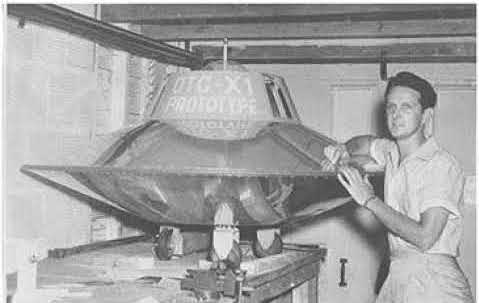 In the late 1950s flying saucers had been in the public consciousness for about a decade. The shock of the Arnold sighting and UFOs over Washington DC had worn off; saucers, though still mysterious, were now familiar. The government was actively running its third investigation into the reports of unidentified flying objects. Hollywood was incorporating the now iconic saucer craft into films of all budgets. Books had been printed on saucers and UFO magazines were on the newsstands every week. A new culture was being born around the flying saucers and possibility of alien contact. Many people claimed to have been contacted by extraterrestrials and some even claimed to have ridden in their craft. Others maintained that they had been given messages for their fellow Earthlings from the Space Brothers or comely Venusians.