 by Charles Lear, author of “The Flying Saucer Investigators.”
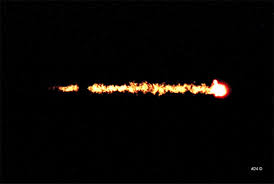
In Marfa, Texas, there is a phenomenon known as “The Marfa Lights” that has been around for a long time and still remains a mystery. It’s been studied by members of the Society of Physics Students from the University of Dallas and a retired aerospace engineer, James Bunnell. The students thought people were seeing car headlights on U.S. 67. Bunnell thought there was more to the lights than mere misidentification.
According to the Texas State Historical Association website entry on the subject by Julia Cauble Smith, the first historical record of a mystery lights sighting dates back to 1883. According to Smith, Robert Reed Ellison, a young cowhand, saw a flickering light while driving cattle through an area known as Paisano Pass and thought it might be coming from an Apache campfire. Other settlers told him they had seen lights on other occasions and when they investigated, they found no signs of fires in the area. This has been used as an argument against the car lights on U.S. 67 explanation by defenders of the mysterious nature of the lights, such as Ariel Slick, who posted an article on the Deep South Magazine website headlined “Marfa Lights: The Spirit of Texas” on August 19, 2022. Read more



 In 2010, an
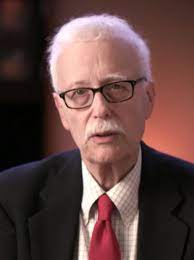
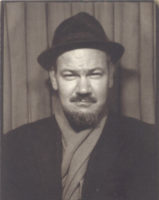
 Out of the three most prominent people in UFO abduction research, Budd Hopkins, David Jacobs, and John Mack, only Mack had any formal training in psychology. Hopkins was an artist, Jacobs was an historian, and Mack was the head of the psychology department at Harvard Medical School. Mack’s interest in UFO abduction research first gained major media attention when he co-chaired the Abduction Study Conference at M.I.T. in June of 1992. His position at Harvard lent credibility to the subject, and he worked to convince other academics to consider it seriously. Harvard’s leadership didn’t interfere with Mack’s interest until he published a book in 1994 titled Abduction: Human Encounters With Aliens based on his research with 13 subjects. Mack had had previous success as an author with a 1976 book on T. E. Lawrence, A Prince of Our Disorder, which won him a Pulitzer Prize in 1977. Abduction was a hit and Mack was featured in many newspapers, television news shows, and talk shows. As Mack’s position at Harvard was part of the story, there were some there who felt it was necessary to examine the validity of Mack’s investigations.