by UFO History Buff & Author, Charles Lear
 In the Volume 26, Number 6, March 1981 Flying Saucer Review, there is an article (page 7 of the pdf) by Russian UFO investigator Nikita A. Schnee headlined, “Contact Reported Near Pyrogovskoye Lake.” It tells the tale of an unnamed Red Army officer who said he was taken aboard a craft by “two men in dull-coloured cellophane like garments,” who told him they wanted to have a talk. In his introduction, Schnee explains that Soviet UFOlogists were of the belief that there were no Russian CE-3 cases. He cites Felix Y. Zigel, an assistant professor at the Moscow Institute of Aviation, who presented his opinion in the second issue of Observations of UFOs in the USSR that, in Schee’s words, “such reports are the fruits of sick minds, or obvious hoaxes with the aim of making money or obtaining publicity.” With that said, Schnee assures the reader that in his report, “all the events described actually (emphasis in the original) took place and are not products of the contactee’s imagination.” He says this “has been proved, quite convincingly” through examination of the witness and “the landing site of the UFO.” As the reader shall see, Russian UFOlogists had a unique style of landing site examination in those days. Read more
Podcast: Play in new window | Download
 Brazil has a history of official UFO investigation almost as long as that of the United States. However, it has an official policy on disclosure that predates the U.S.’s by more than a decade. In 1954, the Brazilian Air Force started The First Confidential Inquiry into Unidentified Aerial Objects in response to the first major flap in that country. In 1969, the Sistema de Investigação de Objetos Aéreos Não Identificados (SIOANI) was established, and nearly 100 detailed case files were accumulated up until its termination in 1972. After this, in 1977, in response to reports of injuries and deaths as a result of UFO encounters in the area of Pará (mainly in Colores) Operação Prato was authorized by Colonel Protásio Lopes de Oliveira. This resulted in more than 2000 photos, 16 hours of film, and a 179-page report. The First Confidential Inquiry, SIOANI and Operação Prato files were classified for decades, but thanks to a freedom of information campaign begun in April of 2004 by the Brazilian UFOlogist and publisher of UFO Revista, Ademar José Gavaerd, many of the files were shown to him and other UFOlogists in 2005 as a prelude to releasing them to the general public. Then, in 2010, Brazil issued Ordinance 551/GC3, requiring every branch of the military and aviation sectors to collect and transfer all UFO reports to the Aerospace Defence Command in Brasilia along with any material proof by way of photos or video on a yearly basis. There, it is to be catalogued and made available to the public. Along with this, since
  In the course of researching UFO cases in Spanish speaking countries, one is bound to run into Scott Corrales and Inexplicata: The Journal of Hispanic UFOlogy. It exists today as a
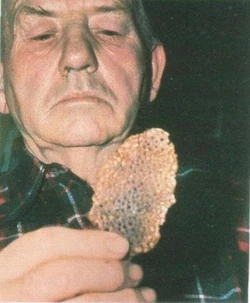
 In the August 1975, APRO Bulletin, the front-page

 BIO: David has had a lifelong interest in the UFO subject and has actively