By Charles Lear
 For many people, the late night radio show, “Coast to Coast AM” hosted by Art Bell, was their source for a steady stream of discussion on the subject of UFOs. It began in 1988 as a forum for political discussion with call-ins and interviews and, by 1995, it had evolved into a platform for the paranormal. Bell broadcast from his home in Pahrump, Nevada and handled five phone lines by himself putting unscreened call-in guests on the air to discuss strange experiences, conspiracy theories, UFOs and aliens. At its peak in the late 1990’s, the show was broadcast on over 500 stations and had an estimated 15 million listeners. Bell had discovered, and proven to others, that UFOs and the paranormal could be big business in broadcasting but, as would be expected given the long history of radio, he wasn’t the first.
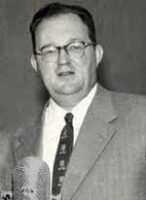 Near the end of the year 1949, Frank Edwards, newscaster for the American Federation of Labor sponsored Mutual Broadcasting System, received an advance copy of the January, 1950 edition of True Magazine. Edward’s attention was captured by a, now historic, article by Donald E. Keyhoe, “The Flying Saucers Are Real.” Edwards got permission from the editor to break the story on air and from that moment on, continued to include UFO reports and other stories of Forteana in his broadcasts. Though not proven, it is quite likely that these new reports and stories were a great help in propelling Edward’s show to become one of the top three radio news shows in early ‘50s America. He left MBS in 1954 and, shortly thereafter, created and hosted a syndicated radio show called, “Stranger Than Fiction” which was fully devoted to Forteana and UFOs. Edwards is best known to UFOlogists as the author of the 1966 classic, “Flying Saucers – Serious Business.” Edward’s new radio show was short-lived but another broadcaster came up with a show of his own that would go on for many years with great success.
 The decade of the 1970’s was a strange one in America. The counter-culture of the late 50’s gained momentum through the 60’s and, by the 70’s, it had gone mainstream. Experimentation was everywhere in the arts, culture and politics of the era and the minds of the general population were open to possibilities that were, perhaps, beyond the capabilities of the science of the day to explain. It was a good time for UFOlogy and many documentaries on the subject started to appear in movie theaters that culminated in Steven Spielberg’s 1977 fictional treatment, “Close Encounters of the Third Kind.” The title of the movie comes from
 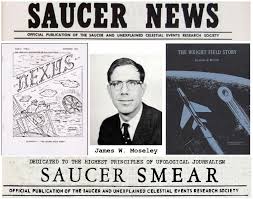 In the early days of the modern UFO era, if you were an American and you saw something strange in the sky and wanted someone to investigate, you reported it to the Air Force. If the Air Force dismissed your case as unworthy of study before 1952, there were no other organizations to turn to. There were a few private individuals who might be willing to look into it, but they were usually under contract with publications such as True Magazine, Look Magazine, and Fate, which meant that there would be some publicity involved. There was a need for a private organization of dedicated researchers and, by the end of 1952, three groups had formed to fill it. The first two were the International Flying Saucer Bureau founded by