By Charles Lear
 The decade of the 1970’s was a strange one in America. The counter-culture of the late 50’s gained momentum through the 60’s and, by the 70’s, it had gone mainstream. Experimentation was everywhere in the arts, culture and politics of the era and the minds of the general population were open to possibilities that were, perhaps, beyond the capabilities of the science of the day to explain. It was a good time for UFOlogy and many documentaries on the subject started to appear in movie theaters that culminated in Steven Spielberg’s 1977 fictional treatment, “Close Encounters of the Third Kind.” The title of the movie comes from J. Allen Hynek’s system of sightings classification and CE3 designated a UFO sighting that involved beings. In 1973, CE3 sightings hit a peak and that year was designated, “The Year of the Humanoids” in a report published by the Center for UFO Studies, written by David Webb from files provided by Ted Bloecher. Both men were co-chairman for the Mutual UFO Network associated, Humanoid Study Group.
Webb wrote that from August into December of 1973, there were 70 reports in files available to him of humanoids associated with UFOs, with 55 of them being within the continental United States. These sorts of reports have always made up a small percentage of the overall reports and Webb acknowledged this. He went on to consider that, if one was to assume that UFOs are piloted extraterrestrial crafts visiting Earth, more could be learned about the visitors by studying them than studying the crafts. The first step, as he saw it, was to organize the sightings. Humanoids seen in association with craft were of primary interest followed by those seen in the proximity of UFO activity. Webb mentions contactee reports with caution, “monster” sightings and finally abduction reports. He distinguished humanoids from “monsters” and ape-like creatures such as Bigfoot, which he termed, “anthropoids.”
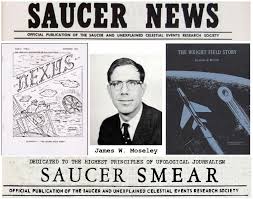 In the early days of the modern UFO era, if you were an American and you saw something strange in the sky and wanted someone to investigate, you reported it to the Air Force. If the Air Force dismissed your case as unworthy of study before 1952, there were no other organizations to turn to. There were a few private individuals who might be willing to look into it, but they were usually under contract with publications such as True Magazine, Look Magazine, and Fate, which meant that there would be some publicity involved. There was a need for a private organization of dedicated researchers and, by the end of 1952, three groups had formed to fill it. The first two were the International Flying Saucer Bureau founded by
  In many ways, the history of UFOs in Canada parallels that of the United States. There are early historical sightings recorded in the 1600’s and 1700’s, mysterious airships in the late 1800’s and a modern era from the 1940’s on. The two countries, concerned about a possible Soviet missile attack, worked closely with each other during the Cold War, monitoring the northern areas, including the Arctic Circle, with extensive radar facilities. Official Canadian UFO policy was then influenced by the U.S. policy, which was to down play reports to the public while quietly investigating them. In later years, the Canadian government became more open about the subject and two of Canada’s most famous cases, Falcon Lake and Shag Harbour, were recently celebrated with the release of commemorative coins from the Canadian Mint. This week’s guest, Chris Rutkowski, is Canada’s foremost UFO researcher and
 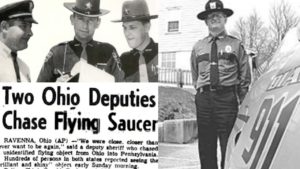 Throughout the history of UFO sightings, police involvement has been fairly common as they are often the first to be called by concerned citizens. Sometimes the officers sent to investigate end up becoming witnesses themselves and there are
 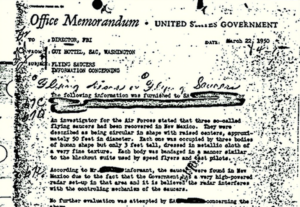 The CIA and FBI were interested in UFOs. It’s on the record and you, the public, can see for yourselves in documents released by both organizations. What’s not entirely evident is the interest those agencies had in civilian research organizations. Did the CIA and FBI plant undercover agents among members of certain groups that had achieved a certain level of popular recognition? Were there operations to discredit prominent researchers and witnesses? Were wiretaps or surveillance devices utilized to monitor researchers and those who provided them with sensitive information? If it can be determined that individuals or groups looking into the subject of UFOs were considered a threat to national security then the answer is, “most likely.”
 Throughout the 20th century it was believed by most researchers that UFOs were physical craft driven by extraterrestrials, ghosts were the spirits of dead people and Bigfoot was a large hominid as yet unclassified by primatologists. In the later part of that era, John Keel, author of “The Mothman Prophecies”, began to consider that all of these might come from a single cause and he began looking for a unifying theory. Now, in the 21st century, more and more researchers are beginning to think this way and some have focused on what have been called “paranormal hotspots” where there is a concentration of reports with many different varieties of strange activity. Investigators have included the father and son team of Paul and Ben Eno looking at areas of New England and Pennsylvania, a team from Robert Bigelow’s organization, the National Institute for Discovery Science (using our tax dollars under a
 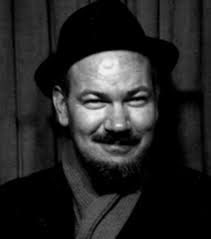 I am a fan of John Keel. For those of you who don’t know, he is best known as the author of, “The Mothman Prophecies”, a book that centers around strange events that occurred in Point Pleasant, West Virginia during a thirteen month period between 1966 and 1967. These included sightings of UFOs, Men in Black and a humanoid with wings that was dubbed “The Mothman” by the press. These events have a similarity, in terms of what is now called, “high strangeness” by modern Ufologists, to more recent events reported at a ranch in Nevada known as, “The Skinwalker Ranch.”
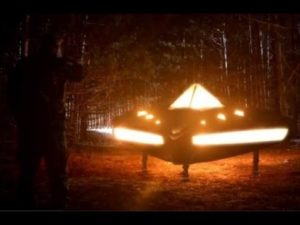 The Rendlesham Forest Incident is a British UFO case from 1980 that is comfortably familiar to those who are interested in the subject and is known, affectionately as, “The British Roswell.” It’s good, clean, UFO fun with an official memo and unofficial tape from a USAF Lt. Colonel, multiple military witnesses and an exuberant former Ministry of Defense employee, Nick Pope, championing the case as if he were the official British spokesperson. Nod and smile and on to the next case, right?
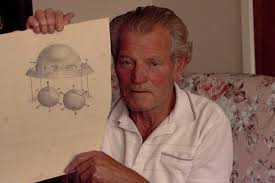 In listings of top UFO hot spots around the world, the small town of Bonnybridge, Scotland is frequently included. Bonnybridge lies within an area known as “The Falkirk Triangle” which is described variously from being a large area defined by lines drawn between Edinbugh in the east, Glasgow in the west and Stirling in the north to a smaller triangle formed by three roads: the M8, the M9 and the M80. The area has a history of many sightings and episodes that were exceedingly strange and the citizenry of the town of Bonnybridge has petitioned a succession of British Prime Ministers for an explanation.
 The history of UFO sightings and alien encounters as portrayed in the popular media is, mostly, separated into distinct periods: modern, from the late 1890’s airship flap followed by World War II “foo fighters” into post-1947 after the Kenneth Arnold report, and ancient interaction pieced together using “evidence” from the time of cave dwelling humans up to the time of the builders of cities and megalithic structures. UFOs depicted in Byzantine paintings (misinterpreted conventional symbols) the 1561 report from
  When people in the UFO community refer to To The Stars Academy founder, Tom DeLonge, more often than not, the words, “rock star” precede his name. This seems to serve the purpose of distinguishing him from “normal” UFOlogists but the truth is that he is but one of many rock musicians who have had or have a serious interest in the subject. What’s unusual about DeLonge is that he has managed to gather the highly credentialed people he has staffing TTSA and that his group has stormed to the forefront of the field overshadowing other long existing research organizations. For a “rock star” to manage this he has to overcome the big issue all UFOlogists are concerned with and that is credibility. If a witness was drunk or on drugs during a sighting, a case will most likely be dismissed by an investigator. As many rockers throughout history have been notorious for their often, extreme indulgence, well, you get the idea of what DeLonge is up against.