by Charles Lear
 Every so often, there are concentrations of UFO sightings reports, known as flaps or waves that receive a substantial amount of press coverage. This occurred in the U.S. in the early years of the modern UFO era and the press generated by one flap in 1952, which included sightings over the Capital, caused a great deal of concern in Washington. In 1954, there was a flap that was worldwide that involved reports of not only flying saucers, but also of landed saucers and humanoid occupants. There are reports on record from South America to Africa and the Middle East but the heaviest concentration was over France. It was there that French researcher, Aimé Michel came to international prominence as he investigated, collected data and tried to unravel the mystery. A young Jaques Vallée first became interested in flying saucers at this time and was inspired by Michel’s work to go on to even greater prominence as a respected and influential figure in the field.
On September 10, 1954, an incident was reported to police by a 34 year-old man in Quarouble that went on to be covered by the press extensively, not only in France, but worldwide. Marius Dewilde told police that at 10:30 PM, he was sitting in his house by the railroad tracks, when his dog, Kiki, started barking outside. Dewilde went to investigate, bringing his flashlight, as it was dark. Outside, he noticed a large object, which he assumed was a harvest cart, six meters from his front door. He then saw two figures on a nearby path that was often used by smugglers. He shined his flashlight at them and it reflected off of what he perceived was a helmet on one of the figures, both of which he estimated to be about a meter in height. At that moment, a door opened up on the side of the object, a blinding light came out and Dewilde said he was paralyzed by fear. He closed his eyes and when he opened them, the object had risen ten meters in the air and it then shot off to the west like “lightning.” Later, indentations were found in railroad ties that were thought to have possibly come from the object’s landing gear. As the story made its way from newspaper to newspaper, Dewilde’s being paralyzed by fear turned into Dewilde being paralyzed by a beam of light.
 At this point in time, most people interested in UFOs are probably used to being able to look at official government documents if they want to do some research. The C.I.A., F.B.I. and N.S.A. all have UFO related documents available online and there is, of course, the enormous collection amassed by John Greenewald Jr. on his site,
 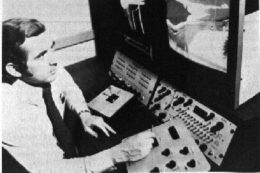 Ground Saucer Watch was formed in 1957 and its members included scientists, engineers and technicians. William Spaulding, the group’s director, was an aerospace quality control engineer who worked at a company called AIResearch. GSW was based in Arizona and was one of the first groups to respond to the 1975
 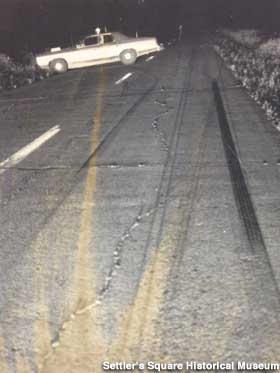 There is a discussion among UFO enthusiasts as to whether or not the objects being reported are actually material in nature. Cases where there have been physical traces left behind after a sighting support the argument that some objects are indeed solid but there were times when those traces were left behind none-too-gently. Actual collisions have been reported between UFOs and aircraft, cars and, possibly, even a train according to a report referenced to in the forum section of
  What was the first civilian organization solely dedicated to research on the subject of UFOs and when did they form? After a little research, most should agree that it was the Los Angeles based
 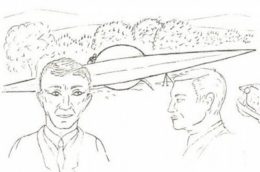 It often occurs among UFO enthusiasts that people will form a belief in a case and find it difficult to let go of that belief in spite of evidence that the case was more than likely a hoax. The alleged 1948 crash and retrieval of a flying disk near Aztec, New Mexico is a classic example. This case has spawned the well-known 1950 book by Frank Scully,
 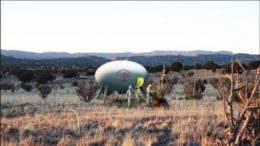 The April 24, 1964 sighting of a landed UFO with two beings standing next to it by Socorro, NM Police Sergeant, Lonnie Zamora has been written about extensively and remains a fascinating mystery to this day. What’s particularly interesting about this case is how many people investigated it. Representatives from the Socorro Police, New Mexico State Police the F.B.I. and Army were first on the scene followed by the Lorenzens from the Aerial Phenomena Research Organization, members of the Air Force and J. Allen Hynek as part of Project Blue Book, and Ray Stanford for the National Investigations Committee on Aerial Phenomena. Besides the testimony of Zamora, there was trace evidence to examine, witnesses to a similar craft to interview, and reputed witnesses to the very craft Zamora reported who were searched for but never found. Despite the thoroughness of the inquiries and analyses by so many experienced investigators, no one was able to come up with an agreeable Earthly explanation.
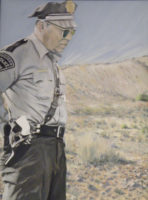 According to Zamora’s written
 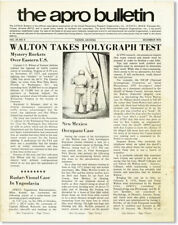 APRO was formed in the fall of 1951 through the efforts of Coral Lorenzen with the help and encouragement of her husband, Jim. Coral’s interest in UFOs preceded the 1947 Kenneth Arnold sighting by more than a decade following her own sighting of an unexplained object. Coral claimed that in 1934, as a young girl with the maiden name, Lightner, she and her two playmates, Barbara Stringer and Dorothy Wethern, saw what looked like a parachute moving across the sky. Coral noticed that it didn’t have any strings and this caused her to question whether what she was seeing actually was a parachute. She told her father what she had seen and he was impressed enough to make inquiries and found that there were no pilots in the area at that time. Three years later, at the age of 12, Coral was being checked for astigmatism and told her doctor what she had seen. He recommended that she read the books of Charles Fort, a writer who was a pioneer chronicler of the strange and unusual, and Coral developed an interest that would stick with her for the rest of her life.
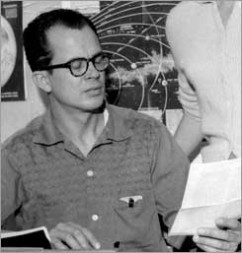 In 1951, Coral and Jim Lorenzen were living in Sturgeon Bay, Wisconsin after a brief stay in Los Angeles. While in Los Angeles, they had met contactee, George Adamski, and Coral reported that she was unimpressed by his claims, in part due to his repeated references to the moon as a planet. In Wisconsin, Coral decided to start a group that would keep track of sightings reports and she wrote to people she knew who might be interested. Around fifty responded positively and the Aerial Phenomena Research Organization came to be. Coral had chosen the name, consciously avoiding the term, “flying saucers” which she found distasteful. The center of operation for APRO was an antique table with clawed feet in the corner of the Lorenzen’s living room and the means of communication among its members was a portable typewriter.
 An important factor influencing acceptance is the credibility of the investigator. It should be safe to say at.this point that civilian UFO investigators have more credibility than government employed investigators. This is because, far too often, commonly mistaken objects have been indiscriminately offered as explanations by public officials in order to put a case to rest. This is unfortunate because there are occasions where a good solution to a case that could help clear out some of noise in the signal may be dismissed by many due to what has become a reflexive reaction. From a
 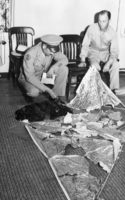 The July, 1947,
  The UFO mystery is not a 20th century phenomenon, but it did in many ways come into prominence in the 20th century. Serious study of UFOs began around World War II and thrived in the following decades. During this golden age of UFO study radio was the dominant form of electronic media. Although film and television existed, radio was a much more important source of timely news and information. Also during this time UFO investigators would find audio recording devices much more portable, reliable and affordable than film equipment. All of this led to an incredible amount of information from the golden age of UFO study being stored in audio formats.
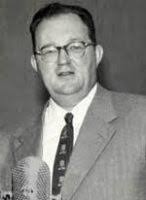 Was the death of Frank Edwards, famous newscaster and UFOlogist, predicted by the space people? This story shows up in a lot of literature from the time and many people took it seriously. An additional oddity offered up in the account is that the time of Edward’s death was a few hours before midnight, June 23rd, 1967. This was almost twenty years to the day after June 24, 1947, which was the date of the sighting by Kenneth Arnold that many consider the beginning of the modern UFO mystery.