by Charles Lear, author of “The Flying Saucer Investigators.”

People react to UFO encounters in different ways. Some are profoundly moved, some are terrified, some take them in stride, and some become fascinated. Tom Moir, a young man in the Aberdeenshire village of Muchalls, Scotland, was moved to become an investigator after his sighting in 1971, and he spent three decades videotaping UFOs in his area that he said were showing up on a regular basis. He came to believe they were monitoring him and his neighbors and this disturbed him to the point where he ended up moving thousands of miles away to Aukland, New Zealand.
Moir’s story appears in the 1998 book by Ron Halliday, UFO Scotland. Moir is identified in the book as Tom McClintock. According to Halliday, Tom was walking home from a bus stop near his home after his weekly violin lesson. On his right, “he noticed a red, pulsating light.” Another identical one appeared on his left and then, a third. He was not scared, but rather, curious as to what they were doing.
 by Charles Lear, author of
 In 2010, an
  Out of the three most prominent people in UFO abduction research, Budd Hopkins, David Jacobs, and John Mack, only Mack had any formal training in psychology. Hopkins was an artist, Jacobs was an historian, and Mack was the head of the psychology department at Harvard Medical School. Mack’s interest in UFO abduction research first gained major media attention when he co-chaired the Abduction Study Conference at M.I.T. in June of 1992. His position at Harvard lent credibility to the subject, and he worked to convince other academics to consider it seriously. Harvard’s leadership didn’t interfere with Mack’s interest until he published a book in 1994 titled Abduction: Human Encounters With Aliens based on his research with 13 subjects. Mack had had previous success as an author with a 1976 book on T. E. Lawrence, A Prince of Our Disorder, which won him a Pulitzer Prize in 1977. Abduction was a hit and Mack was featured in many newspapers, television news shows, and talk shows. As Mack’s position at Harvard was part of the story, there were some there who felt it was necessary to examine the validity of Mack’s investigations.

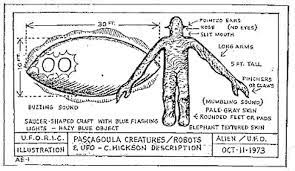
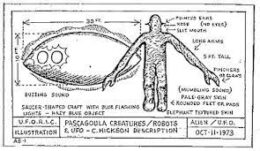 In 1973, the claims of Charles Hickson and Calvin Parker that they’d been abducted by elephant-skinned, robot-like creatures in Pascagoula, Mississippi, opened researchers up to what have become known as “high-strangeness” reports. The term comes from J. Allen Hynek’s efforts at creating a system of strangeness ratings in Chapter Four of his 1975 book, The UFO Experience. Hickson and Parker were taken seriously because they seemed genuinely traumatized by their experience while just the two of them were waiting in a room at the police station where they first reported their encounter. They just been interviewed, and unbeknownst to them, a tape recorder in the room was left running, which captured the bewildered men talking to each other about their experience. Their story was reported in newspapers and UFO publications worldwide. After that, abduction reports began to increasingly appear. In the midst of this new openness to high-strangeness reports, in 1979, there was a story told by a trucker that was highly unique, and highly strange, and yet was still given serious consideration by the local newspapers and investigators who examined it.
 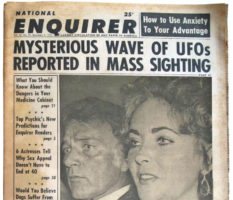 Many readers may not be aware that, at one point in time, the National Enquirer was associated with serious UFO research in spite of its reputation as a sensationalistic supermarket tabloid. In 1972, the Enquirer put together what they called “The National Enquirer Blue Ribbon UFO Panel,” which was made up of five UFO researchers, all of whom held PhDs. The Enquirer was offering a $50,000 reward for proof, by the end of the year, that UFOs came from space and were not a natural phenomenon. The panel was tasked with evaluating UFO cases to determine if any of them provided such proof. The panel members included four consultants for the Aerial Phenomena Research Organization, and Dr. J. Allen Hynek, a scientific consultant for the Air Force’s UFO investigation for most of its existence. All of them had good reputations within the UFO community, and the reader may wonder why they would put those at risk by being associated with the Enquirer in such an endeavor. It’s likely that the prospect of getting some of their research funded by the Enquirer may have helped them to put aside any aversions, and the assignment in 1975 of
 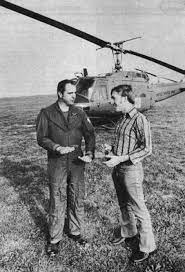 1973 was a special year for UFO enthusiasts. Not only were there a huge number of reports in the
 newspapers as can be seen in the