by UFO History Buff & Author, Charles Lear
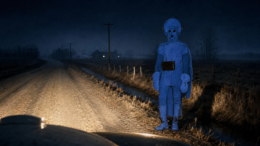 In 1958, motorists in Elkton, Michigan, were alarmed by the sight of a blue creature with blinking lights and what looked to be a space helmet. Estimates of its size ranged from 2 to 10 feet tall, and mothers who spotted it while looking out the windows of their homes were reportedly worried about letting their children go out at night. The police got involved after a busload of junior high school students spotted it, and it wasn’t long before the mystery was solved.
In the October 31, 2008, Huron Daily Tribune there is an article (page 5 of the pdf) by Traci L. Weisenbach headlined, “50 Years Ago, ‘Little Blue Man’ Shook up Elkton.” After the introduction in which the reader is asked to imagine driving down a country road and spotting “an illuminated, bluish figure moving very quickly, perhaps even dancing,” Weisenbach reveals that the creature was actually a young man dressed in a costume. He and two of his friends had come up with the idea, and with him in costume hidden in the trunk of a car, the other two would drive around and let him out in various locations.
According to Weisenbach, the three men involved were Jerry Sprague, LeRoy Shultz, and Don Weiss, who had just returned after serving in the military. Don Weiss was interviewed and said, “We were 22 or 23 years old and we were looking for work.” He added, “We had a little extra time on our hands.” Read more
Podcast: Play in new window | Download
 Rony Vernet returns to Podcast UFO to discuss his field investigations into unusual phenomena reported in the Amazon rainforest and other remote regions of Brazil. An electrical engineer and researcher, Vernet shares accounts from indigenous communities involving luminous orbs, humanoid figures, strange lights, apparent equipment interference, and encounters that local residents believe originate from the forest itself. Martin and Rony also discuss the Peru flying humanoid reports, the Varginha case, alleged Brazilian military and police encounters with UAPs and beings, and the difficulty of collecting repeatable scientific data in unpredictable field conditions. Vernet explains his use of cameras, drones, infrared equipment, sensors, and other tools, along with why some of the most striking incidents reportedly involved lost or corrupted recordings. The conversation explores possible physical, spiritual, psychological, and interdimensional interpretations of the phenomenon, as well as Rony’s upcoming work and documentaries.
 Martin Willis is joined by Donna Killeen, UFO Jack, Kelly Hughes, and Sam Milodragovich for UFO Headlines, discussing the latest developments in the UAP and UFO world. Martin and Donna share highlights from the recent Disclosure Forum in Washington, DC, including Martin’s question to Representative Eric Burlison about government file releases, private-sector crash-retrieval claims, and the search for more meaningful transparency. The panel also discusses the latest UAP records release, unusual orb reports, the role of skeptics, government disclosure efforts, archival research, and major historic cases including Roswell, Ariel School, Phoenix Lights, and Rendlesham Forest. They also explore the larger questions: Could there be multiple intelligences behind the phenomenon, and what evidence would it take for the public to truly accept the reality of UAPs?
 Guest Joe Biscotto
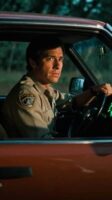 We often write about UFO cases that end up being neglected as other more dramatic cases grab the attention of investigators and the press. A case that was doomed to just this sort of treatment involved reports on October 22, 1973, out of Indiana. This was just after the October 12th Pascagoula Incident and the October 18th Coyne Helicopter Incident, and while all three cases share the front page of the September-October 1973 APRO Bulletin, the Indiana case faded into obscurity as the other two became classics.
 Rhys Dalton-Morgan joins me from Contact in the Desert for a fascinating conversation about a remarkable family connection to one of Australia’s most intriguing UFO cases. Rhys’s grandfather, a decorated RAF fighter pilot and later operations head of the vast Woomera Test Range in South Australia, reportedly witnessed a bright disc-shaped object during the era of Black Knight rocket testing. According to Rhys’s research, the object was seen over the range by multiple personnel, appeared to circle a missile site, and then accelerated away at extraordinary speed. The case has since led Rhys into a deeper investigation of his grandfather’s military background, including a reported early involvement with a secret U.S.-U.K. UFO inquiry. We also discuss Rhys’s mother’s personal experiences, the role of respected Australian researcher Bill Chalker, the strange history surrounding Woomera, and some of Australia’s most compelling cases. Later, Rhys gives an excellent overview of the 1966 Westall school UFO incident, including the witnesses, reported landings, unusual aircraft, alleged military response, and some lesser-known details surrounding the event. We also touch on Australian high strangeness, alleged abduction cases, cryptid reports including the Yowie, and why the UFO phenomenon may be far more complex than simply unexplained technology.
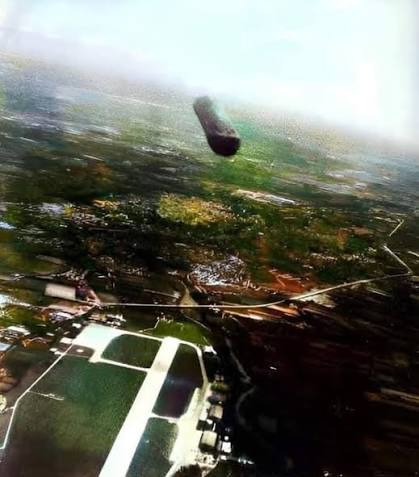 It often happens that reported UFO incidents get lost when the media is focused on one of more reports that might be more sensational. This seems to have been the situation in Italy in 1979. There had been a flap in Italy throughout 1978 and a
 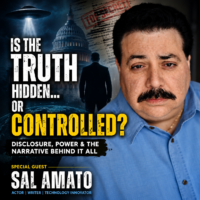 Actor, writer, and technology innovator Sal Amato joins Martin Willis for a fascinating discussion on UFOs, disclosure, media influence, and the inspiration behind his upcoming novel, Hidden Powers: Disclosure From Within. Drawing from decades of interest in unexplained phenomena, technology, and human behavior, Sal shares his thoughts on historical UFO cases, the 1952 Washington, D.C. sightings, information control, and why curiosity is essential when exploring extraordinary claims. The conversation also explores how technology shapes public perception, the challenges of separating fact from fiction, and the themes of disclosure, power, and truth woven throughout his new book. An engaging discussion for anyone interested in UFOs, mysteries, and the bigger questions surrounding what we know—and what we may not know.
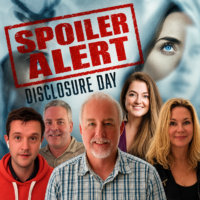 Martin Willis is joined by Podcast UFO producer Donna Killeen, UFO Jack, Kelly Hughes, and Sam Milodragovich for a lively, spoiler-filled roundtable discussion of one of the most anticipated UFO films in recent memory. The panel shares their honest reactions to the movie, explores its many references to UFO history and lore, and debates whether Spielberg successfully captured the mystery, wonder, and complexity of the UFO phenomenon. Topics include experiencers, screen memories, government secrecy, whistleblowers, historical UFO cases, disclosure, and the film’s surprising ending. Was Disclosure Day a groundbreaking UFO movie, a fun science-fiction adventure, or a missed opportunity? Tune in to hear a range of perspectives from voices deeply involved in the UFO community. Plus, the panel discusses some of the real-world UFO developments making headlines and what the movie may mean for public interest in the UFO topic going forward.
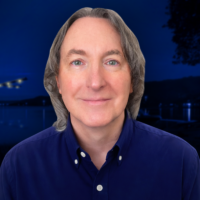 Martin Willis welcomes Simon Bown, author of Aspects of Alien Abduction: Shocking UFO Encounters, Vol. 1. Simon discusses his own UFO sightings, a possible abduction memory recovered through hypnosis, and the recurring patterns he has found after interviewing hundreds of experiencers. Topics include consciousness, missing time, healing cases, family connections, and the mystery behind alien abduction reports.
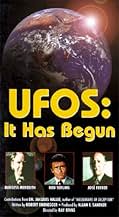 While J. Allen Hynek was bringing the invisible college out into the open, he became involved with a documentary that has Rod Serling as its main host, along with Burgess Meredith, José Ferrer, and Vallée. The movie makes a compelling argument that UFOs should be taken seriously and includes appearances by former Blue Book heads Robert Friend and Hector Quintanilla.
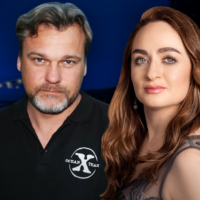 Recorded at Contact in the Desert, Martin Willis sits down with explorer Dennis Åsberg, discoverer of the Baltic Sea Anomaly, and astronomer Dr. Beatriz Villarroel of the VASCO Project. Dennis discusses new developments surrounding the anomaly, repeated equipment failures during expeditions, and the discovery of the lost Russian submarine Som, while Dr. Villarroel shares her groundbreaking research into unexplained transient objects, vanishing stars, and evidence suggesting highly reflective objects in Earth orbit. Together they explore the intersection of ocean exploration, astronomy, UFOs, scientific inquiry, and some of the most intriguing mysteries of our time.
 Preston Dennett returns to Podcast UFO to discuss his latest book, Humanoids & High Strangeness: 20 True UFO Encounters. In this fascinating conversation, Preston shares remarkable cases involving face-to-face encounters with mysterious beings, missing time, telepathic communication, giant owls, elf-like entities, and other bizarre experiences that challenge our understanding of the UFO phenomenon. Martin and Preston also explore schoolyard UFO encounters, witness credibility, differing memories among eyewitnesses, the famous Ariel School case, and the possible connection between UFO contact and consciousness. A thought-provoking discussion with one of ufology’s most prolific researchers that ventures far beyond lights in the sky.
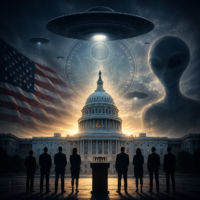 In this special live episode, Martin Willis reviews the June 9 Capitol Hill UAP Disclosure Press Conference featuring David Grusch, James Fox, Leslie Kean, Rep. Anna Paulina Luna, Rep. Tim Burchett, Rep. Eric Burlison, Rep. Jared Moskowitz, and others. The speakers called for increased transparency, declassification of government records, stronger whistleblower protections, and further investigation into claims involving recovered craft and non-human biologics. Grusch discussed ongoing oversight concerns, alleged obstruction of congressional inquiries, and the need for greater accountability. After the event, Martin was joined by Matt Ford of The Good Trouble Show, along with Krys Devine and Kelly Hughes, for an in-depth discussion of the key statements, potential implications, and what may come next in the ongoing disclosure effort.
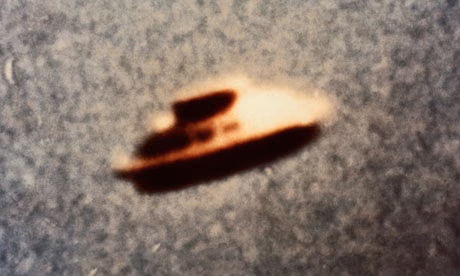 Recently, there have been reports throughout the media that FBI files concerning a UFO sighting reported by three Anoka, Minnesota, police officers have been declassified and are available at the National Archives. Remarkably, almost none of the media outlets covering the story provide a link to the actual document with the exception one news outlet, KARE 11, which was kind enough to provide a