I live in central England about 15 miles from Birmingham. I’ve had a close up encounter with a UFO which I can’t explain to this day. When it happens to you it changes your life forever.
My encounter was in 1975 in Majorca in the evening around 11.00pm (local time). I was 19 at the time. Three other people as well as myself had the encounter.
The sky was dark and crystal clear. The air was still and all was quiet as we walked down the road out of the village where we were staying. There were no street lights.
It started with a pure white well defined circular object (possibly a sphere) with a crisp outline, about 4 times the apparent diameter of the moon, at maybe 200 – 400 yards.
It was descending slowly at a 45 degree angle in front of us to our left. As it descended, it “disappeared” as if someone had turned the internal light source out. It then came back on about 2 seconds later still on the same trajectory. The object then continued on the same path constantly illuminated and went behind some trees on our right.
We all turned to each other absolutely astonished and frightened at what we had seen. I wanted us all to run down the street and find out what had happened to the object.
I said “come on, let’s go and see if we can find it”. The others were afraid and didn’t want to come with me. I pointed down the road to the trees on the right and said, “It’s just there behind the trees on the right”.
As I pointed and we all looked, the object shot back up into the sky, (along the trajectory it had descended on) with such speed that it was a dot high up in the sky within one second.
There was no sound at any time during the encounter.
Although the whole event lasted less than a minute, it has left a lifelong impression on me. Whatever it was, it was definitely NOT anything conventional.
Although I’ve since seen other objects I can’t explain, that encounter 45 years ago remains fresh in my mind to this day.
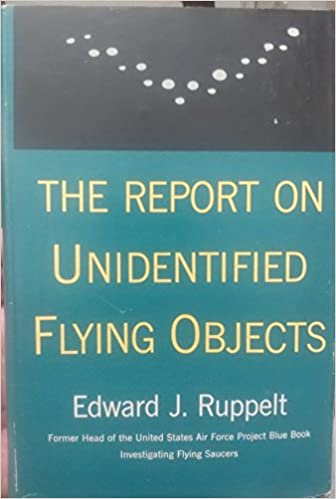 The 1956 book by Edward J. Ruppelt, “The Report on Unidentified Flying Objects” is a must-read for anyone interested in the subject. Capt. Ruppelt was the first director of Project Blue Book after leading a massive re-organization effort to revitalize the investigation while it was still operating as Project Grudge. He was the person who came up with the designation, Unidentified Flying Object, or UFO, which was pronounced “yoofo”, for what were popularly known as flying saucers. His book recounts his time with the project under both names and provides an insider’s view of what were then classified activities. There are two editions of the book with two different endings. The second edition was published in 1960 and Ruppelt included recent cases as a means to update the book. This edition has three more chapters tacked on that have a decidedly more negative tone than the original preceding chapters, where Ruppelt displays an open-minded view. This has led some to wonder if Ruppelt was pressured by the Air Force, which was then following the
 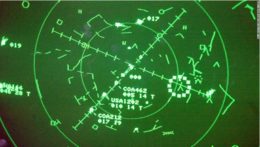 The state of Michigan is best known to UFOlogists as the swamp gas state. This is because of Project Blue Book scientific consultant, J. Allen Hynek. He came up with the explanation that swamp gas was responsible for sightings that were reported there. That was way back in 1966. It caused a furor that led Michigan representative and House Minority Leader, Gerald Ford, to call for a hearing in Congress. The case is based on multiple witness testimonies, which include those of police officers, and is well represented in UFO literature. However, there is a more recent, and less well-known case that not only has multiple witnesses, but radar confirmation and a 911 dispatch tape as well.
 On the night of March 8, 1994, meteorologist Jack Bushong was manning the National Weather Service office in Muskegon. He received a call from an Ottawa County dispatcher who’d been dealing with multiple reports of mysterious lights in the sky. The dispatcher wanted to know if there was anything on radar to confirm the reports.
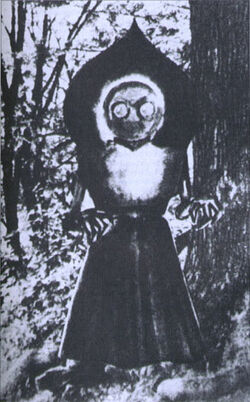 Much has been written about the 1952 Flatwoods Monster encounter in Braxton County, West Virginia. It is a bizarre tale that received national press coverage at the time and it is still celebrated today as part of West Virginia’s weird history. You can have your picture taken in one of five giant Flatwoods Monster chairs located in various areas around Braxton County and you can visit the Flatwoods Monster Museum in the town of Sutton. With all of the focus on the monster itself, certain aspects of the case tend to be overlooked. For one thing, this was the very first report of a creature associated with a U.F.O. For another, the case was looked into by some of UFOlogy’s very first private investigators.
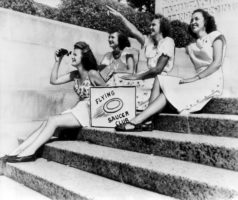 The very first flying saucer flap occurred during the summer of 1947. It began with the reported sighting of nine mysterious objects by pilot Kenneth Arnold on June 24 and hit its peak that July. This was the first, “summer of the saucers.” Much has been written about Arnold’s sighting but the sightings after that have been largely ignored. For the interested student of this period in U.F.O. history, there is a document available online that is well-worth reading. It provides a comprehensive account of the flap, citing a large number of newspaper articles that appeared during that time.
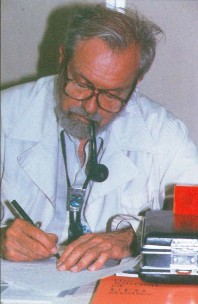 In 1966, there was a flap over Michigan that got the attention of the press and the Air Force. There was a great deal of excitement and Project Blue Book’s scientific consultant, J. Allen Hynek, was sent in to help calm things down. At a press conference, he offered some possible explanations. Due to sightings over a marsh, he speculated that people had seen ignited balls of swamp gas, some going out and others igniting and that this created the illusion of movement. The swamp gas explanation made the headlines, outraged many Michigan residents, including then-Governor Gerald Ford, and became forever associated with Hynek in the history books. Fortunately for Hynek, he had a sense of humor and was able to turn his gaffe into an entertaining talk at a celebration of the Michigan events, ten years later.
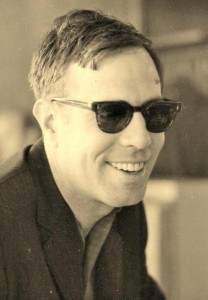 Among the early flying saucer investigators who stumbled their way through the mystery in the late 1940s and early 50s, there were some fascinating characters. Imagine being able to meet and discuss flying saucers with the likes of Donald E. Keyhoe, Edward J. Ruppelt, Frank Scully, Albert Bender or Gray Barker. A young man who did was James Moseley, who had more than a passing interest in the subject. With no prior writing experience or credentials, he convinced the most prominent people in the field to sit with him for interviews for a book he’d set out to write. He never published the book but found a place for himself in the world of flying saucers and saucerers where he’d remain for the rest of his life.