Simulcast on KGRA Radio, YouTube, Facebook & Twitch – Tuesday, March 23rd, 6:00-8:00 PM EDT (-4GMT)
Frank C. Feschino, Jr. Bio
Frank C. Feschino, Jr. is a graduate of the Paier College of Art in Hamden, Connecticut, where he studied illustration, commercial art, and photography. He was trained by several world-famous artists including Kenneth Davies, Rudolph Zallinger, and John Massimino. He earned his four-year Fine Arts diploma in 1981. Feschino later moved to Florida where he studied film and video production at Phillips Jr. College in Daytona Beach. He was trained by Hollywood steady-cam operator Rich Davis. In 1994, Frank graduated with an Associates Degree in Film and Video Production with a minor in Business.
Feschino would come to be interested in UFOs in the early 1990s when he visited a relative’s farm in Braxton County, West Virginia. Crop circles had appeared overnight, and UFOs were frequently sighted over the region and for many years. He very carefully and meticulously documented these anomalies and then shared his research with British crop circle expert, electrical engineer Mr. Colin Andrews who catalogued Frank’s information in his world crop circle database.
 A common element of UFO reports is that cars or other vehicles cease functioning during the sighting and often restart on their own after the UFO’s departure. Many researchers have speculated that this is an effect of electromagnetism, possibly related to an advanced system of propulsion. This seems to be a reasonable hypothesis and one that could be tested. All one would need would be a car and a source of electromagnetism. So, the question is, have there been any experiments done in laboratories, and have the results been published in a peer reviewed format?

 One commonly reported characteristic of UFOs is that they are often seen near nuclear weapons facilities. One would think that this would get the attention of government authorities, and it seems it has. Robert Hastings is a researcher who looked into this aspect of the UFO mystery, and his work caused many people, including those in the media, to take a serious look at it. Then, at the risk of casting doubt on his credibility, Hastings came forward with the claim that he had had an abduction experience. While this upset some of the people who had been encouraged by Hastings to come forward with their stories of UFOs at nuclear facilities, one man told Hastings of abductions reported by men stationed at such facilities.
 According to Robert Lee “Bob” White, in 1985 (the specific date doesn’t seem to appear anywhere) he was riding in the passenger seat of a car being driven by his female traveling companion. White wouldn’t reveal her name, as she was married, but later gave her first name as “Jan.” They had left Denver, Colorado, and were headed for Las Vegas, Nevada. Between 2 a.m. and 3 a.m., near the Colorado-Utah border, his friend woke him and pointed out a light up ahead. White went back to sleep until his friend woke him again. According to White, the light was extremely bright at this point. He described seeing a lighted object about 100 yards away that was “absolutely huge.” His friend turned on the high beams, and the object shot up. It moved between two, blue lights that looked like horizontal fluorescent tubes. All the lights sped off, and as they did so, White saw a flash, and a small, glowing object fell to earth.
 From the days of the earliest citizen UFO investigators, metals associated with UFO reports have been held up as evidence for extraterrestrial visitation. Labs have been employed in testing and claims have been made that the results support a non-earthly origin for the material in question. While some of these claims have been dismissed, others continue to be debated.
 In our last
 According to the report, Donald Shrum, 28, was bow hunting with two friends in the Loch Leven Lakes region, southeast of Cisco Grove, on Friday night, Sept. 4, 1964. He became separated from his friends, and as it became dark, he decided it would be safer to remain where he was than to risk making his way back to camp in the darkness over rough terrain.
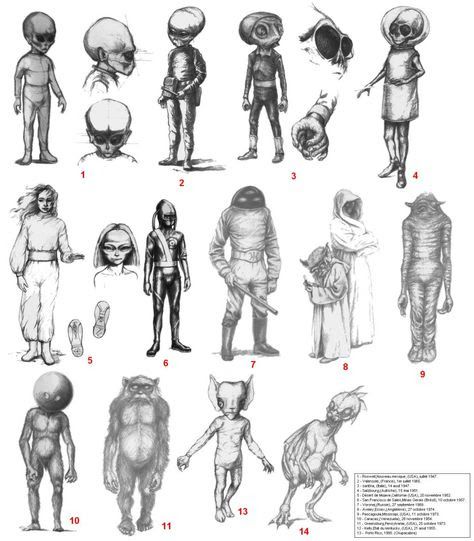
 One of the most sensational abduction cases of the 1970s, the Pascagoula Incident remains unsolved to this day. On October 11, 1973 two co-workers out fishing claimed to have been taken by three strange looking aliens into their spaceship, examined and released. The two men attempted to report their encounter to a nearby military base who referred them to the local sheriff. Thinking that the two men could be caught in a lie that would expose a hoax the sheriff left the men together in a room with a hidden microphone after his initial interviews. Much to the surprise of law enforcement, the men did not reveal a hoax but instead had a conversation that just reinforced their claims. The story spread from local media to international wire services and was investigated by Dr. J. Allen Hynek and others. Detractors note that nearby security cameras should have seen the craft the men described but other witnesses have reported seeing the craft on the same night.
 In last week’s