By Charles Lear
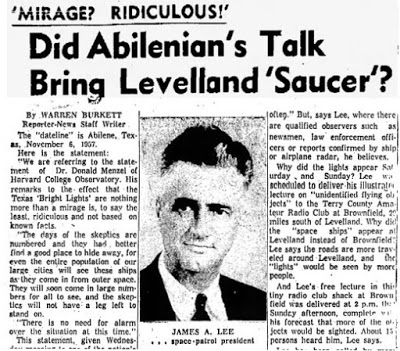 In November of 1957, there was a major flying saucer flap that began with a case that remains a favorite among UFOlogists. Starting on the night of November 2, and going into the early morning hours of November 3, there were a series of extraordinary encounters in and around the small farming community of Levelland, Texas. Besides the quantity and quality of the witnesses, there were reports from other areas in the Southwest that supported the Levelland accounts. The Air Force conducted an investigation that was cursory at best and offered explanations that could have been pulled out of a hat. The National Investigations Committee On Aerial Phenomena had their own man on the case. That he might have been biased towards an unearthly explanation for the reports is an understatement. Whether one was biased or not, based on the witness reports, what was seen was not easily explainable in terms of natural phenomena or the technology of the day.
November in Levelland was a peak period for the cotton harvest and the work was round-the-clock. For this reason, there were many people awake during the night and early morning hours of the dates under discussion. Patrolman Abraham John Fowler was working the evening shift at the Levelland Police Department when the first of what would be a series of unusual calls came in. Just before 11:00 p.m., a farm worker, Pedro Saucedo, called to report a very strange encounter that left him and his co-worker, Joe Salaz, shaken and mystified. According to Saucedo, they were in his pickup truck, on their way to a farm ten miles northwest of Levelland. At 10:30 p.m., they turned off Route 116 (now Route 114) four miles west of Levelland, onto a side road. Off to their right, in a field, they saw a bright blue flash, which drew their attention. The source of the light was a cigar or torpedo-shaped object around 200 feet long. As they watched, the object, glowing blue-green, lifted up and came towards the truck. As it did so, its color changed to bright yellow-white. As it passed over the truck at high speed, the engine stalled and the headlights went out. Saucedo, afraid that it would hit the truck, jumped out and hit the dirt. Salaz remained inside and, fortunately for him, there was no collision. The object gave off a roaring sound, its color changed to red, and air rushed in behind it as it flew off, leaving the truck rocking. Saucedo described feeling an intense heat from the object and estimated that it traveled at 600 to 800 mph to the east. As the object moved off, the truck engine started back up on its own and the lights came back on. Saucedo then drove to the town of Whiteface, ten miles away, which was the location of the nearest payphone. Read more →
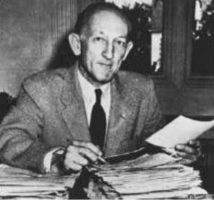 In late 1957, Americans’ minds were on space. On October 4th of that year, the Soviet Union launched Sputnik 1, the very first satellite to achieve a successful orbit. This was followed by Sputnik 2 on November 3rd. This satellite carried a dog, Laika, who tragically died on the fourth orbit. This was due to overheating after the air conditioner unit malfunctioned. The Soviets were pulling ahead of the United States in the space race and American anxiety was high.
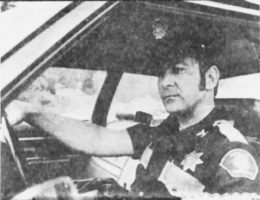 Reported police encounters with UFOs have been a common occurrence throughout modern history. Records show that police have seen them in the sky, hovering above the ground and landed. They’ve chased them, been hit by them and been taken aboard them. As police officers are usually the first responders to citizen UFO reports, the frequency of their involvement makes sense. For an officer to go on the record with his or her encounter takes courage in light of the fact that fellow officers are quite likely going to have a few laughs at their expense. Quite often, however, they are supported by their fellows and superiors when facing public scrutiny. Public reaction can be brutal and in the case of Patrolman Herbert Schirmer, it was particularly so.
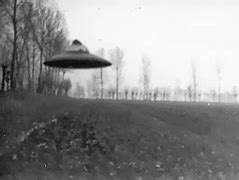 There was a period from the early 1950s into the 1960s when more than a few people (more than one of which were named, George) came forward saying that they’d been in direct communication with humanoid beings who were not of this earth. They are referred to as, “The Contactees” and they were individuals who claimed they were chosen by our space friends to deliver a message to humankind. In other words, contact with single individuals was the norm. Then, in 2007, a man in Italy, engineer and university professor, Stefano Breccia, came out with a story of alien interaction with a large group of Italians that began in 1956 and continued until 1978. This became known as, “The Friendship Case” and, in spite of its dubious nature, the case attracted a lot of press and people came forward to support the story.
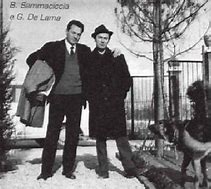 According to Breccia, his friend, writer, theologian and psychologist, Bruno Sammaciccia, asked him to listen to a story he’d been keeping secret and to write it down. As Sammaciccia died in 2003, this could be said to have been the confession of a dying man. Breccia said that he spent a month at his friend’s house and granted his wish. According to Breccia, in 1956, Sammaciccia and two friends were visiting the Pia Fortress overlooking Ascoli Piceno, when they were approached by two beings that appeared human but one was a little more than one meter tall, and the other was almost three meters tall. Speaking perfect Italian, the two beings told them they were extraterrestrials and that they were here to help humankind. The men were later taken to an underground base to meet others like them, all of varying heights. They revealed that there were representatives from six different civilizations from our galaxy and others, that there had been an e.t. presence for over two centuries and that there were over 200 of them in underground and undersea bases throughout the world. These bases were made with “a particular mechanism” which would compress the surrounding earth as a space opened up. When they were done using the base, “all you had to do is flip a switch” (apologies if this is too technical) and the earth would return to normal. One base under the Adriatic Sea was described as being so big, it had its own climate. The e.t.s were concerned that humans were destroying the planet, which was precious as a place that produced life, and they were also concerned about atomic weapons. They described love as a powerful source of energy and promoted moral, as opposed to technological development.
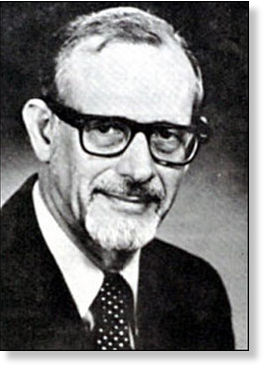 Some are born to it, some achieve it, and some have it thrust upon them. If one is talking about a life devoted to UFO research, Leonard Stringfield was in the last category. He was a prominent figure in the early days of UFO investigation and remained highly active until his death in 1994. Most notably, Stringfield was the only private investigator ever to have a direct line to the Air Force during their Project Blue Book investigation.