By Charles Lear
 Occasionally, a good, solid, interesting UFO case will slip away from memory only to be rediscovered, years later by an alert researcher. A 1967 case involving a New York woman, Emma Funk, is a perfect example. This case was found recently by New York based researcher and author, Linda Zimmermann, and discussed on the Hudson River Radio show she hosts, “UFO Headquarters.” The Hudson River Valley of New York has long been an active area for UFO sightings and is particularly well known for a wave in the 1980s involving low flying, silent, black triangles, some the size of a football field. The incident involving Funk occurred in Millerton, NY, which is just east of the Hudson River Valley near the Connecticut border. It involved a collision with an object while driving and was remarkably similar to a case familiar to many, the “Val Johnson Incident”, that happened 12 years later.
On Tuesday morning, July 18, 1967, Emma Funk reported an incident to local police. Village patrolman Lewis Lindsay described the report for an article, which appeared in the July 19th edition of the Poughkeepsie Journal. According to the article, Funk was driving home after work on Monday at 11:25 PM. She was heading north on route 22, when an object the size of a softball hit her windshield. At that moment, her headlights went out, her car stalled and the inside of the car was filled with a bright light. Funk was dazed and when she regained her composure and got the car back in motion, she realized she was driving south, in the opposite direction. Lindsay checked the car, saw that there was a crack in the windshield and noted that he couldn’t make a determination as to its cause. The article mentions that there had been “recurring reports of unidentified flying objects in Northeast Dutchess County.” Lindsay said that there was a search planned in the area to try to locate “the sphere” but wouldn’t speculate whether the incident had any connection with the reported UFOs.
A follow up article in the August 5th edition of the same paper describes a meeting at LaGrange Town Office hosted by Aerial Investigations Research Corps Inc. where Funk’s windshield was on display. The object is described in this article as baseball sized and black with an orange glow. A.I.R.’s president, William Donovan, announced at the meeting that the windshield would be sent to the physics department of Syracuse University for “chemical and ballistics tests” and that pictures of it would be sent to the Condon committee. The Condon committee was a group at the University of Colorado that was studying the UFO phenomenon on behalf of the Air Force.
Read more →
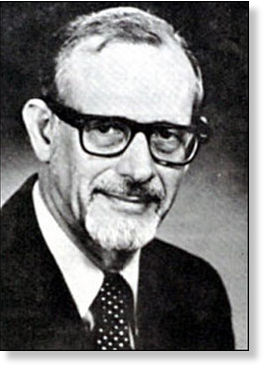 Some are born to it, some achieve it, and some have it thrust upon them. If one is talking about a life devoted to UFO research, Leonard Stringfield was in the last category. He was a prominent figure in the early days of UFO investigation and remained highly active until his death in 1994. Most notably, Stringfield was the only private investigator ever to have a direct line to the Air Force during their Project Blue Book investigation.
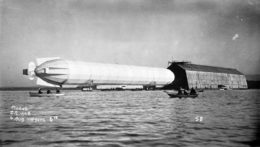 A lot of people are familiar with the mysterious airship wave over the United States that began in 1896. Beginning in California and continuing throughout the rest of the country, people reported seeing large ships in the sky, often described as cigar-shaped and with bright lights when seen at night. There were reports of landings and meetings with human-looking occupants and most thought they were seeing the results of some great inventor’s work. The sightings were reported in many newspapers of the day and they remain an intriguing part of American history. What many people are not aware of is that, in 1909, New Zealand experienced a similar wave of sightings.
 The history of UFO reports in Finland is much like that of other countries except that it starts earlier than most, dating back to the early 20th century. As was the case for much of Scandinavia, Finland had reports in the 1930s and 1940s of mystery lights, aircraft and rockets but, unlike its neighbors and much of Europe, the government of Finland has been quite secretive regarding official UFO investigations. Despite the government’s secrecy, documents have been released and were examined by private researchers. These documents revealed that Finnish defense organizations were actively investigating UFO reports from the very beginning and some intriguing cases have been brought to light.
 When it comes to reported UFO crash locations in New Mexico, everyone has heard of Roswell, many have heard of Aztec but few have heard of San Antonio. San Antonio is a small village, 12 miles south of Socorro just northeast of White Sands Missile Range. It was the childhood home of two men, Reme Baca and Jose Padilla who, in 2003, came forward with the story that they had discovered a crashed UFO there in 1945.
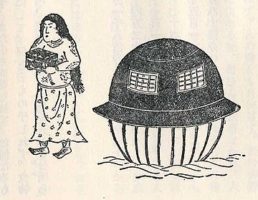 When it comes to popular culture, the Japanese people seem to have as much of an appetite for science fiction and the paranormal as the people in the United States. With stories ranging from ghosts to Godzilla to aliens, Japanese media from film to comic book has not only entertained Japanese people, but people worldwide. Despite the popularity of otherworldly subjects in that country, the Japanese government and its people have a history of being conservative regarding the subject of UFOs. According to journalist and television producer Michi Saito, “to most of the Japanese, they’re accepted as more like a mysterious fantasy.” Japanese officials have only recently acknowledged a need to have some sort of official UFO policy. This comes in the aftermath of the U.S. Department of Defense’s recent release of official UFO videos. That’s not to say there haven’t been believers within official circles or that there have been no significant cases in the country. Japan’s UFO history goes back well before the 20th century and there are enough Japanese believers, researchers and enthusiasts to keep that history alive.
 Another ancient episode brought up by UFOlogists is known as the “Utsuro-bune” incident, which, according to legend, took place on February 22, 1803. Utsuru-bune translates to “hollow boat” and it refers to a vessel that washed up on a beach in Hitachi province. Inside was a woman with red hair who spoke a strange language. No one was able to communicate with her so she was returned to the sea. The description of the boat mentions wood and tree resin, which seems to make it a poor candidate for a spaceship.
 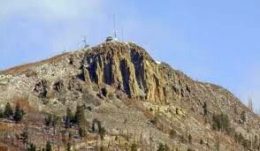 As the internet was becoming more and more a part of everyone’s daily life, the mood of UFOlogy was becoming more and more paranoid. Growing numbers of people were reporting abductions and animal mutilations and the idea that our Earth based governments were collaborating with alien races was gaining acceptance beyond just a small fringe element of society. Little green men became little grey men (and large reptilians) and they were, reportedly, not very friendly. All of these elements converged in dark tales told about an area located in New Mexico. That area is near the town of Dulce and its history of strange activity goes back well before the internet.
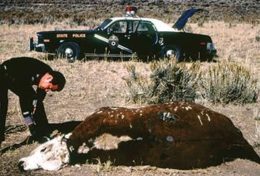 In the 1970’s, the Dulce area was hit with a wave of reported cattle mutilations with accompanying black helicopters and strange lights. New Mexico State Police officer, Gabe Valdez, investigated many of the reports and became obsessed with the mystery for over 30 years. By 2005, Valdez had become
  Every so often, there are concentrations of UFO sightings reports, known as flaps or waves that receive a substantial amount of press coverage. This occurred in the U.S. in the early years of the modern UFO era and the press generated by one flap in 1952, which included
  At this point in time, most people interested in UFOs are probably used to being able to look at official government documents if they want to do some research. The C.I.A., F.B.I. and N.S.A. all have UFO related documents available online and there is, of course, the enormous collection amassed by John Greenewald Jr. on his site,
 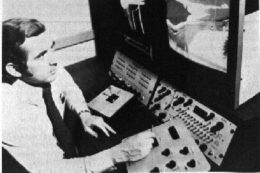 Ground Saucer Watch was formed in 1957 and its members included scientists, engineers and technicians. William Spaulding, the group’s director, was an aerospace quality control engineer who worked at a company called AIResearch. GSW was based in Arizona and was one of the first groups to respond to the 1975
 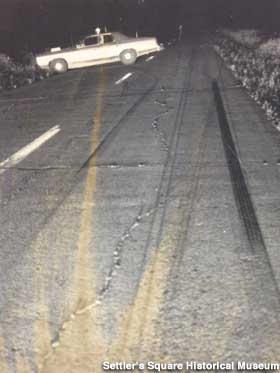 There is a discussion among UFO enthusiasts as to whether or not the objects being reported are actually material in nature. Cases where there have been physical traces left behind after a sighting support the argument that some objects are indeed solid but there were times when those traces were left behind none-too-gently. Actual collisions have been reported between UFOs and aircraft, cars and, possibly, even a train according to a report referenced to in the forum section of
  What was the first civilian organization solely dedicated to research on the subject of UFOs and when did they form? After a little research, most should agree that it was the Los Angeles based