By Charles Lear
 In late 1957, Americans’ minds were on space. On October 4th of that year, the Soviet Union launched Sputnik 1, the very first satellite to achieve a successful orbit. This was followed by Sputnik 2 on November 3rd. This satellite carried a dog, Laika, who tragically died on the fourth orbit. This was due to overheating after the air conditioner unit malfunctioned. The Soviets were pulling ahead of the United States in the space race and American anxiety was high.
The rest of that November, flying saucer reports increased dramatically. This caused particular concern for the Air Force because public frenzy over flying saucers was considered a threat to national security. In 1953, a C.I.A. convened panel of advisors, “The Robertson Panel”, expressed concern that communication channels could be overwhelmed by flying saucer reports. This would have provided the Soviets with an opportunity for a surprise attack. The recommendation was to make flying saucers go away and this became part of official Department of Defense policy.
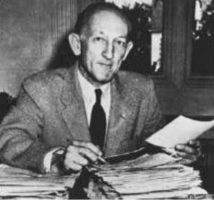
While the Soviets were causing headaches for all branches of the U.S. military at the time, the Air Force had some extra stress added on courtesy of one Donald A. Keyhoe. Keyhoe was a former Major who served in World War II in the Naval Aviation Training Division of the U.S. Marine Corps. After his service, Keyhoe became interested in flying saucers and wrote a hugely popular article for True magazine, “Flying Saucers are Real”, published in the January 1950 issue. He expanded the article into the 1950 book, “The Flying Saucers are Real”, which was the first to be published on the subject. He’d been helped in his efforts with cooperation from the Air Force but, after 1953, that turned to evasion and eventually into outright stone walling. Keyhoe sensed that there was an officially directed cover-up. He was outraged that people were providing reports to the Air Force in good faith, only to have them dismissed with often implausible and insulting explanations. Keyhoe’s outrage fueled his zealousness and, in 1957, he was given the opportunity to channel that zealousness when he was made director of the group he’d co-founded, the National Investigations Committee on Aerial Phenomena.
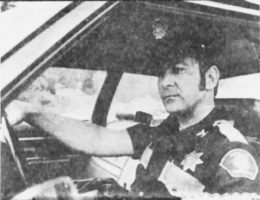 Reported police encounters with UFOs have been a common occurrence throughout modern history. Records show that police have seen them in the sky, hovering above the ground and landed. They’ve chased them, been hit by them and been taken aboard them. As police officers are usually the first responders to citizen UFO reports, the frequency of their involvement makes sense. For an officer to go on the record with his or her encounter takes courage in light of the fact that fellow officers are quite likely going to have a few laughs at their expense. Quite often, however, they are supported by their fellows and superiors when facing public scrutiny. Public reaction can be brutal and in the case of Patrolman Herbert Schirmer, it was particularly so.
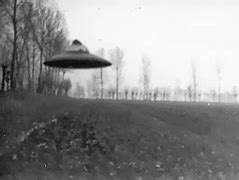 There was a period from the early 1950s into the 1960s when more than a few people (more than one of which were named, George) came forward saying that they’d been in direct communication with humanoid beings who were not of this earth. They are referred to as, “The Contactees” and they were individuals who claimed they were chosen by our space friends to deliver a message to humankind. In other words, contact with single individuals was the norm. Then, in 2007, a man in Italy, engineer and university professor, Stefano Breccia, came out with a story of alien interaction with a large group of Italians that began in 1956 and continued until 1978. This became known as, “The Friendship Case” and, in spite of its dubious nature, the case attracted a lot of press and people came forward to support the story.
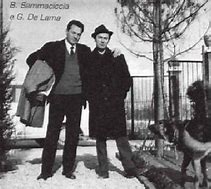 According to Breccia, his friend, writer, theologian and psychologist, Bruno Sammaciccia, asked him to listen to a story he’d been keeping secret and to write it down. As Sammaciccia died in 2003, this could be said to have been the confession of a dying man. Breccia said that he spent a month at his friend’s house and granted his wish. According to Breccia, in 1956, Sammaciccia and two friends were visiting the Pia Fortress overlooking Ascoli Piceno, when they were approached by two beings that appeared human but one was a little more than one meter tall, and the other was almost three meters tall. Speaking perfect Italian, the two beings told them they were extraterrestrials and that they were here to help humankind. The men were later taken to an underground base to meet others like them, all of varying heights. They revealed that there were representatives from six different civilizations from our galaxy and others, that there had been an e.t. presence for over two centuries and that there were over 200 of them in underground and undersea bases throughout the world. These bases were made with “a particular mechanism” which would compress the surrounding earth as a space opened up. When they were done using the base, “all you had to do is flip a switch” (apologies if this is too technical) and the earth would return to normal. One base under the Adriatic Sea was described as being so big, it had its own climate. The e.t.s were concerned that humans were destroying the planet, which was precious as a place that produced life, and they were also concerned about atomic weapons. They described love as a powerful source of energy and promoted moral, as opposed to technological development.
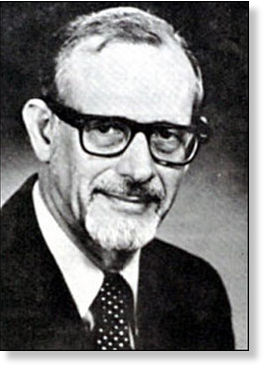 Some are born to it, some achieve it, and some have it thrust upon them. If one is talking about a life devoted to UFO research, Leonard Stringfield was in the last category. He was a prominent figure in the early days of UFO investigation and remained highly active until his death in 1994. Most notably, Stringfield was the only private investigator ever to have a direct line to the Air Force during their Project Blue Book investigation.
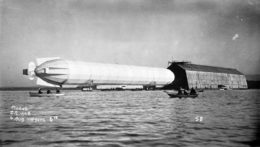 A lot of people are familiar with the mysterious airship wave over the United States that began in 1896. Beginning in California and continuing throughout the rest of the country, people reported seeing large ships in the sky, often described as cigar-shaped and with bright lights when seen at night. There were reports of landings and meetings with human-looking occupants and most thought they were seeing the results of some great inventor’s work. The sightings were reported in many newspapers of the day and they remain an intriguing part of American history. What many people are not aware of is that, in 1909, New Zealand experienced a similar wave of sightings.