Simulcast on YouTube and KGRA Radio Tuesday April 28th, 6:00-8:00 PM EDT (-4GMT)
Guest Curt Collins on an update on his research on the classic 1980 Cash-Landrum UFO case, and talk a bit about his work on early historic cases, The Saucers That Time Forgot. He will then be discussing how he and other independent researchers have been chipping away at the secrets of AATIP, the secret Pentagon UFO program, the nature of work Robert Bigelow contracted with MUFON, and just allegedly how the $22M dollars was spent.
The Saucers that Time Forgot: https://thesaucersthattimeforgot.blogspot.com
Cash-Landrum documents: https://www.blueblurrylines.com/2013/07/resource-guide-for-cash-landrum-ufo-case.html
The Scientific Coalition for UAP Studies (SCU) will be holding regular live-streaming sessions in which those who participate live will be able to ask questions during the presentation. The SCU will be inviting guests to present research on various topics related to the study of UAP. The videos will be archived on the SCU YouTube channel and at www.explorescu.com.
The first live-stream presentation will be on May 6, 2020 at 3 pm Pacific/6 pm Eastern and is titled Analysis of the “Ubatuba” material by Robert Powell. It is expected to last about an hour. The fist half will be presentation and then will open up to Q and A from the chat for the remainder.
Description: Robert Powell will review recent testing he completed on a 99.88% pure magnesium sample first obtained in the Ubatuba region of Brazil in 1957. Powell will review the history of the sample, previous chemical testing, isotopic analysis of the magnesium as well as isotopic analysis of impurities in the sample that were in 100ppm levels, namely strontium, barium, zinc, and copper. Lastly he will discuss the meaning of the results that he obtained.
Here is a link to the live-stream presentation: https://youtu.be/NamnxaADugo
Curtis L. Collins is the author behind Blue Blurry Lines, the website focused on the UFO mystery, as well as its legends and hoaxes. After a career in retail management Curt began writing about UFOs, with a special interest in re-investigating the paradoxical 1980 Texas Cash-Landrum case. In 2015 Curt was on the investigative team, the Roswell Slides Research Group, that exposed the BeWitness alien photo fiasco. More recently, he launched The Saucers That Time Forgot with Claude Falkstrom, focused on unearthing “tales that UFO history has overlooked, or would rather forget.” Curt lives in the southern United States, near Jackson, Mississippi. For more details: https://www.blueblurrylines.com/p/curt-collins-is-author-behind-blue.html
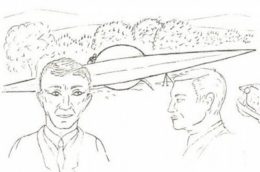 It often occurs among UFO enthusiasts that people will form a belief in a case and find it difficult to let go of that belief in spite of evidence that the case was more than likely a hoax. The alleged 1948 crash and retrieval of a flying disk near Aztec, New Mexico is a classic example. This case has spawned the well-known 1950 book by Frank Scully,
 DEAN ALIOTO: is the creator of both the mysterious and enigmatic UPN TV special Alien Abduction: Incident in Lake County (aka The McPherson Tape), as well as the first found-footage movie,
 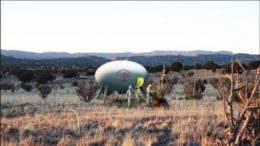 The April 24, 1964 sighting of a landed UFO with two beings standing next to it by Socorro, NM Police Sergeant, Lonnie Zamora has been written about extensively and remains a fascinating mystery to this day. What’s particularly interesting about this case is how many people investigated it. Representatives from the Socorro Police, New Mexico State Police the F.B.I. and Army were first on the scene followed by the Lorenzens from the Aerial Phenomena Research Organization, members of the Air Force and J. Allen Hynek as part of Project Blue Book, and Ray Stanford for the National Investigations Committee on Aerial Phenomena. Besides the testimony of Zamora, there was trace evidence to examine, witnesses to a similar craft to interview, and reputed witnesses to the very craft Zamora reported who were searched for but never found. Despite the thoroughness of the inquiries and analyses by so many experienced investigators, no one was able to come up with an agreeable Earthly explanation.
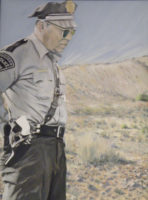 According to Zamora’s written
 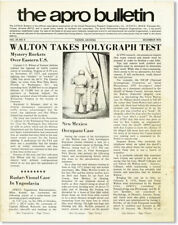 APRO was formed in the fall of 1951 through the efforts of Coral Lorenzen with the help and encouragement of her husband, Jim. Coral’s interest in UFOs preceded the 1947 Kenneth Arnold sighting by more than a decade following her own sighting of an unexplained object. Coral claimed that in 1934, as a young girl with the maiden name, Lightner, she and her two playmates, Barbara Stringer and Dorothy Wethern, saw what looked like a parachute moving across the sky. Coral noticed that it didn’t have any strings and this caused her to question whether what she was seeing actually was a parachute. She told her father what she had seen and he was impressed enough to make inquiries and found that there were no pilots in the area at that time. Three years later, at the age of 12, Coral was being checked for astigmatism and told her doctor what she had seen. He recommended that she read the books of Charles Fort, a writer who was a pioneer chronicler of the strange and unusual, and Coral developed an interest that would stick with her for the rest of her life.
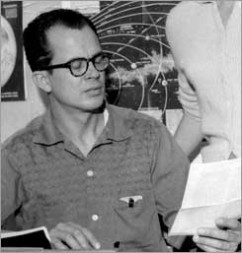 In 1951, Coral and Jim Lorenzen were living in Sturgeon Bay, Wisconsin after a brief stay in Los Angeles. While in Los Angeles, they had met contactee, George Adamski, and Coral reported that she was unimpressed by his claims, in part due to his repeated references to the moon as a planet. In Wisconsin, Coral decided to start a group that would keep track of sightings reports and she wrote to people she knew who might be interested. Around fifty responded positively and the Aerial Phenomena Research Organization came to be. Coral had chosen the name, consciously avoiding the term, “flying saucers” which she found distasteful. The center of operation for APRO was an antique table with clawed feet in the corner of the Lorenzen’s living room and the means of communication among its members was a portable typewriter.
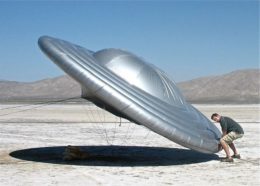 An important factor influencing acceptance is the credibility of the investigator. It should be safe to say at.this point that civilian UFO investigators have more credibility than government employed investigators. This is because, far too often, commonly mistaken objects have been indiscriminately offered as explanations by public officials in order to put a case to rest. This is unfortunate because there are occasions where a good solution to a case that could help clear out some of noise in the signal may be dismissed by many due to what has become a reflexive reaction. From a
 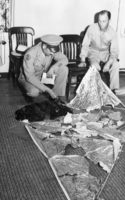 The July, 1947,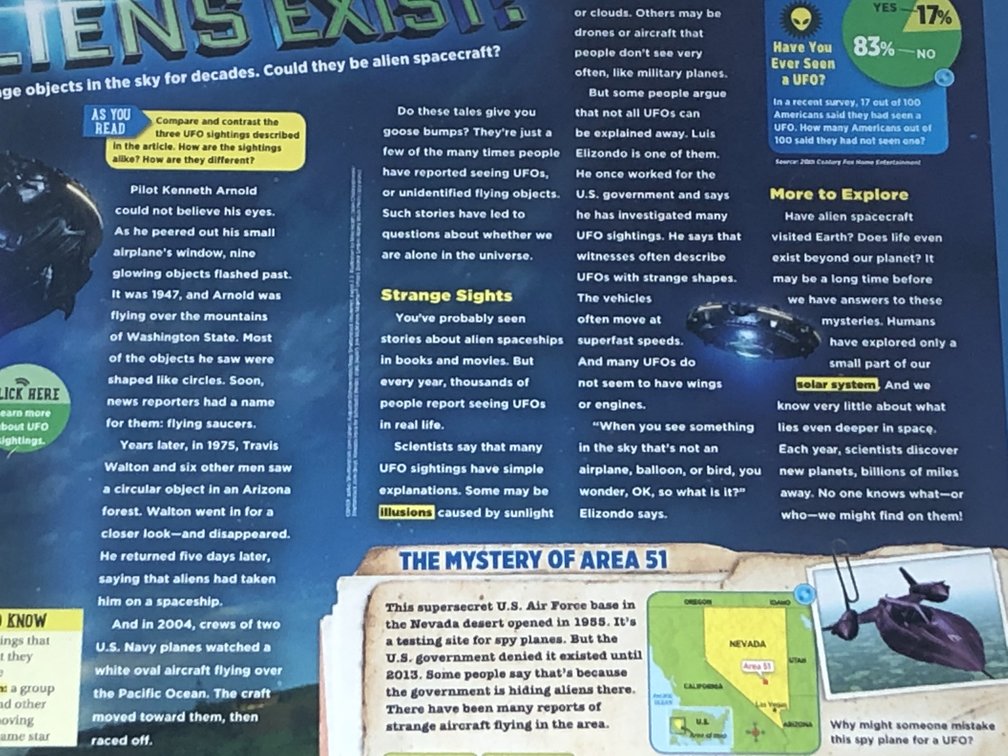
 The UFO mystery is not a 20th century phenomenon, but it did in many ways come into prominence in the 20th century. Serious study of UFOs began around World War II and thrived in the following decades. During this golden age of UFO study radio was the dominant form of electronic media. Although film and television existed, radio was a much more important source of timely news and information. Also during this time UFO investigators would find audio recording devices much more portable, reliable and affordable than film equipment. All of this led to an incredible amount of information from the golden age of UFO study being stored in audio formats.
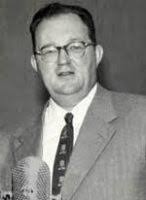 Was the death of Frank Edwards, famous newscaster and UFOlogist, predicted by the space people? This story shows up in a lot of literature from the time and many people took it seriously. An additional oddity offered up in the account is that the time of Edward’s death was a few hours before midnight, June 23rd, 1967. This was almost twenty years to the day after June 24, 1947, which was the date of the sighting by Kenneth Arnold that many consider the beginning of the modern UFO mystery.
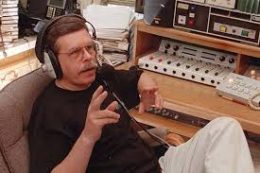 For many people, the late night radio show,
 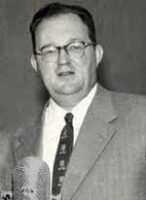 Near the end of the year 1949, Frank Edwards, newscaster for the American Federation of Labor sponsored Mutual Broadcasting System, received an advance copy of the