By Charles Lear
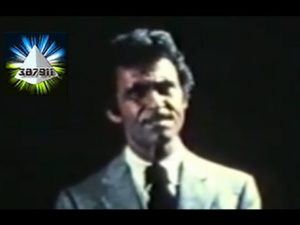 I’m a fan of 1970’s UFO documentaries. They have cool, period, analog synthesizers in the scores, descriptions of classic cases and the best of them maintain a decent sense of journalistic integrity. My favorite is, “UFOs: It Has Begun” which is a 1979 re-release of a 1974 documentary, “UFOs: Past, Present, and Future” based on a book of the same title by Robert Emenegger.
The movie is hosted by Rod Serling and has Burgess Meredith and Jose Ferrer as well. Once you get past Serling’s delightful cheesy introduction, and Meredith’s somber narration of the story of Ezekiel as a UFO sighting along with other “historical” encounters, there are some excellent cases dramatized and discussed. Notable figures presenting testimony include researcher Jaques Vallée with a stunning hair helmet, J. Allen Hynek and Robert Friend, science advisor and director respectively of Project Blue Book, Al Chop, an Air Force press operator present in the Washington National Airport radar room during the famous 1952 event, and Lonnie Zamora discussing his 1964 Socorro sighting. The movie was made with the cooperation of the Air Force, and with this in mind, a very strange case is brought to light by Robert Friend that involves a contactee, Naval Intelligence and the C.I.A.
In the movie, Friend speaks of intelligence officers conducting an interview with someone claiming to be in contact with an alien entity. For proof the officers put forth technical questions beyond the contactee’s capability and they received accurate answers. One of the officers, told that he could establish contact directly, went into a trance, was questioned by the other officer, and both were convinced that contact had indeed occured. The officers went back to Washington and a demonstration was done where the same officer again went into a trance and series of questions was put to him, or rather, to the entity he was channeling. After receiving their answers, the questioners asked if they could be shown a flying saucer, and the reply was to look out a window. Friend was told during a subsequent briefing on the incident, that a flying saucer did, indeed appear, and fly off. Did this really happen? My armchair internet research has revealed that the story has some bizarre truth to it.
Read more →
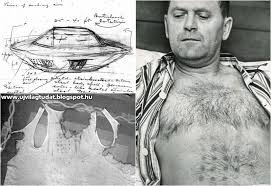 In many ways, the history of UFOs in Canada parallels that of the United States. There are early historical sightings recorded in the 1600’s and 1700’s, mysterious airships in the late 1800’s and a modern era from the 1940’s on. The two countries, concerned about a possible Soviet missile attack, worked closely with each other during the Cold War, monitoring the northern areas, including the Arctic Circle, with extensive radar facilities. Official Canadian UFO policy was then influenced by the U.S. policy, which was to down play reports to the public while quietly investigating them. In later years, the Canadian government became more open about the subject and two of Canada’s most famous cases, Falcon Lake and Shag Harbour, were recently celebrated with the release of commemorative coins from the Canadian Mint. This week’s guest, Chris Rutkowski, is Canada’s foremost UFO researcher and
 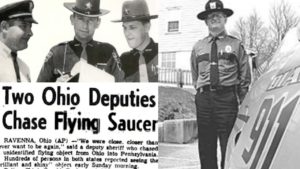 Throughout the history of UFO sightings, police involvement has been fairly common as they are often the first to be called by concerned citizens. Sometimes the officers sent to investigate end up becoming witnesses themselves and there are
 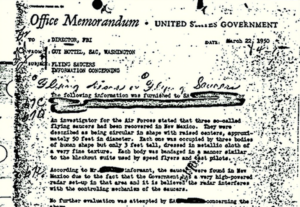 The CIA and FBI were interested in UFOs. It’s on the record and you, the public, can see for yourselves in documents released by both organizations. What’s not entirely evident is the interest those agencies had in civilian research organizations. Did the CIA and FBI plant undercover agents among members of certain groups that had achieved a certain level of popular recognition? Were there operations to discredit prominent researchers and witnesses? Were wiretaps or surveillance devices utilized to monitor researchers and those who provided them with sensitive information? If it can be determined that individuals or groups looking into the subject of UFOs were considered a threat to national security then the answer is, “most likely.”
 Throughout the 20th century it was believed by most researchers that UFOs were physical craft driven by extraterrestrials, ghosts were the spirits of dead people and Bigfoot was a large hominid as yet unclassified by primatologists. In the later part of that era, John Keel, author of “The Mothman Prophecies”, began to consider that all of these might come from a single cause and he began looking for a unifying theory. Now, in the 21st century, more and more researchers are beginning to think this way and some have focused on what have been called “paranormal hotspots” where there is a concentration of reports with many different varieties of strange activity. Investigators have included the father and son team of Paul and Ben Eno looking at areas of New England and Pennsylvania, a team from Robert Bigelow’s organization, the National Institute for Discovery Science (using our tax dollars under a
 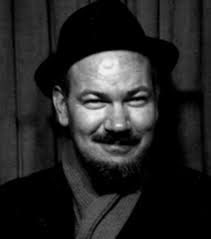 I am a fan of John Keel. For those of you who don’t know, he is best known as the author of, “The Mothman Prophecies”, a book that centers around strange events that occurred in Point Pleasant, West Virginia during a thirteen month period between 1966 and 1967. These included sightings of UFOs, Men in Black and a humanoid with wings that was dubbed “The Mothman” by the press. These events have a similarity, in terms of what is now called, “high strangeness” by modern Ufologists, to more recent events reported at a ranch in Nevada known as, “The Skinwalker Ranch.”
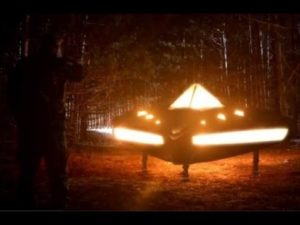 The Rendlesham Forest Incident is a British UFO case from 1980 that is comfortably familiar to those who are interested in the subject and is known, affectionately as, “The British Roswell.” It’s good, clean, UFO fun with an official memo and unofficial tape from a USAF Lt. Colonel, multiple military witnesses and an exuberant former Ministry of Defense employee, Nick Pope, championing the case as if he were the official British spokesperson. Nod and smile and on to the next case, right?
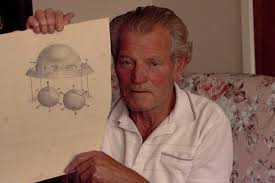 In listings of top UFO hot spots around the world, the small town of Bonnybridge, Scotland is frequently included. Bonnybridge lies within an area known as “The Falkirk Triangle” which is described variously from being a large area defined by lines drawn between Edinbugh in the east, Glasgow in the west and Stirling in the north to a smaller triangle formed by three roads: the M8, the M9 and the M80. The area has a history of many sightings and episodes that were exceedingly strange and the citizenry of the town of Bonnybridge has petitioned a succession of British Prime Ministers for an explanation.
 The history of UFO sightings and alien encounters as portrayed in the popular media is, mostly, separated into distinct periods: modern, from the late 1890’s airship flap followed by World War II “foo fighters” into post-1947 after the Kenneth Arnold report, and ancient interaction pieced together using “evidence” from the time of cave dwelling humans up to the time of the builders of cities and megalithic structures. UFOs depicted in Byzantine paintings (misinterpreted conventional symbols) the 1561 report from
  When people in the UFO community refer to To The Stars Academy founder, Tom DeLonge, more often than not, the words, “rock star” precede his name. This seems to serve the purpose of distinguishing him from “normal” UFOlogists but the truth is that he is but one of many rock musicians who have had or have a serious interest in the subject. What’s unusual about DeLonge is that he has managed to gather the highly credentialed people he has staffing TTSA and that his group has stormed to the forefront of the field overshadowing other long existing research organizations. For a “rock star” to manage this he has to overcome the big issue all UFOlogists are concerned with and that is credibility. If a witness was drunk or on drugs during a sighting, a case will most likely be dismissed by an investigator. As many rockers throughout history have been notorious for their often, extreme indulgence, well, you get the idea of what DeLonge is up against.
 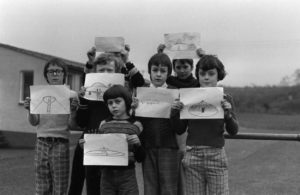 Remember that UFO sighting by all those school children some years back? That was in Australia, right? No, it was Florida… or was it Wales? Perhaps it was in Africa? The answer is that there were incidents of significance in all four locations. All were similar enough to cause confusion but the reactions by school and public officials involved were strikingly different.
 Let’s imagine that you’re a young person with a passionate interest in UFOs. You’ve devoted a lot of time to study and research and have developed some expertise and maybe even a specialty. Now it’s time to get out of your parents’ house and into your own apartment. You need to find a job and you’re determined to follow your bliss so, where do you look?
 “Truth.” That’s a word that has been deeply associated with ufology thanks to “The X-Files” and apparently the “truth” is what U.F.O. researchers are looking for. But what truth is it? Is it the whole truth as in a unifying explanation for all strange phenomena or just proof of alien visitation? Do we want it from the “Government” or do we want to find it on our own through research and maybe, actually experiencing something ourselves?
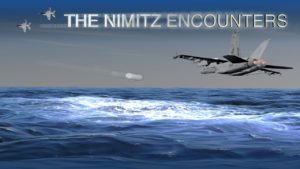 On December 16, 2017, The New York Times published an article and sidebar that startled a lot of people. The article was about a Pentagon program to investigate UFOs, which was proudly championed by former United States Senator and Minority Leader from Nevada, Harry Reid. The sidebar was about an 2004 encounter with a UFO by two Navy pilots and included an embedded 76 second video purported to have been taken during the encounter. The fact that the Times had published a UFO story was almost stranger than the stories themselves because it was well known, at least among ufologists, that The New York Times NEVER reported on UFOs. The encounter is now referred to as “The Nimitz Encounter.” This should have been The Case that put to rest the question of whether some UFOs are intelligently controlled craft of non-human origin and the claim that the “Government” has hidden evidence in its possession. It should have but it didn’t.