by Charles Lear
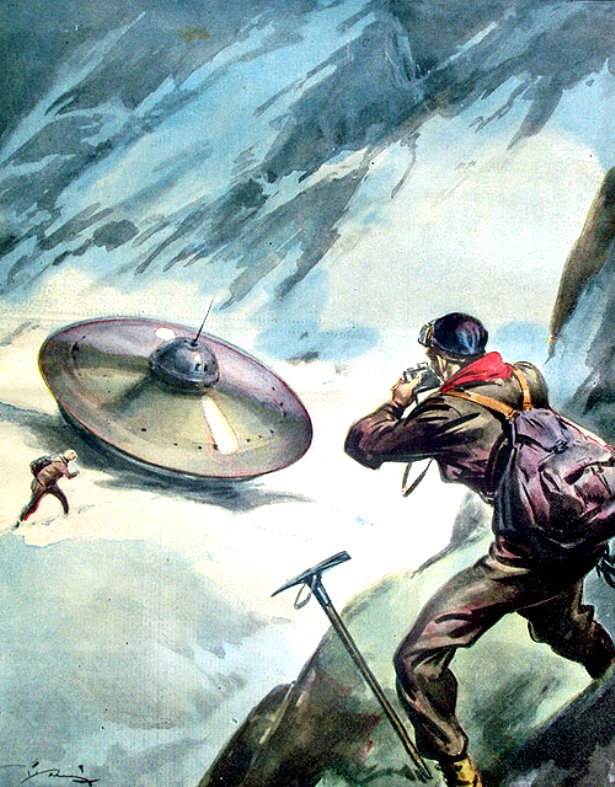 In the hunt for proof that strange vehicles are flying through our atmosphere, possibly under the guidance of alien pilots, researchers have long looked to photographs. There are some, such as the McMinnville photos, that have become classics that continue to spark debate. Many have been passed through time by newspaper articles, books, magazines, documentaries, and websites. Of course, along with the photo, there is the story of the photographer, though getting that story straight might prove difficult.
In October of 1952, a story went across the newswires that a man in Italy had claimed to have taken pictures of a flying saucer and its occupant while climbing in the Bernina section of the Italian Alps. He told reporters that he saw a flying saucer land on a glacier. According to him, “a human shape wearing some sort of diving suit” got out, walked around the ship, and then got back in. The saucer rose up and “it took off without a sound at breathtaking speed.” He said he sold the photos to a French magazine.
The man was 29-year-old Italian engineer Gianpietro Monguzzi. His story is told in detail and his pictures are presented in the Sept.-Oct. 1958 issue of Flying Saucer Review. According to the article “Monguzzi Takes Saucer Photos of the Century,” written by Lou Zinstag, Monguzzi (first name given as Giampiero by Zinstag) worked as an engineer in Monza, near Milan, and was a member of the Edison Society of Italy. On July 31, 1952, he was hiking in the Bernina Mountains with his wife when they came across an object, shaped like a flying saucer, sitting on a glacier. Moguzzi wanted to get closer, but his wife was frightened and insisted he stay with her. He did so and took a series of pictures showing the saucer on the ground, a humanoid walking around it, and two “excellent photos of the ship’s departure.” Monguzzi ended up with a total of seven photos. At the top of the article, in a photo with a number two written on it, the saucer and the humanoid are both seen to have antennas.
Read more →
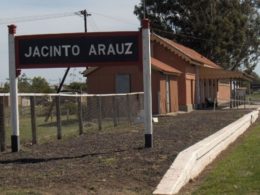 Just weeks ago, there was an intriguing incident reported in Argentina involving a woman who went missing and was then found a day later, 65 km from where she was seen last. She had no memory of how she got there, and local residents and Argentinian officials were mystified. The case aroused the interest of a local UFO researcher who noted a similarity to an earlier alien abduction case in the area.
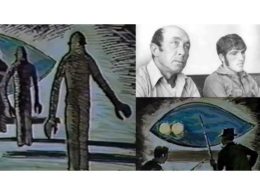 In 1973, there was a worldwide wave of UFO associated humanoid encounters. Arguably, the most famous of these was the alleged abduction in Pascagoula, Mississippi, of Charles Hickson and Calvin Parker. They reported being forcibly taken aboard a craft by three, approximately five-foot-tall, robot-like, elephant-skinned creatures with crab claw-like hands, no eyes, a slit for a mouth and cone-shaped protrusions where the nose and ears would be on an earthly creature. While the creatures described by Hickson and Parker are unique in UFO literature, what is common to the 1973 humanoid wave is that most of the creatures described were unique. One report that stands out came from the city of Vilvoorde in Belgium. It was investigated by the Societé Belge d’Etude des Phénomènes Spatiaux, and an article describing the reported encounter written by Jean-Luc Vertongen appears in the SOBEPS journal,
 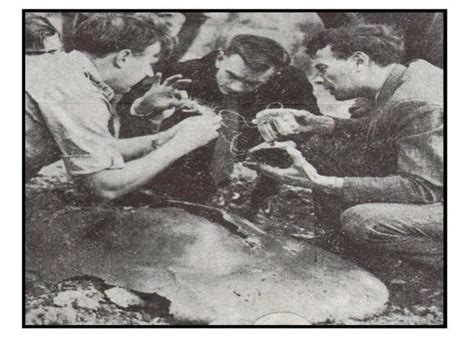 In 1957, the same year the Soviets launched Sputnik, British authorities, media, and citizenry had their attention drawn back down to Earth as they attempted to unravel the mystery of a flying saucer said to have been found laying in a moor. It was dismantled, studied, and opinions were divided between its having come from space and its having been manufactured right here on Earth. Over time, the saucer went missing, but the mystery as to its origin remained. Then, in 2018, pieces of the saucer and its mysterious contents were found in the archives of the Science Museum in London.
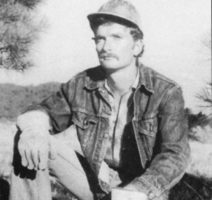 One of the most famous early abduction cases is that of Travis Walton in late 1975, which received a lot of attention and still fascinates many people to this day. Walton’s case was investigated primarily by the Aerial Phenomena Research Organization. In the midst of that investigation, APRO was contacted by Johnny Sands, a country western singer who claimed he had encountered two humanoids in the desert outside of Las Vegas, Nevada. It is perhaps because of the attention given to the Walton case, that Sand’s case has all but been forgotten. I might also be because it’s seriously weird.
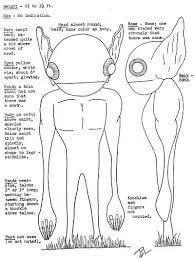 On August 21, 1955, there was an incident that took place on a farm located in the town of Kelly, 7 miles north of Hopkinsville, Kentucky that reads like it was straight out of a ‘50s sci-fi comic book. The story has been recounted in many books and all over the internet but, because of its comic book nature, that it involved real people who were deeply affected and real people who did earnest and laudable investigations tends to be overlooked.
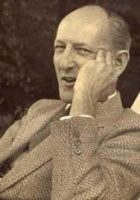 Of all the private organizations devoted to UFO investigation, the National Investigations Committee on Aerial Phenomena was arguably the most ambitious and tenacious. This was driven in large part by its director, Donald Keyhoe. Keyhoe held the beliefs that UFOs are extraterrestrial and that the U.S. Government, particularly the Air Force, was keeping information from the public that could possibly prove the ET hypothesis. As effective as NICAP was at hounding the Air Force and convincing many in the U.S. Congress that UFOs were deserving of scientific study, there are indications that the CIA was involved in both the beginning and the end of the organization.
 Todd Zechel wrote about the CIA – NICAP connection in the January 1979 issue of
  by Charles Lear
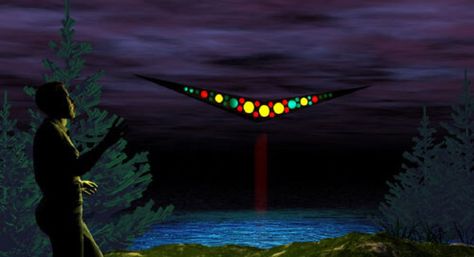
 From February 17 to February 24, 1954, President Dwight D. Eisenhower was in Palm Springs, California, on what was described to the public as a “vacation.” On February 20, he disappeared from public view and rumors spread to the point that the headline, “Pres. Eisenhower died tonight of a heart attack in Palm Springs.,” appeared on the Associated Press newswire. The story was removed two minutes later and the AP reported that he was still alive. UFOlogists have speculated on where he was that day, and some have come to the conclusion that Eisenhower went to Muroc Air Force Base for a secret meeting with alien visitors.
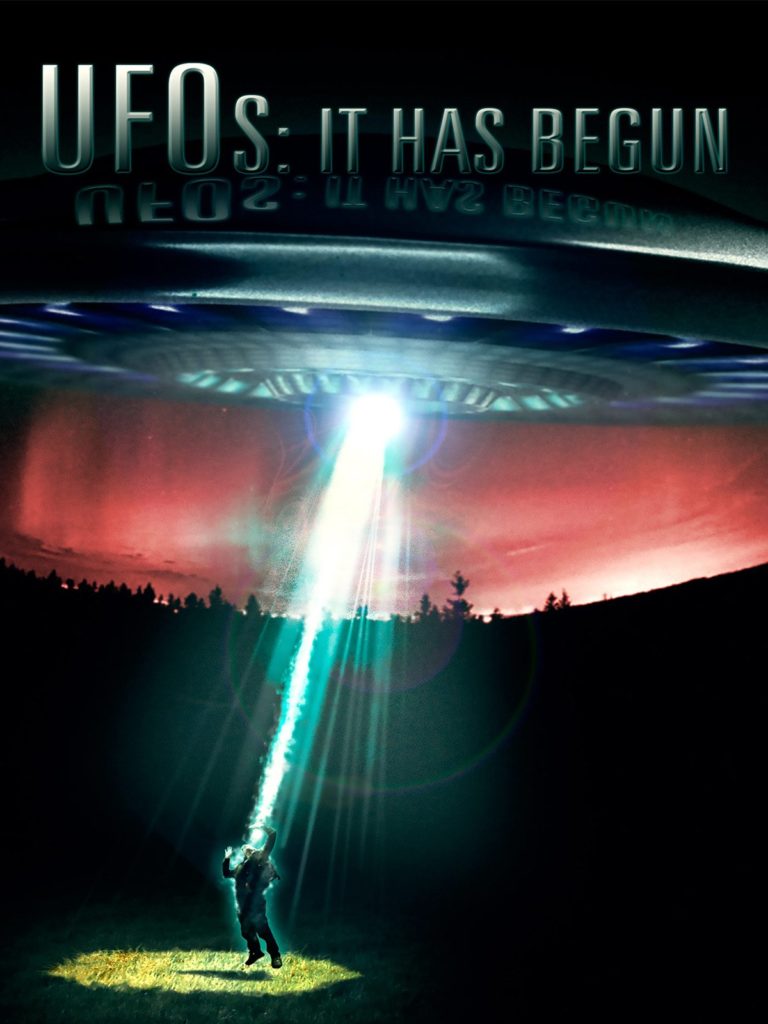 UFO documentaries, besides being informative and entertaining, also serve to preserve UFO history for future researchers. However, one documentary, “UFOs: It Has Begun.” has itself become a part of UFO history. One of its producers has claimed that the U.S. Department of Defense offered him and his partner the use of some film footage taken by the Air Force at Holloman Air Force Base. According to him, it showed a UFO landing and a meeting between its occupants and Air Force officials, and it was going to be the finale of the documentary until the DoD withdrew the offer at the last minute.
 1967 was quite a year in UFO history. In Canada there was the
  Pilot UFO sightings have been a constant in the world of UFOlogy ever since the sighting in 1947, that started the public fascination with the subject, by Kenneth Arnold, who was flying in his own plane near Mount Rainier in Washington State. Even though these are often single witness sightings, researchers generally take them seriously, as pilots, especially a commercial pilots, risk their reputations and continued employment by coming forward. But, what about airplane passengers? In the case of passenger sightings, you often have multiple witnesses, or at least one witness that can corroborate the pilot report.
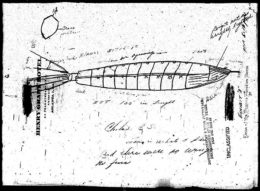 An instance where a passenger witness came forward to back up a pilot report occurred in 1948 in the case of the classic Chiles-Whitted UFO encounter. On July 24, 1948, pilot Clarence Chiles and co-pilot John Whitted, were flying a DC-3 over Alabama. At about 2:45 a.m., Chiles spotted a red glow up ahead and brought Whitted’s attention to what he assumed was an Army jet. It closed in on the DC-3 quickly, shot past the right side of the plane, and then, with a burst of flame coming out of its rear, climbed up into the clouds. The pilots reported that the object was torpedo-shaped, had no wings, was 100 feet long, and 25 to 30 feet in diameter. Passenger Clarence L. McKelvie added to the credibility of the sighting by reporting that he saw a bright light streak by his window at that time. He later appeared in the documentary,
 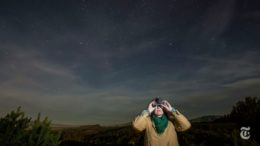 On February 9, 2021, at around 10:30 p.m., a helicopter pilot with U.S. Customs and Border Protection flying over Tucson, Arizona, reported to air traffic control that he had just had a near collision with a drone. A Tucson Police Department helicopter was sent into the area and the two helicopters followed the object and attempted to determine the location of whoever might be operating it. While it was described as a drone and a quad-copter, it was mostly tracked using night vision, and the only visual description was of a blinking green light. If it was indeed a drone, it attained an altitude well above the 400 foot limit set by the FAA, performed extraordinary evasive maneuvers, and had a power source that lasted far longer than a normal drone battery.